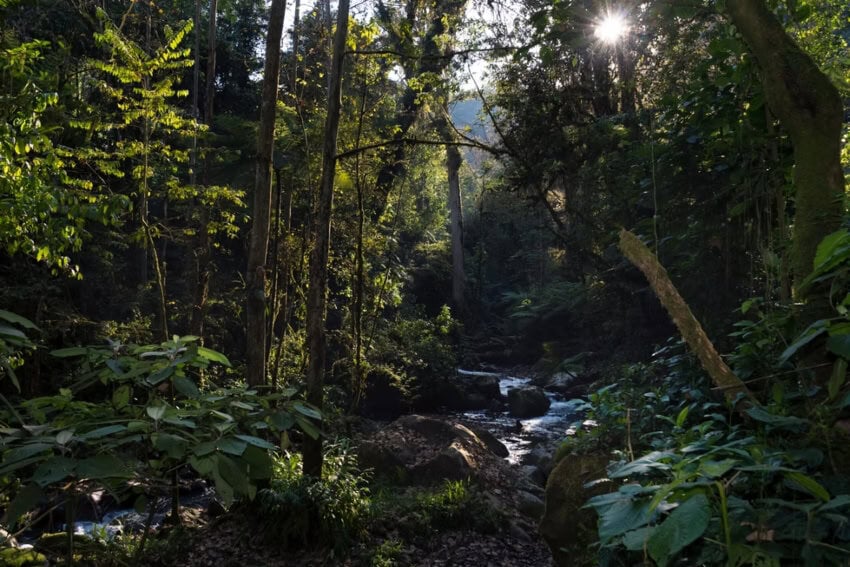
Cloud forests make up just 1% of Mexico’s territory. They contain nearly 10% of the country’s plant species and shelter a remarkable range of wildlife species. These ecosystems are known for their foggy environments caused by the wet and rainy weather that prevails in regions such as the Sierra Madre Oriental, Sierra Madre del Sur and Sierra Norte de Chiapas, where some of the last remaining cloud forests survive. The weather tends to be warm but humid, with nights becoming cooler, especially when the mist envelops the area.
Despite their ecological importance as biodiversity hotspots and for capturing water and carbon, helping regulate regional weather, Mexico’s cloud forests are sadly endangered. Illegal logging, cattle ranching and urban expansion continue to drive deforestation and place these fragile habitats at risk. As such, any action that seeks to protect these forests is of utmost importance.
@tamarablazquezhaik Únanse a los esfuerzos de conservación de Blanco Pitaya. Pueden encontrarlos en FB e Ig con ese nombre, “Blanco Pitaya”. La reserva está en Teziutlán, Puebla. #naturaleza #fotografía #animales #fyppppppppppppppppppppppp #conservación ♬ swatting at flies – ethan mcneal
The effort to save Blanco Pitaya
One grassroots effort is Blanco Pitaya, a natural reserve founded by Ignacio Castillo in 2021 in Teziutlán, Puebla (just four hours away from Mexico City). The 16.5-hectare (40-acre) reserve preserves an almost pristine stretch of cloud forest where towering tree ferns rise above a dense understory. Bromeliads and other epiphytes blanket the trees, creating shelter for species such as the small-eared tree frog (Rheohyla miotympanum), countless insects, birds and mammals like ocelots that depend on the forest canopy to survive.
Blanco Pitaya protects the forest through low-impact ecotourism. Ignacio’s vision was to first create a small hotel-boutique in the area. However, after going through some intense personal situations and thinking about leaving a livable planet to his young son, he decided on a different future. Thus, Ignacio now aims to attract visitors through camping and spiritual retreats, bird and wildlife watching, and river cleanups along the Xoloatl River that runs through the reserve. The goal is to foster a connection strong enough that visitors leave caring deeply about these forests that are often overlooked or mistaken for generic rainforests or tropical jungles.
Ecotourism at Blanco Pitaya
With tree ferns evoking a prehistoric landscape, recalling an era when dinosaurs roamed the planet, visitors can enjoy open meditation spaces, marked hiking trails, spring pools, waterfalls and the river that cuts across the property. The reserve is equipped with a working toilet and hot showers as well as spacious camping tents. There’s also a kitchen and dining area designed to bring together travelers who share a love for the outdoors.
Ignacio’s guided experiences combine hiking with meditation, encouraging visitors to slow down and reconnect with the present moment. The trails take visitors to several waterfalls and a beautiful basin known as the “Poza de los sueños” where encounters with the local frogs are not uncommon.
Community-based conservation
Blanco Pitaya’s conservation work extends beyond tourism as well. Over the years, Ignacio and his team have recovered a significant amount of plastic waste and debris, like old tires, plastic bottles, and old remotes, just to name a few examples from the Xoloatl River. As nearby communities expand, untreated waste continues to reach the waterways that feed the forest.
Although a treatment plant exists near Teziutlán and the neighboring San Juan Acateno, it remains nonfunctional. allowing polluted runoff to flow directly into the river and threaten the forest’s long-term survival. This threatens both the local biodiversity and the long-term survival of Blanco Pitaya’s cloud forest. Local authorities have expressed interest in addressing the problem and supporting cleanup efforts. As have some universities like the Universidad de las Américas, which has participated in restoration activities.

Ignacio’s broader vision also includes supporting local communities by donating supplies to rural schools and involving the local children in environmental stewardship, thus ensuring that conservation becomes a shared community responsibility, with Blanco Pitaya representing a model for community-based conservation. Ignacio believes that through ecotourism, environmental education and collaborative projects, the reserve can become financially sustainable while supporting surrounding communities and safeguarding what remains of the cloud forests along the Puebla–Veracruz state line.
Tamara Blazquez Haik is a writer and photographer.