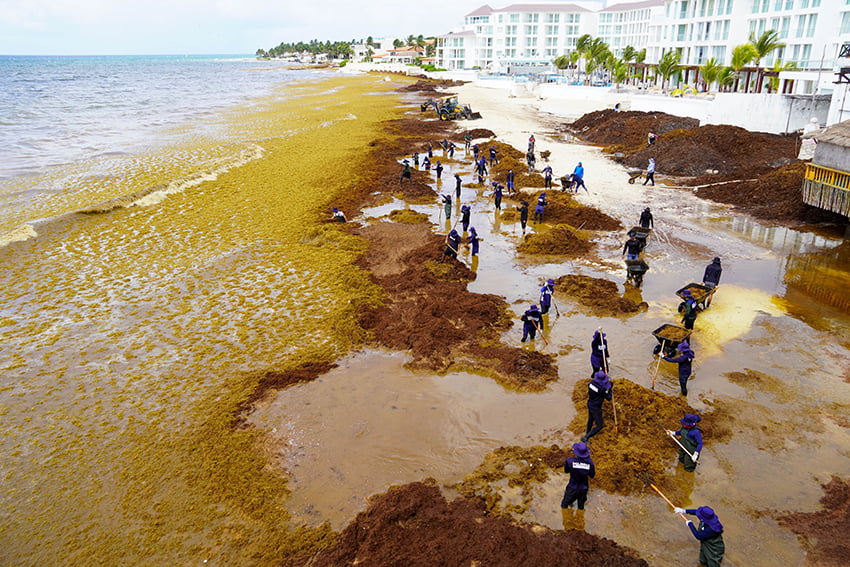
Nearly half of Quintana Roo beaches are currently on red alert due to a massive influx of sargassum seaweed in recent days, making conditions unsuitable for swimming or enjoying the otherwise turquoise waters.
Head of the Sargassum Monitoring Center in Quintana Roo Esteban Amaro reported that substantial amounts of seaweed accumulating offshore triggered the alert in 65 of the 140 beaches monitored in the state.
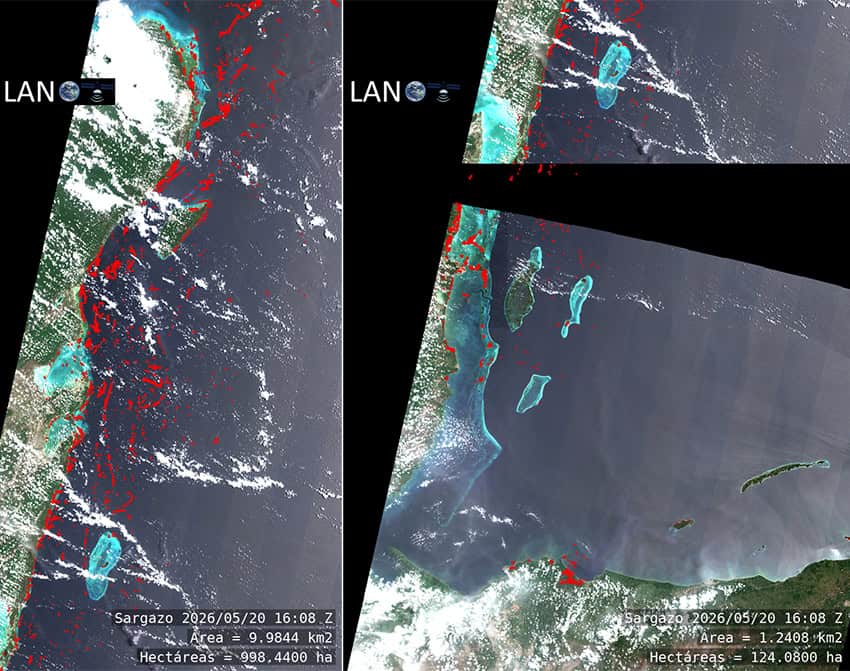
“We have observed a significant increase in the amount of sargassum in the first five nautical miles off the coast in the state of Quintana Roo,” he said.
There are 34 beaches on red alert in the northern part of the state, Amaro said, including numerous beaches in Cancún, Playa del Carmen and Tulum. In southern Quintana Roo, there are 31 beaches on red alert, mainly in and near Mahahual, another popular tourist destination.
Forecasts indicate sargassum will continue to increase on the Riviera Maya’s shores. According to monitoring reports, the first week of June will see larger quantities of sargassum wash ashore in both the northern and southern parts of the state, partly due to intensifying strong winds coming from the southeast.
The amount of sargassum has overwhelmed local business owners, who said it has exceeded the capacity of cleaning brigades.
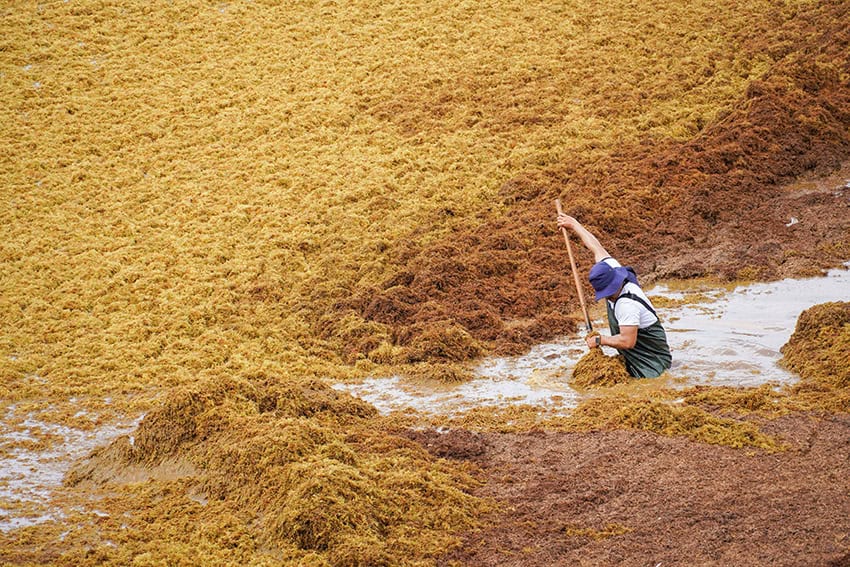
Earlier this month, the Navy announced the deployment of an additional 150 personnel to support the cleaning and containment efforts of the seaweed before it reaches the shores of Quintana Roo. Furthermore, authorities added a new sargassum collection vessel that can collect up to 600 tons daily on the high seas, compared to the 250 tons that were previously collected.

But collection efforts don’t come without risks for workers. A new study conducted by the National Autonomous University of Mexico (UNAM) found that workers who collected sargassum on beaches in Puerto Morelos, Playa del Carmen and Mahahual suffered headaches, rashes, nausea, difficulty breathing and other health issues after exposure to the hydrogen sulfide that is released by the algae as it decomposes.
With reports from La Jornada and El Economista