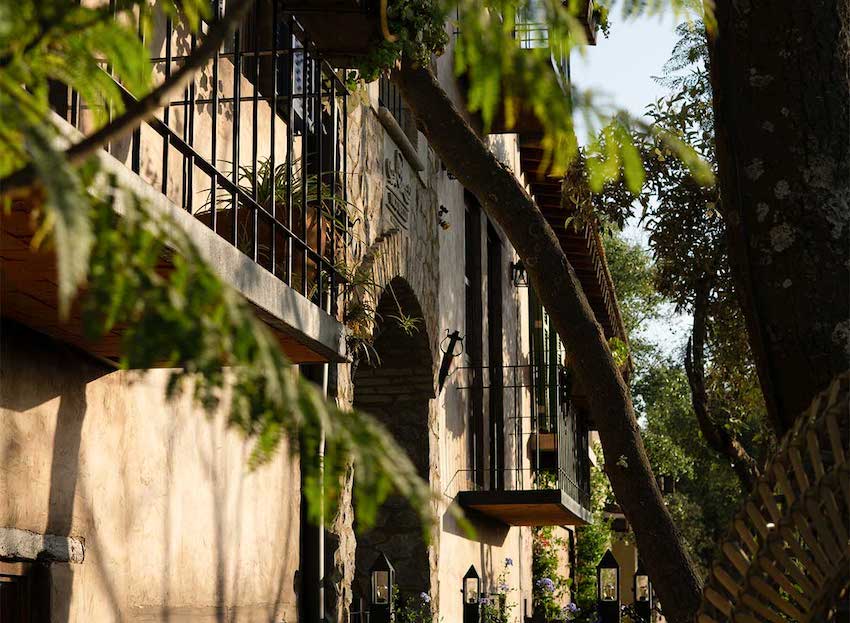
The Tourism Ministry introduced a new “Kingdoms of Mexico” (Reinos de México) program on Monday to recognize places in the country inspired by other regions of the world.
The Val’Quirico tourist attraction in Tlaxcala received the first badge, while the Sassi del Valle in Ensenada, Baja California, is expected to receive the second.
This initiative follows the Tourism Ministry’s Pueblo Mágico and Barrio Mágico programs. Both designations give financial support and promotion to encourage tourism for historic towns and neighborhoods, respectively.
So far, the Ministry of Tourism has recognized 132 Pueblos Mágicos and five Barrios Mágicos around the country.
Tourism Minister Miguel Torruco Marqués said that the new program visualizes a fusion of cultures, highlighting the architectural beauty of the selected regions, as well as potential economic benefits to local communities.
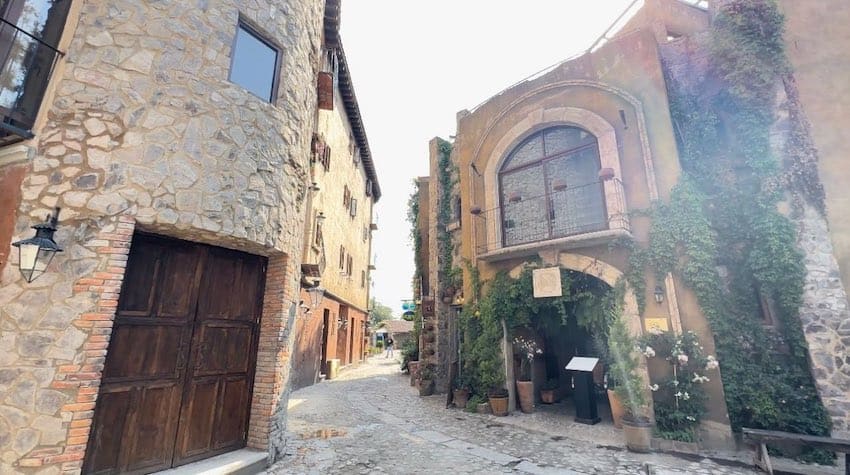
Opened in 2015, Val’Quirico is built on the remains of the Hacienda Santa Águeda, an Industrial Revolution-era dairy complex in the state of Tlaxcala. The development is designed to emulate a medieval town with cobbled streets and houses built from wood and stone and draws inspiration from the Italian regions of Tuscany and Umbria and the Spanish city of Segovia.
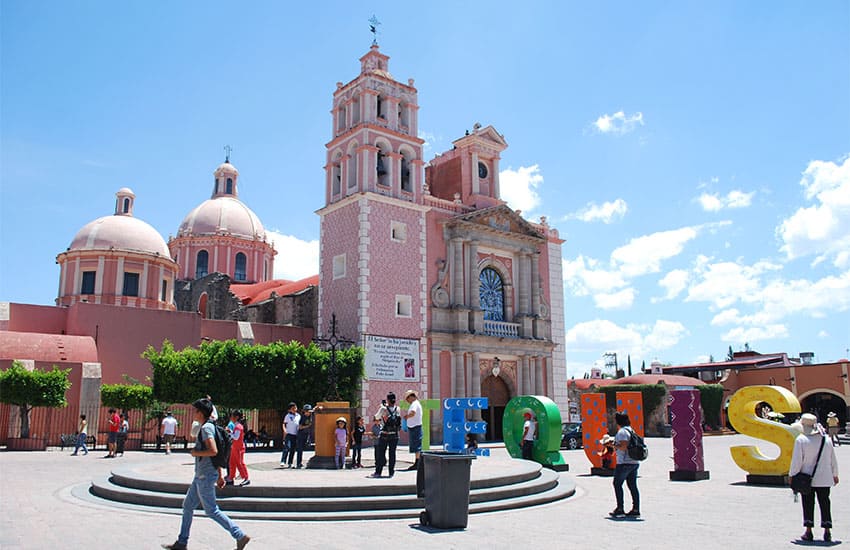
Restaurants, businesses and residences can be found here — a fusion of tourist attraction and town.

Luigi de Chiara, the Italian ambassador to Mexico, highlighted that Val’Quirico promotes Italian lifestyle, culture and history.
“It’s an incentive for [tourists] to travel to Italy to see the original places,” he said.
The second location expected to win the Kingdom of Mexico designation, Sassi del Valle, is in the wine region of Valle de Guadalupe. The project is inspired by the Italian city of Matera and seeks to merge Mexican and Italian culture.
Head of the Kingdom of Mexico board Adolfo Blanca Núñez said that Sassi del Valle will honor the most productive wine region in Mexico, the best olive grove in the country and the Italian missionaries who helped develop the region.
“Granting this status [as a Kingdom of Mexico] is a way to provide more employment and greater opportunities for international tourism,” Torruco told the media outlet Forbes México.
Visitors to Val’Quirico, Torruco said, generate revenue of more than 80 million pesos per month (US $4.52 million). The town generates 11,400 jobs — 3,500 direct and 7,990 indirect.
The National Statistics and Geography Agency (Inegi) estimated the number of Mexicans employed in the tourist industry at 4.6 million at the end of 2022 — 8.9% of total employment in the country.
From January to March, Forbes México reported that employment in the tourism industry provided jobs to an additional 74,269 people, an increase of 1.6%.
With reports from INEGI, Forbes México, La Jornada and El Universal