When I first decided to leave the San Francisco Bay Area in California to live in Xalapa, Veracruz — the city where both of my parents once immigrated from decades ago, and where my mom eventually moved back to live — I never anticipated how much I would fall in love with one of Mexico’s best-kept secrets: Jarocho coffee.
The state’s adoration for, and history of, producing some of Mexico’s best coffee dates back centuries. This is, after all, where coffee cultivation began with the arrival of Europeans in the 1700s. While living here, I’ve been able to travel along the oldest coffee-producing trails on the continent, sipping my way through it all, and visiting coffee plantations to learn more about the process and conditions for cultivating coffee and its environmental impacts in modern times (spoiler: it’s harder than ever for producers to keep up with the global demand and maintain their practices from the past).
The rich coffee culture of Veracruz
@parametromx Tradicional lechero del Gran Café de la Parroquia ☕️🥛 #veracruz #lechero #cafe #cafedelaparroquia #visitveracruz #turismo #viaje ♬ La Bamba – Son Jarocho – Voces Veracruzanas
In Mexico’s entirety, no state boasts the same pedigree of rich coffee lineage and ongoing traditions as deeply, and perhaps as invisibly, as Veracruz. Nowhere is that notion more evident than in the state’s largest city: the actual port itself.
Of course, Jarocho coffee is by no means completely unheard of or brand new, by any stretch of the imagination, particularly for those in the know. The sight of a “lechero” pouring frothy milk into a cup of espresso at El Gran Café de la Parroquia is a classic image of the Veracruz experience going back to 1808, when the cafe first opened as a tiny operation in front of the Parroquia de Nuestra Señora de la Asunción.
Now, it represents one of Mexico’s most iconic coffee rituals. Here’s how it works: patrons tap their glass with a spoon; a formally dressed lechero comes bustling over with a steaming pot of milk; the lechero evinces showmanship by pouring the milk from a spout at an impressive height, never spilling a drop. It may seem gimmicky for some, but throughout my life, it has always represented the Jarocho way of drinking coffee.
Café traditionalism
View this post on Instagram

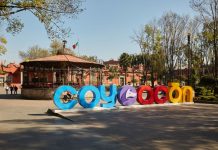
In addition to El Gran Café de la Parroquia (which eventually split into two separate factions due to ownership disputes in the 1990s), Gran Café del Portal in Veracruz’s historic center is also worth visiting for its colonial-era charm and sense of coffee traditionalism. Indeed, the port of Veracruz’s reputational coffee heritage has carried over into other parts of Mexico over the years, too; the most popular café in Coyoacán is named El Jarocho, which opened in 1953, and ships its coffee beans by the truckloads directly from Huatusco, Veracruz.
And yet, while becoming an intrinsic part of a classic tourist experience in Veracruz, the city has not always found a way to merge its glorious coffee past with its ongoing present and future. Until now.
A new generation of cafés
Currently, the specialty coffee scene in the port of Veracruz is booming in unseen ways, as a new wave of coffeemakers and baristas has entered the mix with a more contemporary approach, offering a cool range of Veracruz’s flavorful past in an aesthetic, renovated context. In just the past year and a half that I’ve lived in the state of Veracruz, I’ve noticed an uptick of youthful cafés in the puerto; it seems that every time I go for a weekend outing with my family, another one springs up.
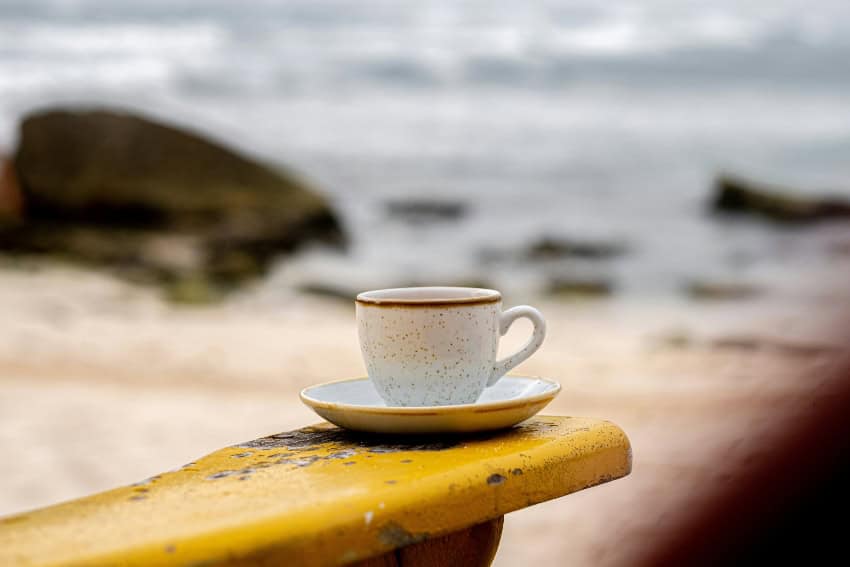
So here are just a few of those cafes that should be added to your list. The next time you decide to visit Mexico’s oldest and most historically important port city — where imbibing a cup of coffee in the midday swelter is a way of life — you can experience its coffee renaissance for yourself.
Singular Coffee Roasters
View this post on Instagram
Located directly across the street from Playa de Oro, right on the border of Boca del Rio — a ritzier suburb a few miles away from the industrial center of Veracruz — Singular Coffee Roasters in many ways embodies the next generation of coffeemakers in the city. In addition to having a pristine view of the beach, where the nearby ocean scenically blows palm trees along the main avenue, the vibe is funky and hip, and the menu is top-notch.
Enjoy a tampiqueña de res (a thin cut of beef served with salsa, salad greens and beans) alongside an orange cold brew, a maracuyita (cold brew mixed with mashed passion fruit) or a matcha frappe. Or, keep it simple, and order a locally sourced cup of filtered coffee — with the option of adding coconut milk for an extra 20 pesos. Either way, it’ll be a refreshing way to start off your day before hitting the nearby Gulf’s waters to cool off from the oppressive weight of the year-round heat.
Impetus
View this post on Instagram
With three locations sprinkled throughout the city, Impetus has become the “it” café in town. Recently named as one of seven finalists in Mexico’s nationwide Expo Café, the brand is certainly of the highest caliber, and the interior decor and design of each café matches the high-grade taste in each cup. Though their original location has been around for 10 years now, they’ve still retained the title as Veracruz’s leading specialty coffee purveyors with a seasonally changing menu. Available in multiple price tiers ascending from lowest to highest (coffee of the day, excellent or extraordinary), they’re known for their fine-tuned brewing methods. In true Veracruz fashion, you can cool off with a granizado de olla (shaved ice poured over with café de olla) or a chilled bottle of housemade cascarita (a fruity, tea-like beverage made by steeping the dried husks of a coffee cherry in water).
Ethos Casa de Café
View this post on Instagram
Small but mighty, this bite-sized café (it’s a small room that comfortably seats around 10 people, not counting the limited sidewalk seating available outside) was named as one of the Top 100 Coffee Shops in North America, Central America and the Caribbean islands. Aside from their regular pours — which are exceptional — they offer cold brews infused with in-house ginger ale, coffee liqueur frappes and dulce de leche espressos, among other inventive options like the Blue Velvet (a concoction of blue butterfly pea flower extract, lavender, organic vanilla and milk).
Volador
View this post on Instagram
Recognized as a two-time Expo Café winner for producing the best coffee in Mexico, this outpost can be found on a vibrant strip in Colonia Reforma (which, for my money, is the coolest and most diverse neighborhood in the state of Veracruz, replete with stylish bars, cafés, taquerias, Korean ramen, smash burgers, Middle Eastern dining, pizzerias and more, all connected by a tree-lined walking path that leads straight to the beach). Volador is the unequivocal king of coffee in this area, with a spacious environment and outdoor patio seating to accompany its vegan food options, salads and — for the over-18 crowd — carajillos (espresso and coffee liqueur) in mazapan or horchata varietals.
Avi
View this post on Instagram
Specializing in brunch and sweet treats — in addition to their selection of coffee and teas — this dog-friendly café is charming and sprightly. Another of Colonia Reforma’s highlights, it opened at the end of 2024 and has added to Veracruz’s rising cafe presence. A pistachio tarta vasca (a dense Basque-style cheesecake) is ideally partnered with a tri-colored strawberry matcha, an iced taro or a classic espresso cortado.
Habibi Café
View this post on Instagram
The latest newcomer to Veracruz’s growing and diversifying coffee scene, Habibi opened its doors earlier this summer and added something completely fresh and rare to the port city’s culinary sphere: a Turkish-inspired café. Found in the ever-trendy Reforma neighborhood, the decor here is a bit over the top and kitschy, but the spirit of the coffee and food is unique and notable. Order a Turkish coffee (which is brewed in hot sand) and, if you’re hungering or have a sweet tooth, add a side of gold-dusted dessert — or grab a loaded shawarma de pollo — and stay for the fun of it all. Pro tip: don’t forget the plátano macho-stuffed kibbeh.
DeLirio
View this post on Instagram
The tropical abundance of Veracruz’s ingredients reigns supreme at DeLirio. Take your pick of orange espressos, pineapple cold brews, maracuya cheesecakes, watermelon agua frescas, chilled cucumbers and lime frappes, and so much more. Despite its colorful vibrancy on the menu, it retains an understated interior style: An elegant, minimalist architecture highlighted by its mid-century-inspired curved walls and wicker chairs — all working in harmony to accentuate this chic café in (you guessed it) Colonia Reforma.
Alan Chazaro is the author of “These Spaceships Weren’t Built For Us” (Tia Chucha Press, 2026), “Notes from the Eastern Span of the Bay Bridge” (Ghost City Press, 2021), “Piñata Theory” (Black Lawrence Press, 2020) and “This Is Not a Frank Ocean Cover Album” (Black Lawrence Press, 2019). He is a graduate of June Jordan’s Poetry for the People program at UC Berkeley and was selected as a Lawrence Ferlinghetti Poetry Fellow at the University of San Francisco. His work can be found in NPR, The Guardian, SLAM, GQ, L.A. Times and more. He is currently based in Veracruz.