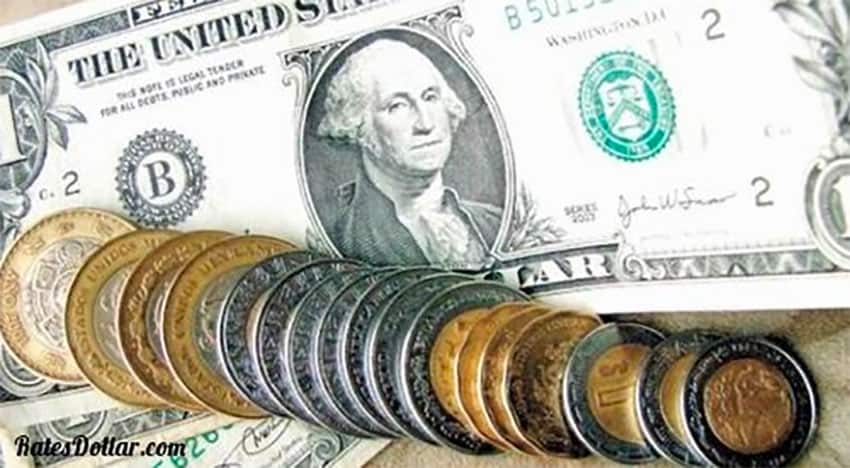
Mike might be saying to his San Diego pals on their annual fishing trip to Ensenada, “Geez guys, the Corona’s gotten a lot more expensive this year.”
Sally might be saying to Harry in their Ajijic pied a terre, “Jeez, our pensions don’t seem to go as far now as they used to.”
Mike and Sally are both correct.
On or about April 1, 2020, generally reckoned as the start date for the pandemic, the interbank dollar exchange rate stood at just under 24:1, having flirted with the round number of 25:1 only a few weeks earlier. As this is written the rate has dropped to less than 20.
It may be the invisible hand of Adam Smith in the free market. It may be, as currency traders say, a dirty float, with a policy finger on the scale from Mexico’s central bank. It may be a Faustian bargain with the U.S. to reduce emigration from zero population growth Mexico. It may be a nutrition police op to reduce Mexico’s waistline.
Or it may be all of the above.
Mike, Sally and Harry are annoyed, even inconvenienced by the 20% erosion in the value of their dollars. But the recipients of remittances from sacrificing Mexicans working in the U.S., Canada and Europe may be devastated by the roughly four-peso-per-dollar plunge in the purchasing power of the money sent back home.

It’s a triple or even quadruple whammy to an economy already struggling with loss of employment, a disappeared tourism sector, and low oil prices.
To reduce the situation to Exchange Rates for Dummies: a higher value for a country’s currency stimulates imports, penalizes exporters, hastens capital outflows, and with an expected $36 billion a year in remittances, a four-peso difference puts billions of kilos’ worth of fewer tortillas on the tables of Mexico’s hungriest.
Where are exchange rates headed? Even Don Quixote wouldn’t tilt at that windmill. But he would certainly pay attention to wind speeds.
The author, a former bank CEO, has an MBA from Harvard and has worked in Ecuador, Peru, Guatemala, Venezuela, Argentina and Mexico.