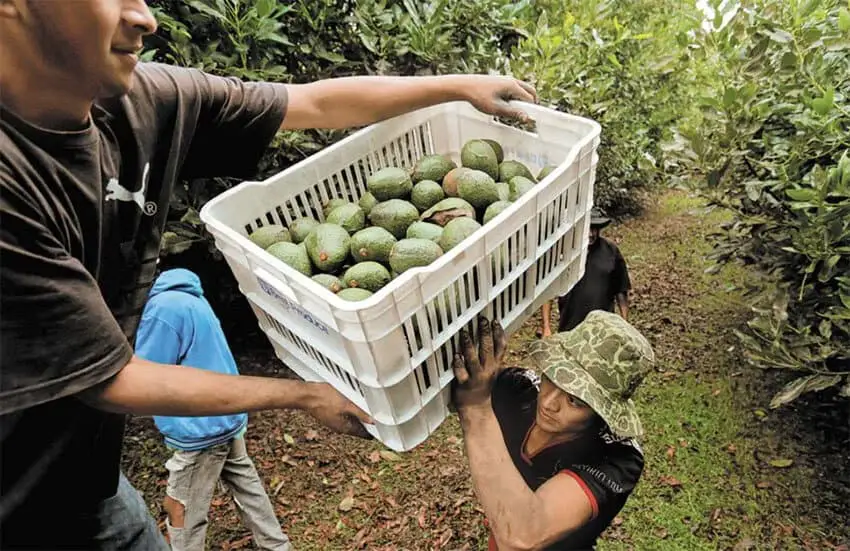
Avocado exports to the United States have resumed a week after the U.S. government temporarily suspended imports in light of a threatening phone call received by a Michoacán-based U.S. inspector.
The Animal and Plant Health Inspection Service (APHIS), part of the U.S. Department of Agriculture (USDA), announced Friday that its avocado inspection program in Michoacán had restarted and that avocado exports to the United States had resumed.
“APHIS, working closely with the U.S. Embassy in Mexico’s regional security officer, Mexico’s national plant protection organization, and the Association of Avocado Producers and Packers Exporters of Mexico (APEAM), have enacted additional measures that enhance safety for APHIS’ inspectors working in the field, following a threat made to an employee on February 11,” it said in a statement.
“The safety of USDA employees simply doing their jobs is of paramount importance. USDA is appreciative of the positive, collaborative relationship between the United States and Mexico that made resolution of this issue possible in a timely manner.”
The newspaper Milenio reported Friday that the U.S. government was considering a proposal to have 90 U.S. government avocado inspectors protected by state and federal security forces in 63 Michoacán municipalities where the fruit is grown. It was unclear whether U.S. authorities accepted the offer.
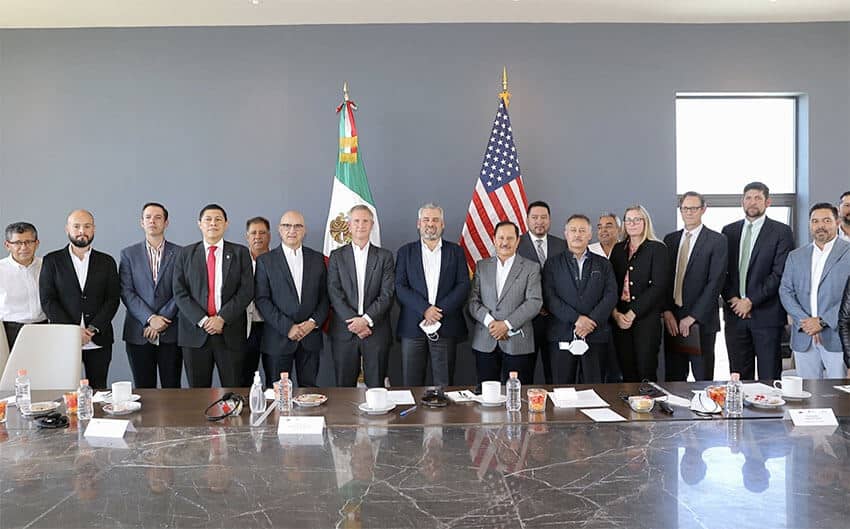
Ambassador Ken Salazar said in a statement that the resumption of the U.S. inspection program was possible thanks to the “rapid response and cooperation” of Michoacán Governor Alfredo Ramírez Bedolla, the federal government and APEAM.
“I thank them for working with my security colleagues at the U.S. Embassy to establish the measures that guarantee the security of our APHIS inspectors in the field,” he said.

Salazar noted that Mexican avocado exports to the U.S. were worth US $2.8 billion last year. Michoacán is the only state with authorization to ship the so-called “green gold” across Mexico’s northern border.
“Mexico and the United States will continue working together to fortify the strong bilateral supply chains that promote economic growth and prosperity in both countries,” the ambassador said.
The threat against the U.S. inspector was made after he detected an attempt to pass off avocados from Puebla as Michoacán-grown. He received a threatening call a few days after he refused to authorize the shipment of those avocados to the United States.
Citibanamex estimated that the import suspension cost avocado producers US $7.7 million per day.
In its statement, APHIS said the United States imported 1.2 million metric tonnes of avocados last year, with 1.1 million metric tonnes coming from Mexico.
With reports from El Universal and Milenio