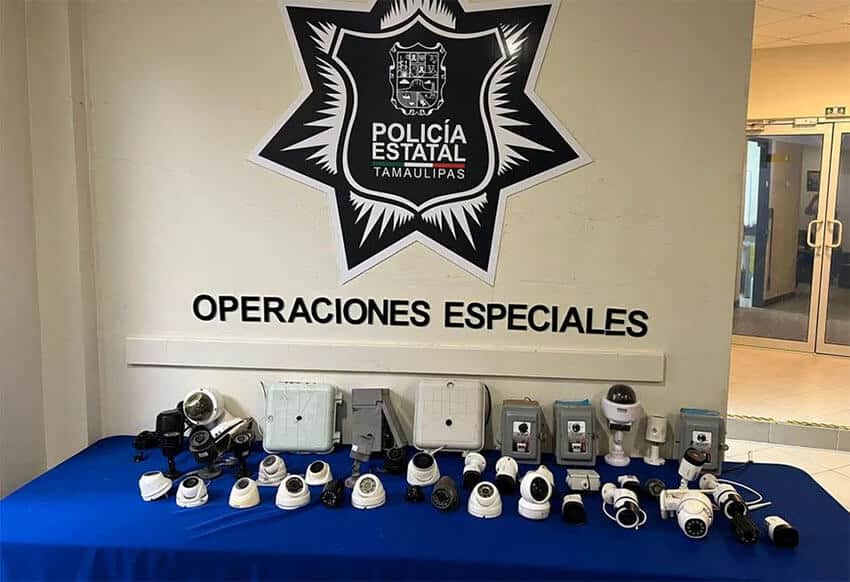
Over 100 surveillance cameras were used by narcos to spy on authorities and rival gangs in Reynosa, Tamaulipas, until security forces disconnected them on Sunday.
The cameras were mounted on utility poles and other electrical and telephone facilities.
The notoriously violent city, located across the border from McAllen, Texas, is a battleground between factions of the Gulf Cartel and the Zetas cartel.
The Tamaulipas Security Ministry (SSP) said in a statement that the state police’s special operations group (GOPES) had disconnected the camera network, which used stolen Wi-Fi signals to transmit the videos.
“More than 100 remote video cameras, connected illegally through the theft of home Wi-Fi or from businesses, were dismantled in recent hours,” the statement said.
The SSP said it would continue to investigate where the videos were being watched from.
“The criminal groups operate illegal video surveillance networks to observe the movements of federal and state security agencies or to cover their illegal activities,” it said.

It added that citizens should report any theft of their Wi-Fi signal.
Cartels do not shy away from a visible public presence in Tamaulipas. In July they hung professionally printed narco-banners in Reynosa and other cities to announce a turf war truce.
With reports from Reforma