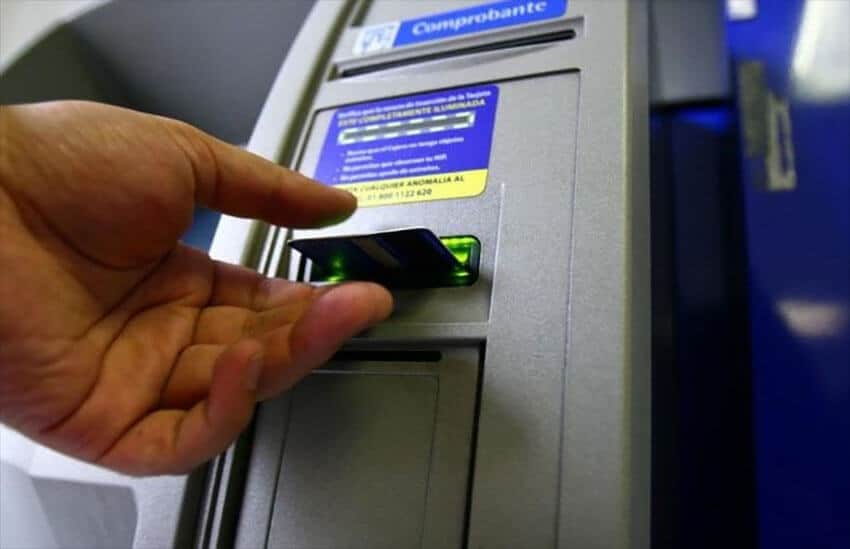
Police in Mexico City have been seeing more instances of an ATM crime in which criminals not only get the customer’s money, but also details of their ATM card.
According to the newspaper Milenio, the fraud works like this: First, the criminals place traps inside an ATM to prevent the dispensed money from being accessible to the customer. Then, they place a professional-looking decal near the ATM that offers a telephone number to call for help.
When the ATM user’s money doesn’t come out, they unwittingly call the phony number, after which they are asked for their PIN, their name and other information, such as account number.
In short order, one of the thieves will return to the ATM to collect the money that was “trapped” inside.
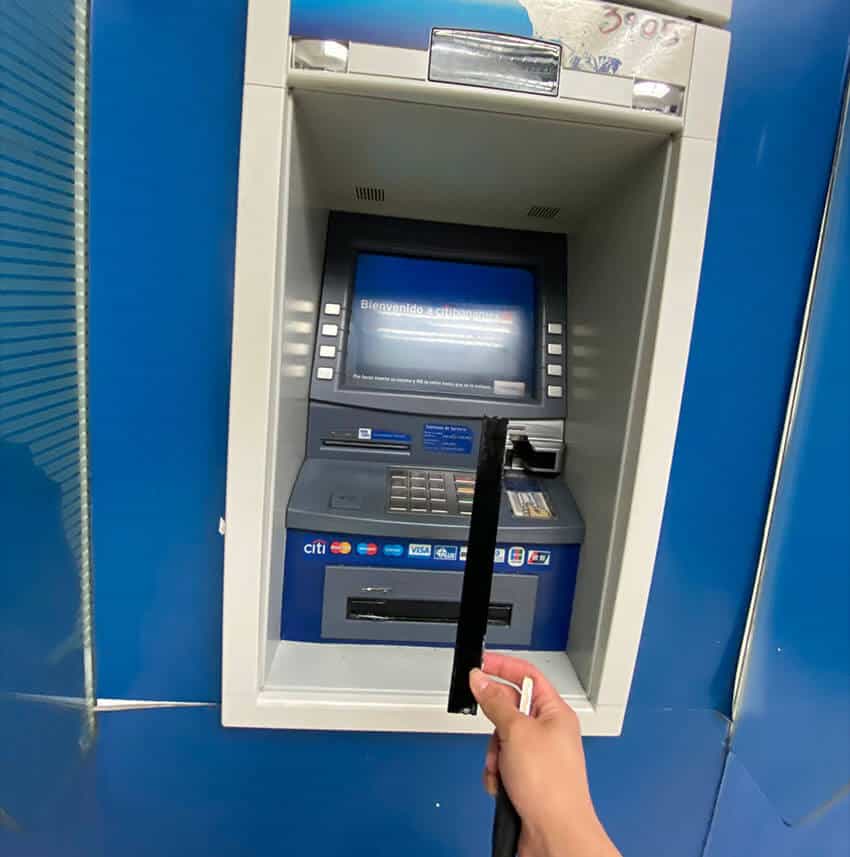
Such crimes have taken place at various banks in four boroughs of Mexico City, according to the Citizen Security Ministry (SSC), one of the two primary law enforcement agencies in the capital.
SSC officials told Milenio that the fraud is being conducted by a criminal group and cited instances of the crime in the Cuajimalpa, Tlalpan, Coyoacán and Cuauhtémoc boroughs. The police received complaints from citizens and bank workers between June 17 and 18.
Much of the nefarious activity was captured by the banks’ closed-circuit and government cameras, and police were able to pinpoint one particular vehicle that was near or around at least eight ATMs that were hit. After locating that car, police not only arrested three members of the criminal group but also found 56 “doses” of marijuana, a bag of cocaine and 300 pesos inside the car.

Police sources said the same gang is also involved in crimes such as gota a gota, home robberies and theft of bank cards. Gota a gota, or drop by drop, is a form of extortion in which people are granted short-term loans (three or four weeks) at interest rates as high as 40%.
With reports from Milenio and El Heraldo de México