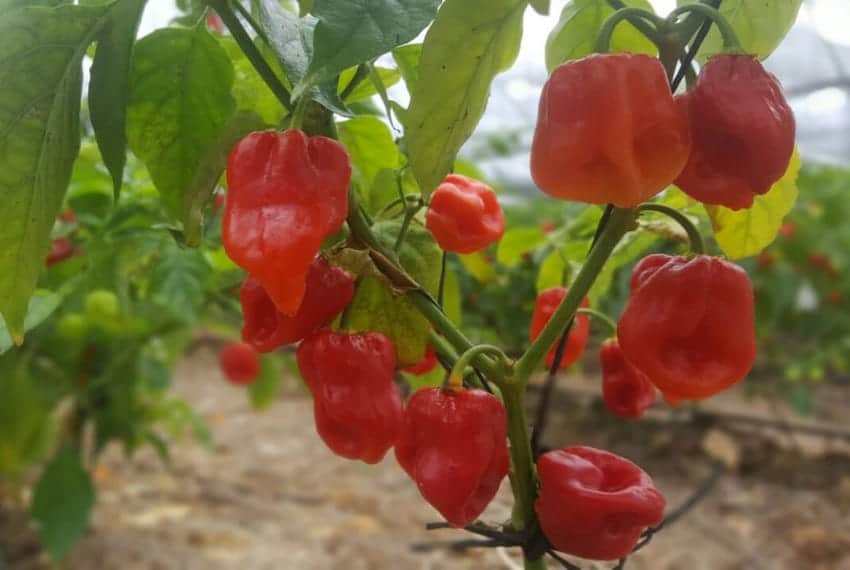
The governments of Mexico’s Yucatán, Campeche and Quintana Roo states have created a Peninsular Council for the Regulation of the Habanero to protect and strengthen the Designation of Origin (DoE) for the region’s famous chili pepper.
The council will be responsible for guaranteeing the traceability, certification and quality of habanero, as well as promoting it in national and international markets. The move is expected to strengthen producers’ competitiveness and generate greater marketing opportunities.
Governor of Yucatán Joaquín Díaz Mena and Governor of Quintana Roo Mara Lezama were joined by the Director General of the Mexican Institute of Industrial Property (IMPI) Santiago Nieto Castillo and other regional officials for the council’s inauguration in Yucatán’s capital of Mérida last week.
While the habanero has had DoE recognition since 2010, the three states did not decide to establish an official joint council until February 2025.
Providing a product with a DoE certification helps combat unfair competition and promotes awareness about its origin. In this case, it is expected to protect the Yucatán Peninsula against imitations and strengthen its commercial value.
“This Regulatory Council was created to protect what is ours, to give more value to the work of the producers and to ensure that future generations find prosperity in their own land,” Díaz Mena said.
“After 16 years, today the producers will have the certainty that the chili pepper’s flavor is what defines it; now there will be rules so that the three states can market this product in Mexico and abroad, but with its Designation of Origin,” said Lezama.

Yucatán produces 5,000 tonnes of the pepper each year, valued at approximately 131 million pesos (US $7.6 million); Campeche produces 3,300 tonnes (90 million pesos/$5.2 million), and Quintana Roo, around 1,000 tonnes (30 million pesos/$1.7 million), according to figures released in an official statement.
Earlier in May, the magazine Wired reported that researchers at the National Autonomous University of Mexico (UNAM) have identified alternative routes to reduce bacterial resistance by developing new antibiotics derived from habanero peppers, highlighting the chili’s promising potential for applications beyond salsa.
With reports from La Jornada and Wired