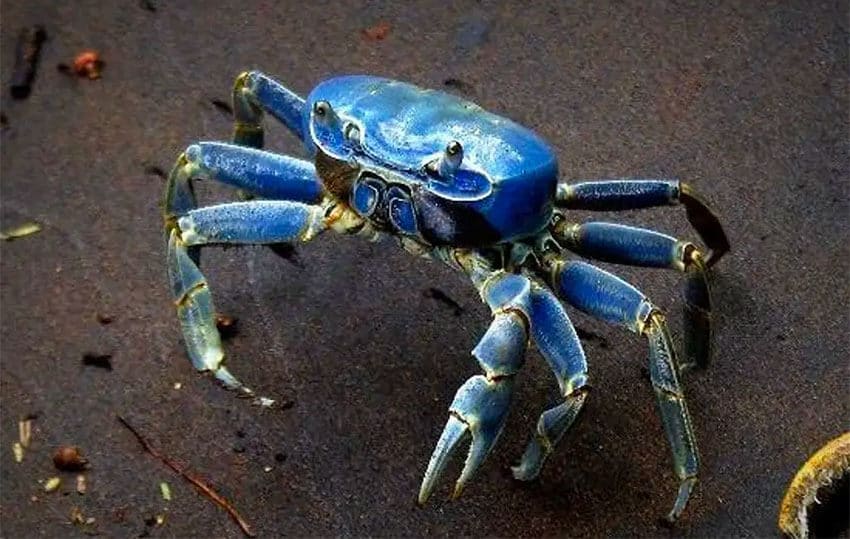
Some blue crabs in Veracruz are finding it hard to get from mangrove swamps to the sea due to the presence of recently-built houses on the coast, but residents and environmentalists are coming to their rescue.
It’s currently spawning season for female blue crabs, which leave mangrove forests when there is a full or new moon to deposit their eggs in the Gulf of Mexico. However, houses in new residential estates in the Riviera Veracruzana are blocking the path to the sea for some crabs.
One video filmed in an estate south of Veracruz city shows a huge number of blue crabs attempting to scale the wall of a home.
“The videos and photos are from the Punta Tiburón estate,” said Sergio Armando González, president of the environmental organization Earth Mission.

He said in an interview that his organization has been helping crabs get to the sea in that part of the Veracruz coast for the past five years. Last month, environmentalists and Punta Tiburón residents rescued 230 spawning crabs, González said, adding that their mass migration typically occurs after rainfall.
Some crabs never reach their intended destination as they are run over while crossing roads in the Riviera Veracruzana, which runs along the Gulf coast in the municipalities of Boca del Río and Alvarado. However, such incidents have become rarer because the Veracruz blue crab population has declined in recent years.

González said that environmentalists and housing estate residents will continue to rescue and relocate blue crabs until September, when the spawning season ends. Males and females that are not carrying eggs are returned to mangrove areas. Approximately 4,000 crabs were returned to mangrove swamps from the Punta Tiburón estate on Monday, González said.
He noted that it’s illegal to catch and consume blue crabs between August 15 and September 30, but advised against eating them at all times given that their numbers have decreased by 90% in Veracruz since 2015, according to data from the National Aquaculture and Fisheries Commission (Conapesca).
Anyone catching blue crabs for commercial purposes is required to have a Conapesca license, González said. Rescue efforts have led to a recovery of blue crab numbers in the Punta Tiburón area, but “unfortunately this isn’t seen along the entire Riviera” coast, he said.
With reports from Al Calor Político, XEU Noticias and Vanguardia de Veracruz