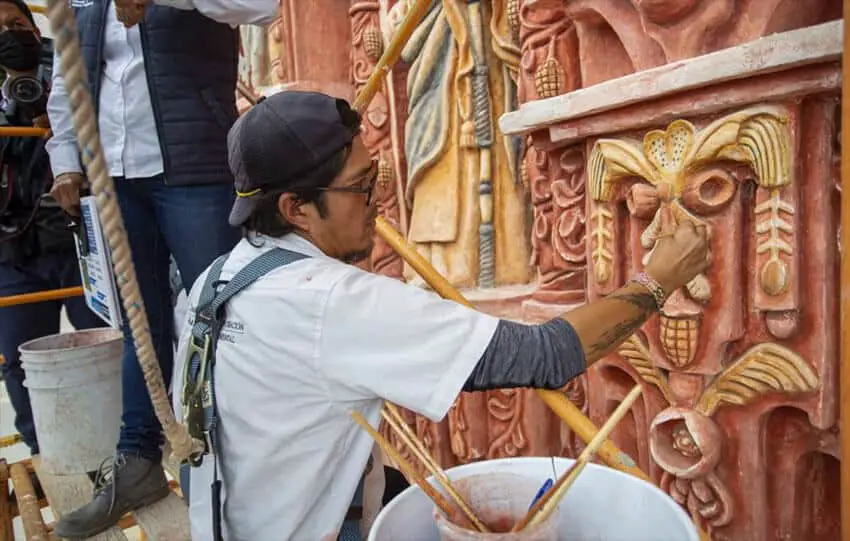
Restoration work is under way that the Santa Maria del Agua Mission in the town of Landa de Matamoras, Querétaro. The Franciscan mission was one of a series of five Catholic missions built between 1750 and 1770 as part of a grand plan to evangelize the native peoples of the hard-to-access region.
By the time the missions were built, the Spanish colonizers had had several setbacks with local populations destroying any structures or settlements they managed to establish in the region. Franciscan monk Junípero Serra is generally credited with the idea to build the five consecutive missions even though other monks, including Miguel de la Campa de Landa, were involved in their construction and management.
Serra is also said to have invested himself in the well-being of the local populations, their issues, and their health as a kind of early liberation theologist, but the historical record shows that most of the local communities were never fully subjugated by the colonialists or by the Catholic Church.
The Santa María del Agua Mission consists of a complex of buildings surrounded by an outer wall that encircles an open-air atrium with a raised cross at its center. The church itself, like its fellow missions, is known for its Mexican Baroque style and has an impressive facade that includes images of the angels, cherubs, apostles, and martyrs, as well as St. Michael the Archangel vanquishing the devil.
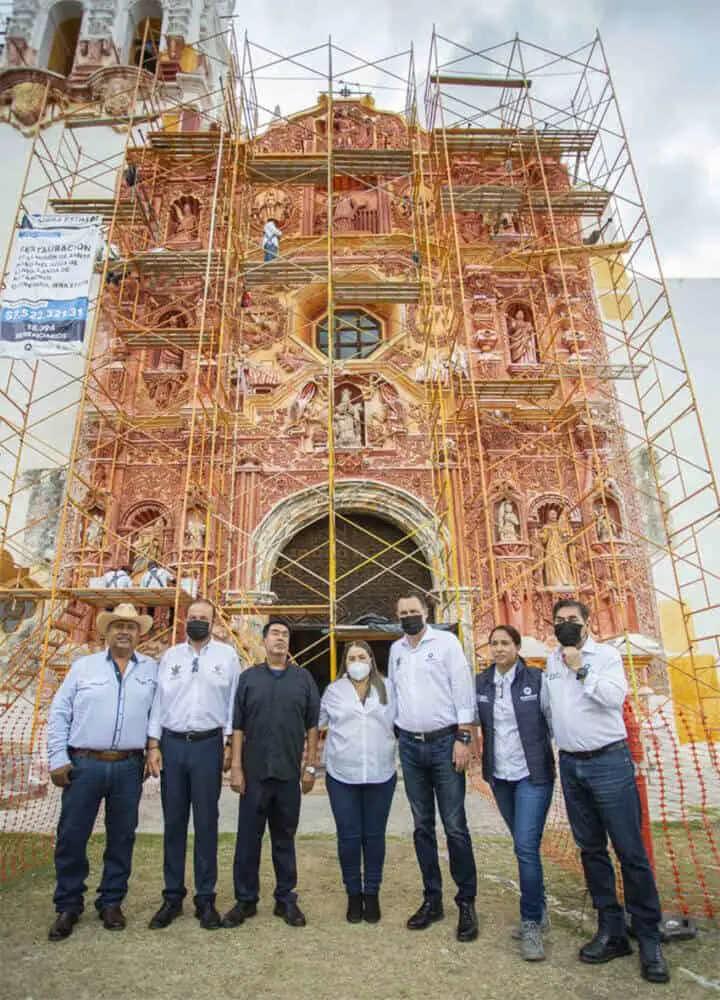
The 7.5-million-peso (US $376,000) government-funded restoration project required a particular amount of care and attention as the collection of missions was named a World Heritage Site by UNESCO in 2003. Local officials are hoping that the newly restored mission will draw even more religious tourists to this part of Querétaro state.
The area is also well known for the La Joya de Hielo, an area inside local communal lands that is home to 100-million-year-old marine fossils on public display.
With reports from Agencia Informativa de México