The Yucatán peninsula is home to one of the most unique local variations of Day of the Dead – Hanal Pixán, a Maya celebration distinct from celebrations held in other regions in Mexico.
What is Hanal Pixán?
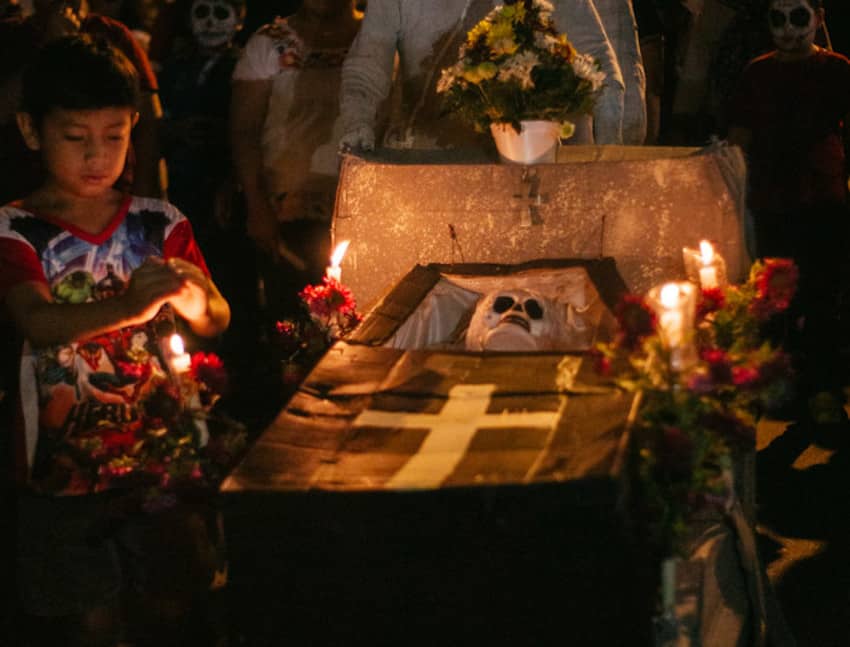
Hanal Pixán is a Maya tradition celebrated exclusively in the Yucatán peninsula. It means “food for the souls” and involves offering traditional foods to the deceased, who are believed to come back to visit their loved ones between Oct. 31 and Nov. 2.
The first day of the celebration is dedicated to remembering children who have passed away, while the second day is dedicated to adults. On the third day, a mass is traditionally held to honor all the deceased.
How are the rituals and traditions distinct from other regions of Mexico?
Unlike the rest of the country, where Day of the Dead is celebrated between Nov. 1 and 2, Yucatecan celebrations start earlier.
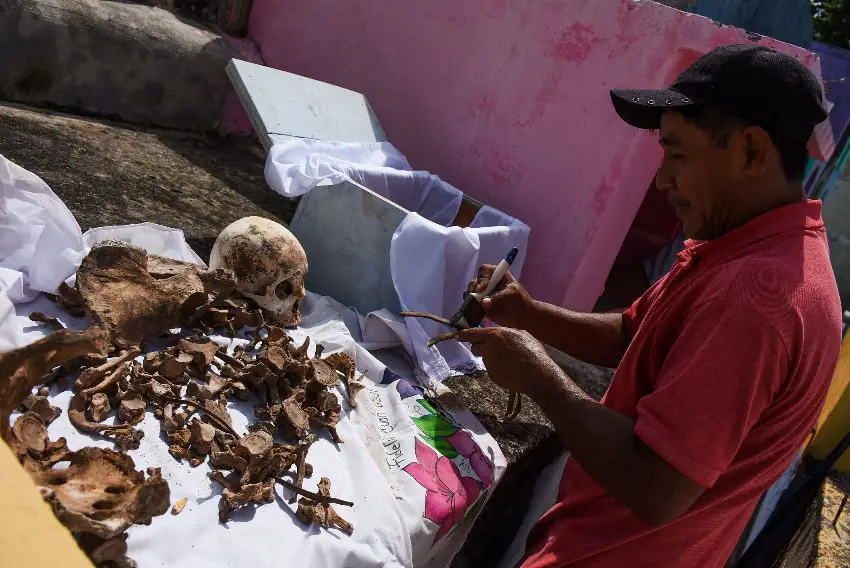
At the end of October, the residents of the town of Pomuch begin with a tradition known as “the cleaning,” an ancient practice that involves cleaning the bones of the dead and is a fusion of Maya traditions and Christian beliefs.
Another difference is where altars are set up. While in other regions of Mexico the altar is set up in cemeteries or in homes, people in the Yucatán place them under trees near the graves of their relatives.
These altars remain through Nov. 1 and 2, and when the souls of the deceased “have received grace,” their relatives eat “mucbipollos” (chicken tamales) and “pibinales,” (grilled corn) and drink atole and “balché” (an alcoholic beverage made of tree bark and honey).

One week after the festivities have ended, people place candles outside their front door to create a row of light to guide the deceased back to the underworld, in a ritual known as “dix.”

What events are held to celebrate Hanal Pixán?
El Festival de las Ánimas 2023 (Festival of the Souls) in Mérida takes place from Oct. 24 through Nov. 2. The program includes 30 free activities ranging from photography exhibitions, to guided tours of the General Cemetery, a honey fair, musicals, bike rides, a Maya ball game, and many more.
One highlight will be the Catrinas Parade on Oct. 28, through Paseo Montejo. The march will represent various Mexican art and dance personalities, like renowned Mexican illustrator José Guadalupe Posada, creator of La Catrina.
To close the celebration, the Broadway musical adaptation of “Coco” will take place at 8 p.m. at Parque Las Américas.
With reports from Yucatán.com.mx, Gobierno de Yucatán and El Financiero