Mexico has uncovered “the greatest archaeological treasure” of the last few decades, according to the head of the National Institute of Anthropology and History (INAH), the archaeologist Diego Prieto Hernández.
During the three years of construction on the newly opened Maya Train that runs through the southern states of Chiapas, Tabasco, Campeche, Yucatán and Quintana Roo, numerous valuable discoveries have been made.
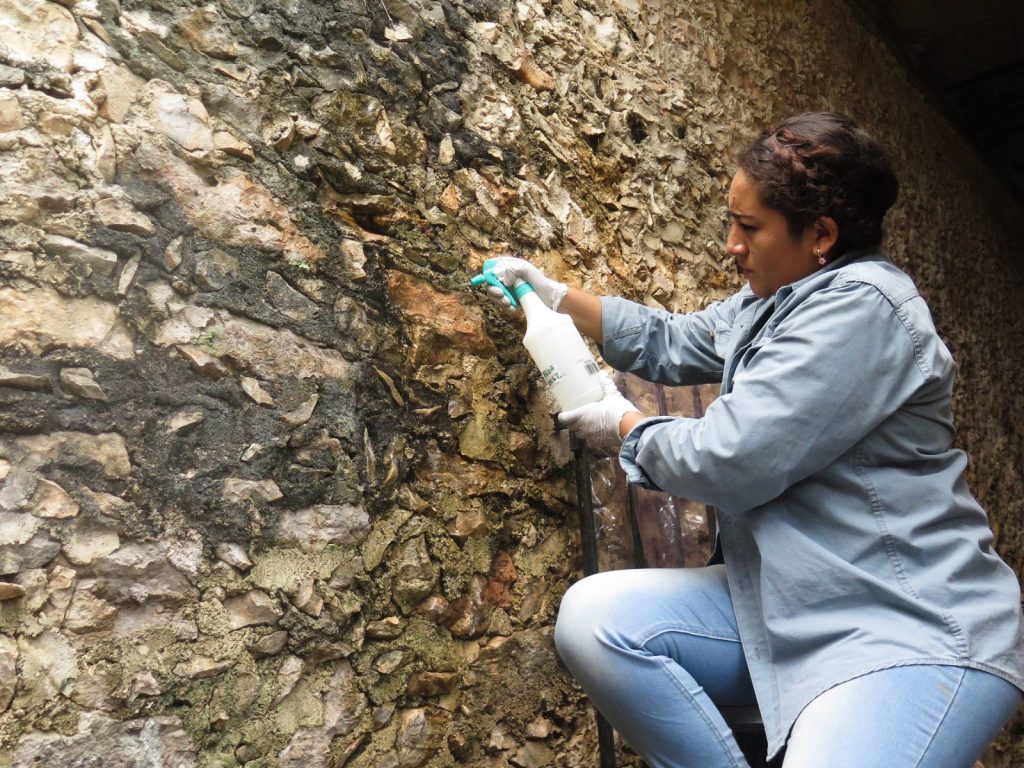
Important findings include a solar disk near Chichén Itzá, a sculpture of a corn god in Palenque, a dual Maya stela in Uxmal, the bas-reliefs of a captive taken by a dignitary in Ek Balam, funerary urns, a wealth of potsherds and other significant artifacts.
In a statement, the INAH said that 2023 was particularly “abundant in archaeological discoveries in the Mexican Maya region,” as it performed rescue work in 29 archaeological sites in the path of the Maya Train.
These discoveries have helped archaeologists recover “valuable information and materials that can contribute to a better understanding of the great Maya civilization, its various eras, cultural regions, and artistic and urban expressions,” the archaeologist added.
According to Prieto, the archaeological rescue work associated with the Maya Train has yielded more than 1.4 million ceramic fragments and over 50,000 movable and immovable objects, which include palaces and architectural structures.
He emphasized the significance of certain objects, such as the tomb of Pakal located in Chiapas, and an arrowhead that serves as evidence of an ancient cultural presence in the region.

He also highlighted the recently rediscovered city of Ichkabal, set to open to visitors in August.
These findings offer new information suggesting population density in Mesoamerica was higher than previous estimates, particularly in the north of Chiapas, the Tabasco jungle, the south of Campeche and the Yucatán Peninsula. The discoveries have also shed light on the intricate urban communication and trade systems that flourished in the region of Maya influence, spanning across Mexico, Guatemala, Belize, Honduras and El Salvador.
Prieto told local media that the found artifacts will aid the INAH in piecing together the social structures and beliefs of the ancient Maya, and have the potential to provide new insights into the history of an Indigenous civilization that has survived to this day.
This “unprecedented discovery,” as the INAH describes it, is only the beginning of a “comprehensive research and restoration process aimed at reclaiming Maya history,” Prieto said, noting the importance of preserving the archaeological materials and sites “for the benefit of future generations.”
The artifacts unearthed during the construction of the Maya Train will be exhibited at the Puuc, Dzibilchaltún and Chichén Itzá Archaeological Museums, as well as at the reimagined History of the Maya People Museum in Mérida, which is to be completed in the coming months.