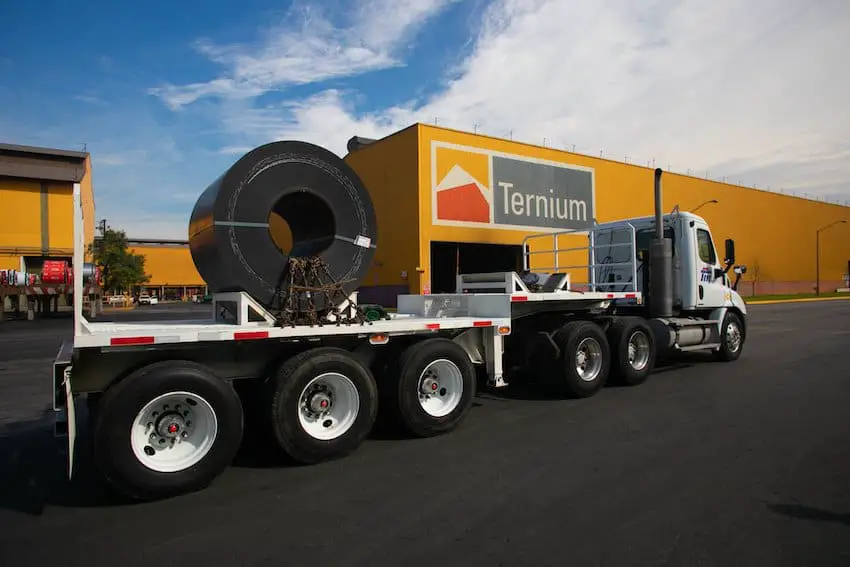
Ternium, one of Latin America’s leading steel companies, has announced a major investment in Mexico as part of an ambitious expansion plan to be completed in 2026.
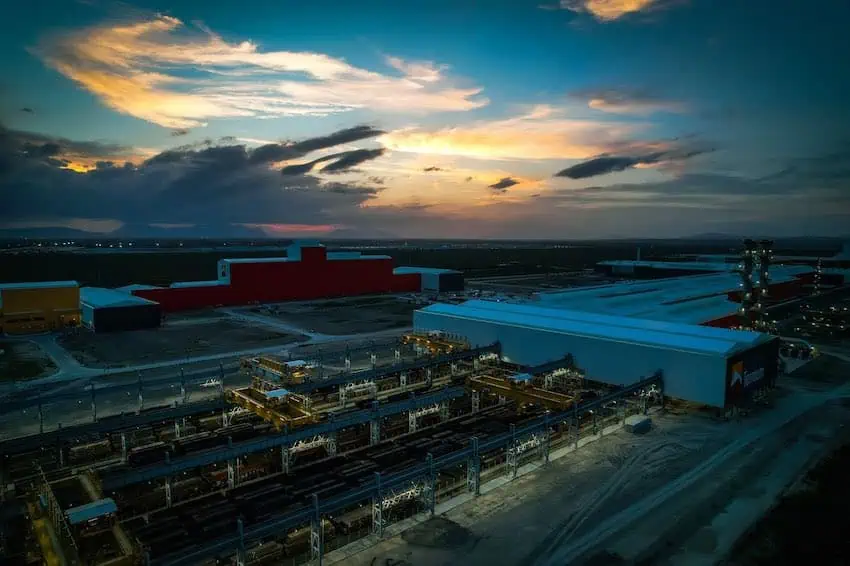
Amounting to US $4 billion, the announced investment will go towards building additional steel manufacturing plants in the northern municipality of Pesquería in Nuevo León. The new facilities will produce cold-rolled, raw and galvanized steel for the automotive, appliance, construction, electric motor, plumbing and train equipment industries, among others.
Ternium CEO Máximo Vedoya said he has already shared the investment plan with President Andrés Manuel López Obrador and president-elect Claudia Sheinbaum.
“We have already invested more than US $4 billion in certain plants [in Pesquería] and we’re now going to invest another 4 billion dollars in carrying out different processes,” Vedoya said in a press conference. He added that this investment will strengthen the value chain in North America, with the USMCA as its main driving force.
The move follows the ongoing construction of a Ternium steel mill in Pesquería which the company announced in March. This facility, once built, will have the capacity to generate 2.6 million tonnes of cast steel annually.
Ternium’s investment in Mexico seeks to add value to the country, Vedoya said.
“I’m convinced that in the North American region we have to work together, because the enemy is not the United States, not Mexico,” he stressed. “The enemy of Mexico and the United States are subsidies, and the aggressive policy of taking good jobs to Asia, mainly China and other satellite countries such as Vietnam and Malaysia.”

In February, official data released from the U.S. Census Bureau showed that Mexico surpassed China as its main exporter for the first time since 2002. However, experts pose that Mexico is in direct competition with Vietnam.
“Mexico is not going to supplant all those imports from China,” Alberto Villarreal, director of Nepanoa, a Chicago-based company that helps foreign companies expand to Latin America, told the newspaper El País. He added that Mexico is competing “at a global level for those exports with other economies in Asia such as Vietnam, the Philippines, Singapore, which is a much more developed country, and with India.”
For Vedoya, the USMCA is “a great treaty” for Mexico as it has helped the country increase its exports to the U.S. “This is what we need to continue to encourage,” he concluded.
Ternium, which employs 20,000 people, operates nine industrial centers in Mexico, six of which are located in Nuevo León. Founded in Argentina, the company has had a presence in Mexico since 2007.
With reports from Forbes México and Mexico Industry