“It’s a sad day for international trade,” said the economy secretary today, describing the United States’ announcement of metal tariffs against its trade partners as “completely incomprehensible.”
Ildefonso Guajardo pointed out in an interview today that Mexico actually buys more U.S. steel than it exports to that country.
Although the U.S. has said the tariffs are being applied for national security reasons, the economy secretary argued that steel and aluminum are integral supplies in highly integrated strategic sectors of the North American economy, such as the automotive, aerospace, electric and electronic industries.
The tariffs on steel and aluminum imports from Mexico, Canada and the European Union (EU), which had been granted a temporary exemption after they were announced two months ago, have now sparked fears of a full-scale trade war.
This morning, Mexico announced tariffs on U.S. goods in retaliation while the EU promised to do the same. European commission president Jean-Claude Juncker described the tariffs as “unjustified,” and said it would hit back with its own tariffs and take the issue to the World Trade Organization.
“This is protectionism, pure and simple,” he said.
The United Kingdom’s trade secretary said the tariffs were “patently absurd.”

In Canada, Prime Minister Justin Trudeau, who discussed the issue today with President Enrique Peña Nieto, announced tariffs of up to 25% on U.S. imports worth up to US $12.8 billion, the value of Canadian steel exports to the U.S. last year.
In Mexico, the economy secretary said care has been taken to impose retaliatory tariffs that will have an impact on regions of the U.S. with strong political influence. “They are products that have implications in some districts where there are important Representatives and Senators who have warned the Trump administration to be careful in its decision making . . . .” Guajardo said.
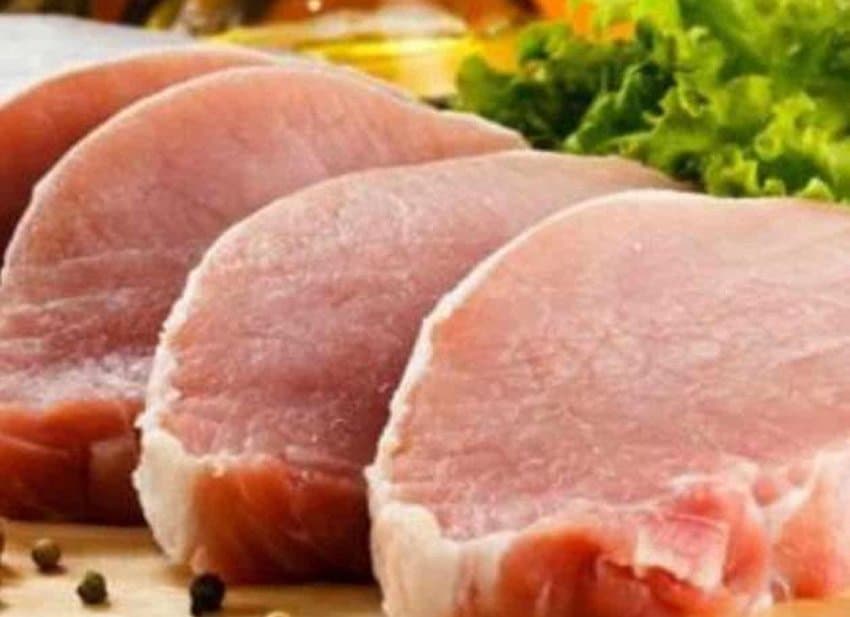
Among them are apples, pork bellies and flat steel.
His cabinet colleague Luis Videgaray, the secretary of foreign affairs, said Mexico “has its limits” but its position on various themes in which it cooperates with the U.S. will not change because of “offensive rhetoric or unjustified measures” such as the tariffs.
Nor will trade talks be affected, although Guajardo recognized there will be more tension at the table. Renegotiating the North American Free Trade Agreement will continue, he said, but he did not expect an agreement to be finalized before the July 1 presidential election. Last week he predicted there was a 40% chance of doing so.
One effect of today’s developments was further pressure on the peso, which fell to its weakest level in 15 months. The interbank rate dropped 0.93% to 19.91 pesos to the dollar, while banks were selling pesos for as much as 20.35 to the dollar.
The peso has dropped 6.4% in May, the biggest monthly decline since November 2016 after Donald Trump won the U.S. presidential election.
Source: The Guardian (en), Milenio (sp), Reforma (sp)
CORRECTION: The photo that originally appeared with this story showed not pork but beef steaks. The photo editor, by no means a vegetarian, regrets the error.