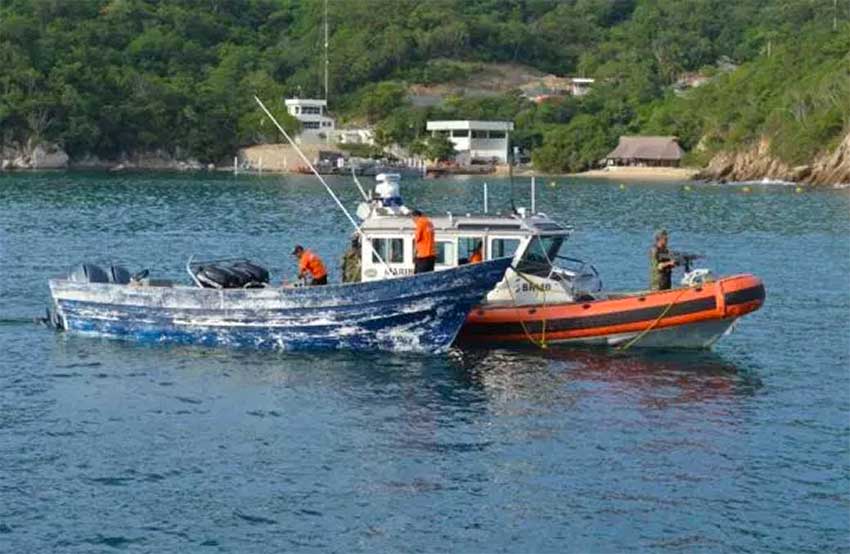
An aerial patrol off the coast of Puerto Escondido, Oaxaca, led to the arrest of five men aboard a small boat carrying 3,000 liters of fuel.
A statement issued by the Navy Secretariat (Semar) said a patrol detected a “go-fast” boat carrying a suspicious cargo about 137 kilometers to the southwest of the resort town.
A navy vessel, an airplane and helicopter were deployed to intercept and secure the boat, “and thereby prevent presumed criminal activity,” said Semar.
The navy said that as marines approached the high-speed boat, its occupants threw their illicit cargo overboard.
Marines arrested the five men, all Mexicans, and secured 44 plastic fuel containers.
The occupants of the boat were unable to show any documentation or justification for their cargo, leading authorities to presume that the fuel “was to be used to supply vessels performing illicit acts at sea, specifically those transporting illegal cargo.”
The navy said in July it had identified fuel storage facilities at distinct locations on the Pacific coast. It suspects their purpose is to supply drug smugglers traveling up the coast in international waters.

Source: El Universal (sp)