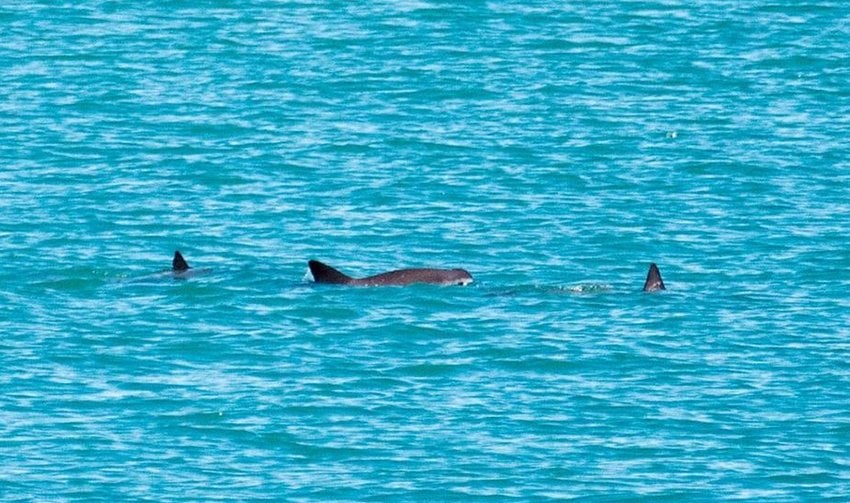
An expedition to investigate the dwindling vaquita porpoise population sighted three different groups of the mammals — including calves, raising hopes about its future.
There were estimates last year that only 30 specimens of vaquita remained in the wild, but the monitoring conducted between September 24 and October 4 in the Upper Gulf of California gave specialists clear evidence that the species continues to reproduce.
Between seven and 10 vaquita specimens were seen at three different times, and all were in excellent health.
A female vaquita and its calf were sighted on September 25 and two days later two adult vaquitas were seen. A group of four to six animals, including a calf, was sighted the following day.
The information gathered during the 10-day expedition led specialists to hypothesize that the porpoise might reproduce every year instead of every second year as was previously thought.
So far all the vaquita deaths recorded have been caused by fishing. Eliminating the fishing nets would guarantee the vaquita’s recovery, according to Diego Ruíz Sabio, director of the La Paz Whale Museum.
He and Armando Jaramillo Legorreta of the National Institute of Ecology and Climate Change agree that the illegal fishing of totoaba, in which organized crime is involved, has withstood official efforts to stop it.

They said now is a good time to prohibit fishing vessels from the vaquita’s habitat because the totoaba fishing season is about to begin.
The Mexico chapter of the World Wide Fund for Nature (WWF) said yesterday it will continue working with local fishing communities to remove abandoned or lost gillnets in which the vaquitas get trapped and drown, and in designing alternative fishing techniques, tasks also undertaken by the La Paz Whale Museum.
Source: El Financiero, Animal Político (sp)