President-elect López Obrador has pledged that his government will maintain macroeconomic stability and not put Mexico into debt while fulfilling its campaign commitments.
The leftist political veteran, who will be sworn in as president on December 1, made the promises in a video message uploaded to social media in which he looked ahead to expenditure that will formally be announced in the 2019 federal budget.
“We’re going to fulfill our campaign commitments. Income will be sufficient to finance the budget and spending next year. We’re going to maintain macroeconomic stability, in other words, we’re not going to spend more than what comes in, there won’t be a deficit, we’re not going to put the country into debt, debt isn’t going to grow in real terms,” López Obrador said.
The president-elect said there are five expense items that absorb a large part of the budget but are “untouchable.”
They are overall debt, debt from previous fiscal years (known as ADEFAS), personal services including remuneration of government officials, old-age pensions and budgetary allocations to state and municipal governments.
Together the five items have a projected cost of more than 3.6 trillion pesos (US $182 billion) next year, 153.7 billion pesos (US $7.7 billion) more than the budget approved for this year.
However, López Obrador said that combating corruption will enable the new government to put an end to “leaks” in the budget and make significant savings.

“A lot of money goes down the drain of corruption,” he declared.
The president-elect, who will head a government led by the leftist Morena party, previously announced that seven urgent infrastructure projects will be prioritized with an investment of 500 billion pesos (US $24.9 billion).
They include building the Maya train on the Yucatán peninsula, developing a trade corridor in the Isthmus of Tehuantepec region and earthquake reconstruction.
The president-elect has also announced a plan to “rescue” the energy sector which includes building a new 160-billion-peso (US $8-billion) refinery and upgrading the six existing ones.
Earlier this week, López Obrador said the decision to cancel the new Mexico City International Airport will save the federal government around 100 billion pesos (US $5 billion) and that converting the Santa Lucía Air Force Base for commercial aviation will cost 70 billion pesos (US $3.5 billion).
The decision was slammed by business leaders including Mexican Employers Federation (Coparmex) president Gustavo de Hoyos, who said killing the airport would be “the biggest waste of public resources in the history of the country.”
With regard to the next federal budget, De Hoyos said that López Obrador must ensure that three essential criteria are met: don’t increase debt, maintain the primary surplus and don’t raise taxes.
“The most important thing is for the federal budget . . . to be balanced . . .” he told the newspaper El Financiero after López Obrador’s video message was published.
Some financial analysts and Mexican media have speculated that the López Obrador government could seek to use Bank of México international reserves to fund public spending and investment and even hold another public consultation to greenlight the idea.
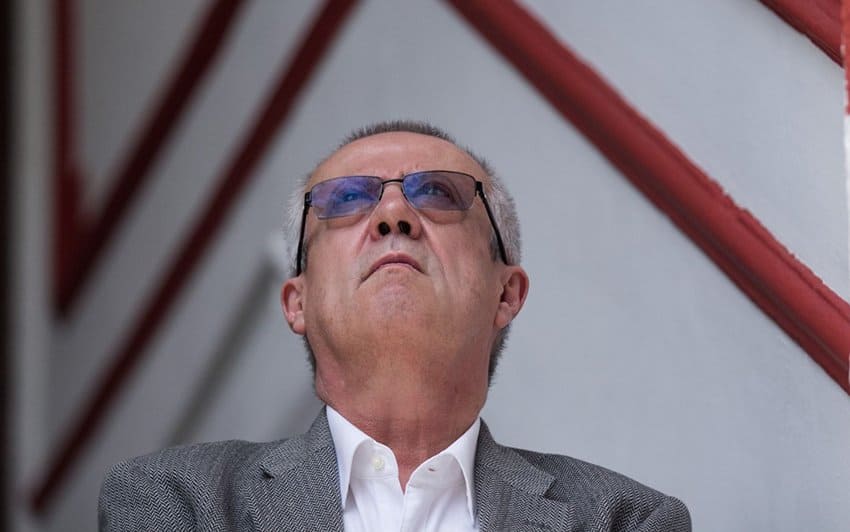
But future finance secretary Carlos Urzúa yesterday rejected the claims.
“No, no, no, the international reserves won’t be touched, they’re the central bank’s,” he said.
Source: El Financiero (sp)