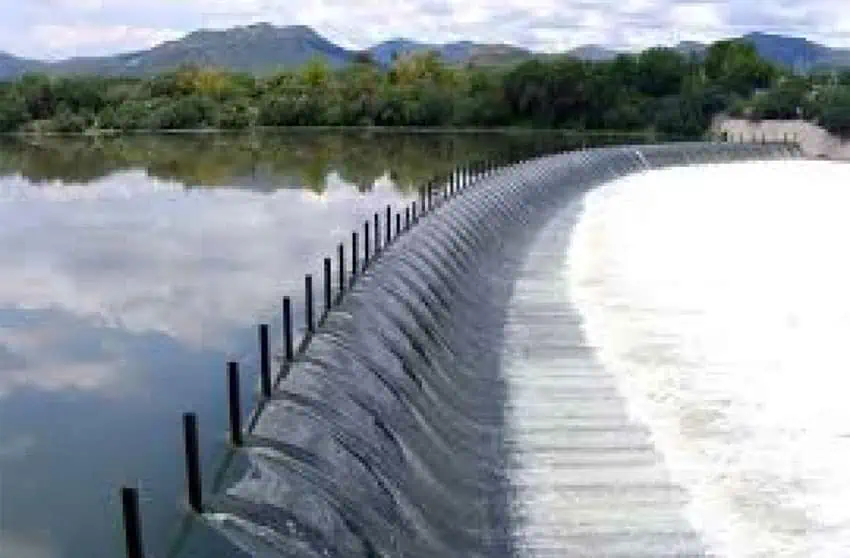
Wastewater from the Mexico City metropolitan area and local industry have led to high levels of pollution in the Endhó reservoir in the state of Hidalgo, amounting to an “environmental emergency” for the inhabitants of nearby communities.
The Secretariat of the Environment and Natural Resources (Semarnat) said it will ask President López Obrador to declare the reservoir an ecological restoration area.
According to a Semarnat report, communities in the municipalities of Tula and Tepetitlán are at risk because they rely on the reservoir for potable water.
It receives wastewater from Mexico City’s central drainage system as well as from nearby industry, including the Atitalaquia Industrial Park.
“We are facing an emergency situation: of the 11 potable water wells, three have higher than recommended levels of barium and phenols, eight exceed lead levels and four exceed those for arsenic,” the Semarnat report says.
A study by the National Water Commission also found that the reservoir has above-regulation levels of arsenic, mercury and magnesium. Fecal coliform levels are 24 times higher than the recommended limit.
Federal Environment Secretary Víctor Toledo blamed the problem on the “neoliberal model,” which he promised to end when he took office.

“The Tula region faces problems related to the presence of several industries related to the Pemex refinery, but also to four cement plants and three lime plants,” he said. “The reservoir receives wastewater from Mexico City, and it’s in a deplorable situation. There are 175,000 people who live in the region, of whom 5,000 are indigenous.”
Semarnat has not decided how much money will be spent on the restoration program, nor what criteria would be used to determine that the reservoir has been restored, because the design of the program is just starting. Toledo added that Semarnat will convene a meeting of everyone responsible for the environmental damage to determine a plan of action.
Source: Reforma (sp)