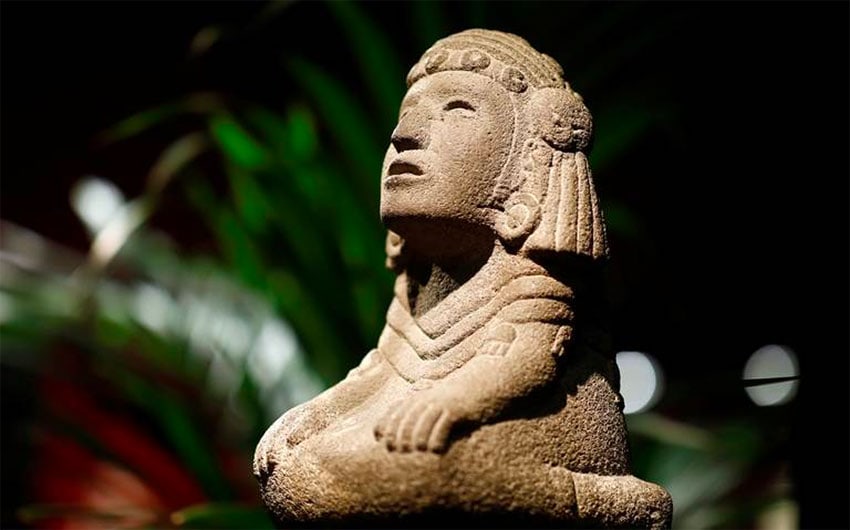
An auction of 120 supposedly pre-Hispanic artifacts went ahead in Paris, France, Wednesday over the objections of the Mexican government.
According to Mexican experts, only 72 of the 95 pieces were confirmed as Olmeca and Mayan originals from the states of México, Guerrero and Oaxaca. The rest of the lot was believed to be made up of recently fabricated fakes.
The Mexican ambassador to France sent a letter to the auction house Millon requesting the restitution of the original pieces to Mexico and the cancellation of the auction. The letter from Juan Manuel Gómez Robledo also alerted the company to the likely dubious provenance of the recently manufactured pieces.
For Gómez, the cancellation of the sale would be “a first step toward the restitution of the authentic cultural property of Mexico.”
“This type of commerce promotes the pillaging, illegal trafficking and imitation practiced by transnational criminal organizations,” he said, lamenting that the pieces would be turned into “simple objects of decoration.”
But the sale by the auction house Millon went ahead anyway. Star of the sale was a statue of the Mexica goddess Chalchiuhtlicue, which sold for US $416,000, five times more than expected. Another goddess sold for $107,000.
In total, the auction generated $1.3 million in sales.

Last week, Guatemala announced that Millon had agreed to suspend the sale of one of its pre-Hispanic pieces after its government expressed opposition.
Gómez emphasized that the government of President López Obrador considers Mexico’s cultural heritage to be one of its “priorities in international politics.”
He stated that the attorney general sent France’s ministry of justice a request that it cooperate in criminal matters, while at the same time the government alerted UNESCO of the need to confirm the provenance of the pieces.
The latter urged that Millon postpone the event to allow it to do so, but the auctioneers were determined to go ahead. Alejandre Millon congratulated French authorities for their “serenity” in light of “media pressure.”
Source: El Economista (sp), AFP (sp)