What a difference a century makes. In the 19th century, the Pacific Coast of Baja California Sur (BCS) was a hunting ground for whalers. Indeed, some of the most notable early immigrants to what is now Los Cabos were deserters from whaling ships who married into local families. As historian Pablo L. Martinez pointed out in his “Guia Familiar de Baja California, 1700-1900”:
“In the southern tip (of the Baja California peninsula), most of the immigrants were fugitives of the whale fishing ships who escaped from the terrible life they endured aboard such ships. Nowadays, the regional inhabitants call them pirates, which is not correct. Many years ago, six young fellows deserted their whaling ship. They were of the following family names: Hastings, Collins, Leggs, McClish, Gavarine and Robinson.” Others bearing surnames like Green and Ritchie followed.
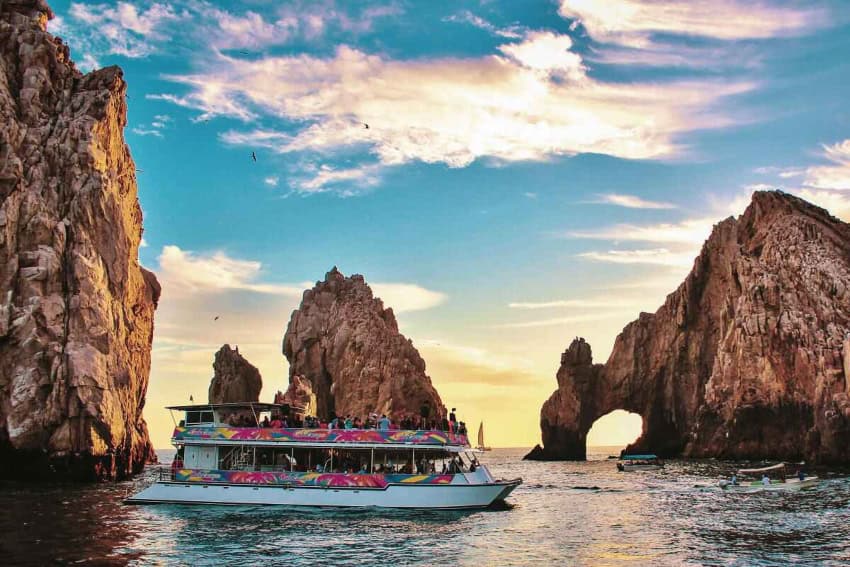
By the late 20th century, however, there had been a sea change in attitudes and a nascent whale watching industry had taken root in Los Cabos. Rather than being hunted, whales were now protected by law and even the season during which tours could occur was regulated.
How long does whale watching season in Los Cabos last?
Yes, that season has arrived. The 2025-2026 whale watching season in Los Cabos begins on Dec. 15 — meaning that’s the day when local tour operators can officially begin taking out tourists aboard boats to see whales — and runs for a full four months, until April 15. The whales themselves, which typically feed in Arctic waters during the summer months before heading south during winter to breed in shallow water coves around BCS, have been seen in local waters since early November, and may be gone by April.
But the dates for whale watching season remain the same regardless and it’s now a big business locally, with tens of thousands of tourists participating in some type of whale watching experience each year.
When are the peak months for viewing?
No guarantees are given when it comes to whale watching tours. The whales do what they want. But from January to March, the peak of whale watching season, it’s a rare tour that doesn’t see some of the whale species that transit Los Cabos this time of year, which include blue, bryde, fin, gray, humpback, minke, orca and sei whales.
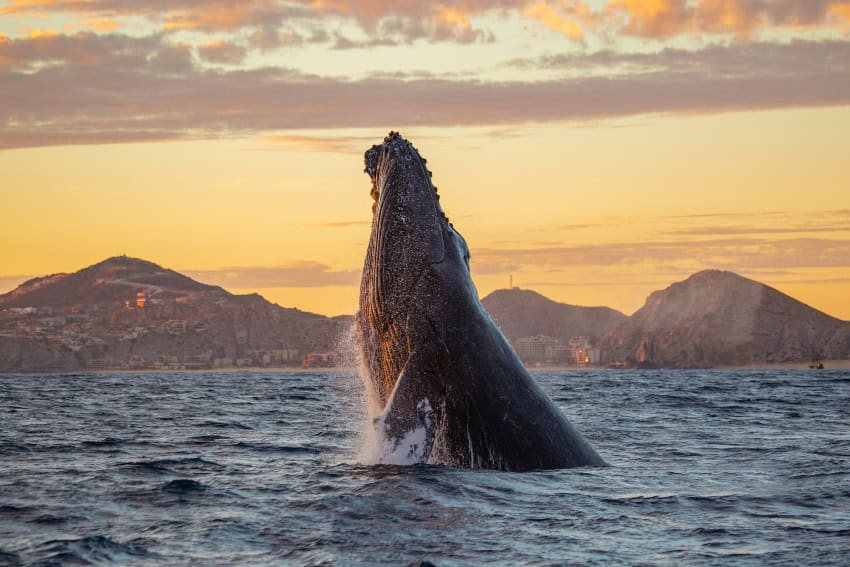
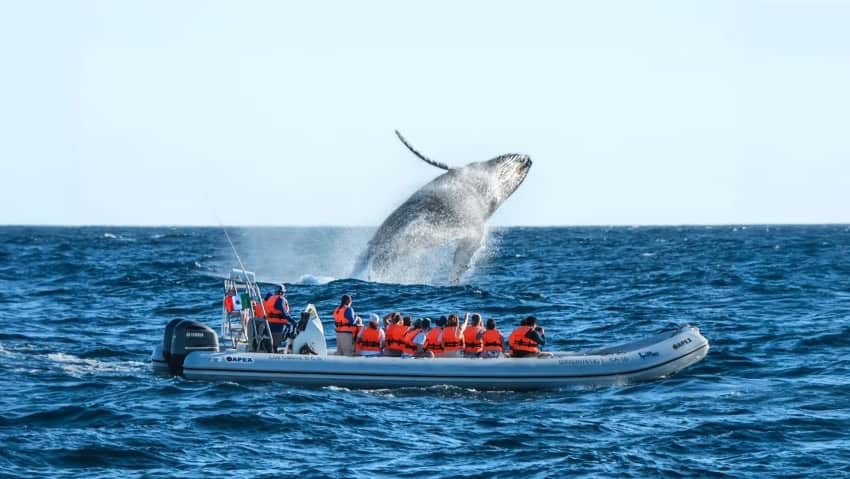
Gray and humpback whales are the most commonly sighted, however, and humpbacks are the most memorably photogenic, thanks to their propensity for spectacular breaching behavior, in which they lift nearly the entirety of their up to 40-ton bodies out of the water before splashing down.

What are the restrictions for tour operators?
Rest assured: whales aren’t harassed by tour operators, even though nearly every tour boat in the Cabo San Lucas marina has the proper permits to offer daily whale watching excursions, as do some from the Puerto Los Cabos marina in San José del Cabo. But legal restrictions ensure that all boats remain a certain distance from the whales (60 to 80 meters, or about 200 to 250 feet, depending on the boat’s size), and do nothing that might frighten or annoy them.
Of course, the whales are unfamiliar with such regulations and can occasionally come up for air much closer to boats. But Los Cabos is not Magdalena Bay, where gray whales will sometimes approach tourists for more intimate interactions.
Still, Los Cabos is a remarkable place for whale watching — as many as 5,000 whales transit the area annually — even for those who aren’t on tour boats, as enormous cetaceans can often be seen from coastal restaurants or golf courses, like those captured on-air during the recent World Wide Technology Championship.
Swimming with orcas in La Ventana
Whale watching in Los Cabos is a bucket-list activity of the first order, but hardly the only seasonal one within a couple of hours of drive time. This year, for example, BCS became the first state to legalize swimming with orcas, although only in La Ventana, a small town about 30 miles southeast of La Paz on the Gulf of California, or as it is known locally, the Sea of Cortés.
This type of tourism is restricted, too, with the zone off La Ventana for orca encounters encompassing 110,000 hectares and the number of boats capped at 24 daily, now through this summer, when presumably restrictions will evolve based on how the pilot program for this season goes. Tours and round-trip transportation from Los Cabos are available via companies like Cabo Adventures, although due to the travel time, it bears noting that this is at least a six-hour time commitment.
Swimming with whale sharks in La Paz
For years, swimming with whale sharks — not actually a whale, but a massive plankton-eating shark and, at up to 30 tons, the world’s largest fish — has taken place off the coast of BCS’ capital city, La Paz, and has also been a bucket-list vacation activity for tourists. But due to declining numbers of the species regionally, these tours were suspended in February 2023, and again from January 2025 through the completion of last season (whale shark season runs annually from October through May).
The activity has reopened, however, for the new season after enough whale sharks were spotted in November to meet the threshold for tours to commence. But conservancy remains a priority for what is, after all, an endangered species, so there’s always the possibility that these tours are suspended again, something visitors should keep in mind before booking too far in advance.
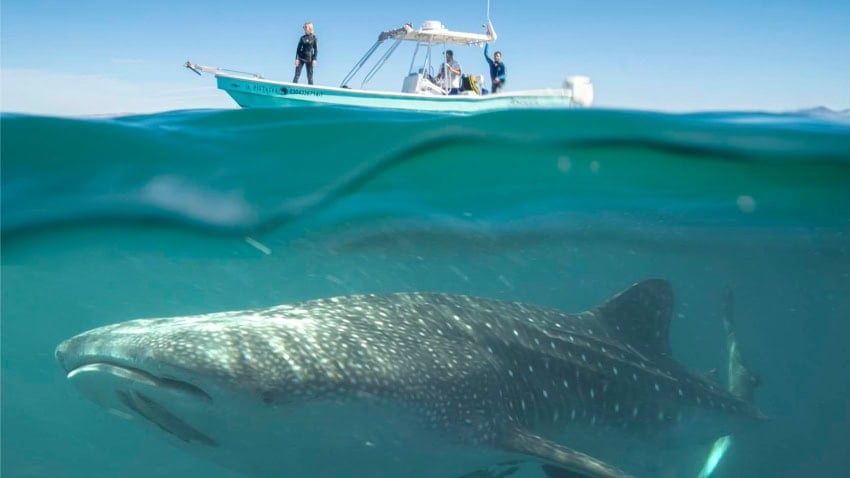
Here, too, there are legally mandated requirements for boats and group size (no more than 36’ in length and 5 per group, respectively), and for distance, with swimmers obliged to stay at least six feet away from the body of whale sharks, and for their own safety, at least 10 feet away from the tail.
Chris Sands is the former Cabo San Lucas local expert for the USA Today travel website 10 Best and writer of Fodor’s Los Cabos travel guidebook. He’s also a contributor to numerous websites and publications, including Tasting Table, Marriott Bonvoy Traveler, Forbes Travel Guide, Porthole Cruise, Cabo Living and Mexico News Daily.