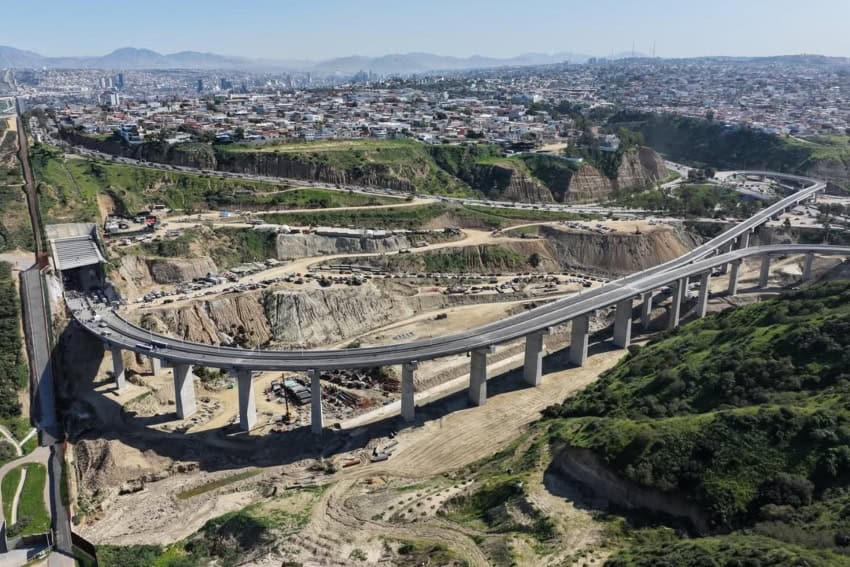
Baja California always welcomes visits from the President of Mexico, not only for reasons of patriotism, but because such visits invariably herald the ribbon-cutting on some significant new project. That was certainly the case when President Sheinbaum visited Tijuana on Friday, Jan. 30, 2026, to inaugurate the first stage of the city’s new toll-free elevated highway, or Viaducto Elevado.
First phase of the new elevated highway completed in Tijuana
The goal of the 11.3-kilometer (seven-mile) elevated highway between Playas de Tijuana and Tijuana International Airport is to increase connectivity while simultaneously reducing traffic congestion among key points in Tijuana, notably the San Ysidro border crossing and downtown Tijuana, which lie between the two endpoints.

Tijuana, it must be remembered, is not only the “Gateway to Mexico” but a key cog in the CaliBaja mega-region, which sees US $200 million in cross-border trade daily and $70 billion yearly. So, more efficient traffic is not only good for the state of mind of motorists but also beneficial for the local economy.
The 14 billion peso project (approximately US $800 million) was originally greenlit by Sheinbaum’s predecessor, Andrés Manuel López Obrador, in 2023. But after three years of planning and construction, and the creation of more than 6,400 direct and indirect jobs, the first 7.2-kilometer (4.5-mile) phase of the highway wasn’t completed until Sheinbaum’s time in office. In fact, she was one of the first to drive on the just-completed first phase during her recent visit, which stretches from Playas de Tijuana to near the border crossing, with two lanes now open in either direction.
Phase two update and a political point to make
The second 4.1-kilometer (2.5-mile) phase from the border crossing to the airport is expected to open within the next month.
The first word in Viaducto Elevado refers, of course, to the bridge support for the elevated highway, a fact which led to a memorable quote from Mexico’s president at the inauguration, and one surely made with the U.S. president in mind. “For Mexicans, bridges are always better than walls. Building bridges is our principle.”
New luxury hotel to open in Valle de Guadalupe
Valle de Guadalupe is the wine capital of Mexico, the premier wine-producing valley among seven in the state that accounts for 70% of the nation’s total. But it’s not just fine wine that makes Valle de Guadalupe such a special place, or such an attraction for tourists. It’s the food pairings available at some of the region’s and the nation’s best restaurants, including five with Michelin stars.

Valle de Guadalupe receives the majority of the one million or so tourists who visit Baja California wine country each year, a number that has increased significantly in recent years. About 35% of these tourists are international, with most coming across the border from Southern California and beyond on weekends — Valle de Guadalupe is only about 90 miles by car from San Diego.
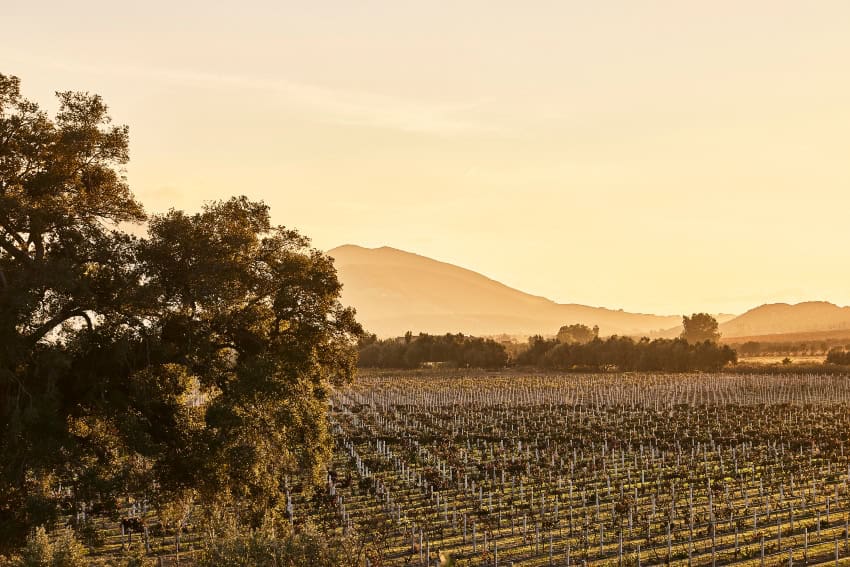
Those seeking fine lodgings on such trips will have a luxurious new option in the coming years: the Montage Valle de Guadalupe. The 62-room property with exclusive hillside, vineyard and private wine estate residences is due to open within the grounds of Bruma Wine Resort in 2028, it was recently announced.
When complete, it will be the second Montage property in the Baja California peninsula, joining the acclaimed Montage Los Cabos, which opened in 2018. Montage properties are also located in Punta Mita and Mexico City.
Amenities and attractions
Many amenities will be offered at the new resort, including a signature restaurant, a Spa Montage with fitness center, a sports center, bars and lounges, and a 4,000-square-foot wedding lawn, among other expansive event spaces. However, given the setting in the heart of Baja wine country, the most eagerly anticipated attractions will likely be those that come in a bottle, or at least are wine-related.
Bruma Wine Resort, one of the more recent of the valley’s 150 or so wine producers — it opened in 2017 — has established a strong reputation for its red, white and sparkling wines, thanks to the efforts of winemaker Lulú Martínez Ojeda. Although born in Ensenada, she received her wine education in Bordeaux, training at Château Brane-Cantenac. Meanwhile, on-site restaurant Fauna, helmed by chef David Castro Hussong and pastry chef Maribel Aldaco Silva, has been ranked among Latin America’s 50 Best Restaurants.
Carnival planning in Ensenada
Ensenada and La Paz are the most significant sites for pre-Lenten Carnival celebrations on the Baja California peninsula — both drew over 200,000 attendees in 2025 — with traditional parades and related events in the cities dating back to the late 19th century. Ensenada’s Carnival, for example, has been held since 1891, when the town had only about 600 residents.
Unusually this year, the dates for Carnival in Ensenada have been moved back from Feb. 12-17 — traditional across the Catholic landscape in 2026 — to March 12-17, in the midst of Lent. According to the Ensenada Municipal Institute of Culture, Arts and Humanities (IMCUDHE), the change of dates was made in the interest of logistics and coordination, so that there was more time to finalize contracts, schedule parades and lock-in performers.

As always, there will be parades and floats, king and queen contests, nightly concerts and the opening “burning of bad mood” in which an effigy is burned to clear away any negativity or bad vibes.
Those aiming to attend Carnival in La Paz in Baja California Sur, by contrast, should note that its dates remain Feb. 12-17.
Chris Sands is the former Cabo San Lucas local expert for the USA Today travel website 10 Best and writer of Fodor’s Los Cabos travel guidebook. He’s a contributor to numerous websites and publications, including Tasting Table, Marriott Bonvoy Traveler, Forbes Travel Guide, Porthole Cruise, Cabo Living and Mexico News Daily.