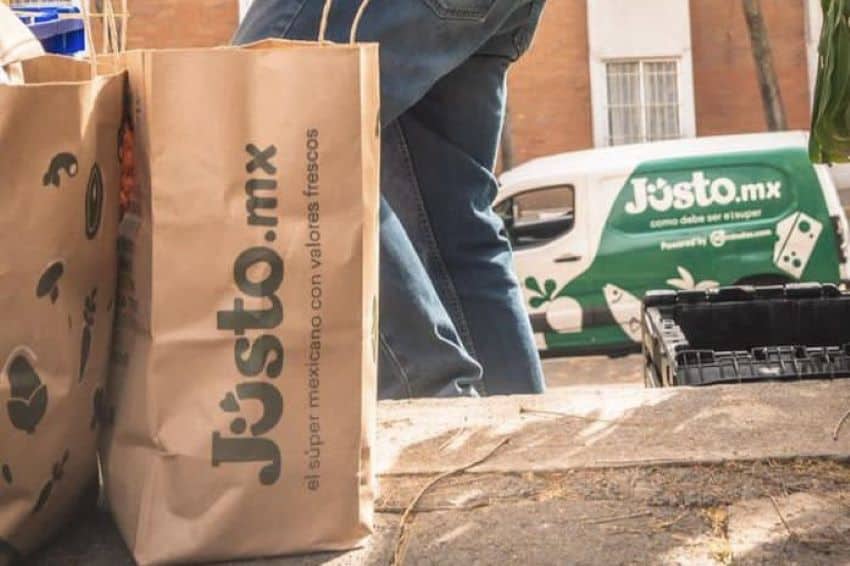
Mexican digital supermarket Jüsto recently announced its plans to partner with Amazon to offer Jüsto’s products on the e-commerce giant’s platform in Mexico.
Shoppers at Amazon will soon be able to purchase grocery items ranging from fresh produce to meat, fish, dairy and household products.
Ver esta publicación en Instagram
Deliveries will be handled by Jüsto from its distribution center in Mexico City’s southern borough of Coyocacán. In the beginning stage, Jüsto will fulfill orders via Amazon in select neighborhoods in the southern part of the capital. Eventually, the service will be available in every city where Jüsto operates.

“The idea is to continue accelerating our operational processes and our technology, but also to expand,” said Ricardo Weder, founder and CEO of Jüsto in an interview with the news magazine Expansión.
“At Amazon México, we are committed to offering our customers an exceptional shopping experience, with a wide selection of products, low prices and great convenience, to become an increasingly complete option for customers in Mexico,” Pedro Huerta, country manager at Amazon México, said in a press release.
Amazon’s first-ever collaboration with a 100% digital supermarket
The move is part of Amazon’s broader global strategy to increase its market share in the grocery industry.
Amazon’s fresh food and grocery service (dubbed Amazon Fresh) has partnered up with supermarkets and food suppliers in other parts of the world. The company’s best-known partnership is with Whole Foods, which they eventually acquired. In an interview with Expansión, Huerta said this partnership has helped Amazon expand throughout the U.S.
In the United Kingdom, Amazon partnered up with Morrison Supermarket and with Lulu Group in the United Arab Emirates. However, the partnership with Jüsto is Amazon’s first-ever collaboration with a 100% digital supermarket.

“In Mexico, we decided on this strategy because we found a startup that fits very well with our consumer vision, and that also has the required technological skills to operate,” Huerta added.
Through Amazon, customers will have access to Jüsto’s 7,000 products, including the digital supermarket’s private-label products. Orders will be placed via a dedicated storefront on Amazon’s platform, requiring a minimum purchase of 500 pesos (US $24.9), while free shipping will be available for orders over 1,000 pesos (US $48.59), once per month. Amazon Prime members will benefit from exclusive deals.
Jüsto is Mexico’s first fully online supermarket. Founded in 2019 by Ricardo Weder, the company offers products by local producers without intermediaries. It currently operates in Mexico, Brazil and Peru.
In April 2022, the Mexican unicorn raised a round of investment for US $152 million to boost its expansion plans. By 2030, Jüsto seeks to become Latin America’s leading online supermarket.
With reports from Expansión, Wired en Español and Business