Business confidence in Mexico fell to its lowest level in three years, according to the results of a survey conducted by the national statistics agency INEGI.
The survey results demonstrate that internal and external uncertainty is negatively affecting the perception of Mexico’s business leaders. Economic weakness (Mexico posted just 0.7% growth in 2025), inflationary challenges and anxiety over the scheduled review of the US-Mexico-Canada trade agreement were likely contributing factors.
Using seasonally adjusted figures, INEGI’s Global Business Confidence Opinion Indicator (IGOEC) suggested that those surveyed were pessimistic about the economy.
The January 2026 results showed the IGOEC stood at 48.0 points, 0.2 points less than in December 2025 — the fourth consecutive monthly decline — and a 3.4-point decrease year-on-year, the 21st straight annual decline. The last time it dipped this low was in December 2022 (47.4 points).
The indicator has now remained below 50 points (which, according to INEGI, is the threshold for pessimism) for 11 consecutive months.
The IGOEC is compiled via a Monthly Business Opinion Survey, in which business executives in the manufacturing, construction, trade and private non-financial services sectors evaluate the economic situation of the country and their companies. The responses are weighted by sector.
Each respondent is asked how they feel about: 1. The current investment environment; 2. The current economic situation of the country; 3. The future economic prospects of the country; 4. The current economic situation of their own business; 5. The future economic prospects of their own business.

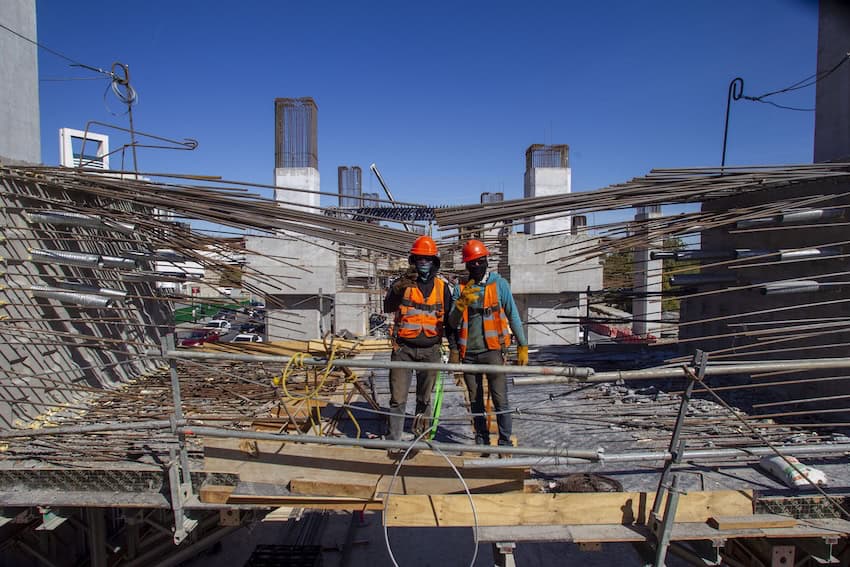
Three of the four sectors that the IGOEC comprises showed monthly declines (only construction offered an improved assessment, though it remained below the 50-point pessimism level) and all four sectors had negative year-on-year responses.
As for individual sectors, manufacturing registered decreases with regard to the perception of the future economic situation of the country and future prospects of private companies.
Construction sector responses revealed that those surveyed were bullish regarding the investment environment, but were uncertain about the country’s future economic situation and equally concerned about their own business prospects, both current and future.
Trade sector respondents were also pessimistic about the current investment environment, whereas executives in the private non-financial services sector were positive about the current investment environment and the current and future economic situation of the country.
With reports from La Jornada and El Economista