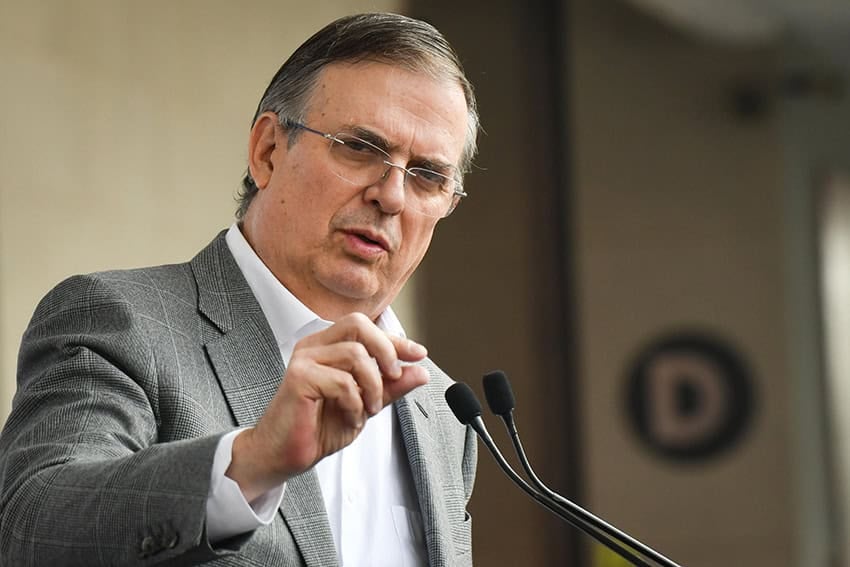
Economy Minister Marcelo Ebrard has announced the permanent renewal of tariffs on steel imports from Asian countries without a trade agreement with Mexico.
Ebrard also presented a new policy of increasing government purchases based on Mexican content, which will direct government entities to prioritize national content over lower costs.
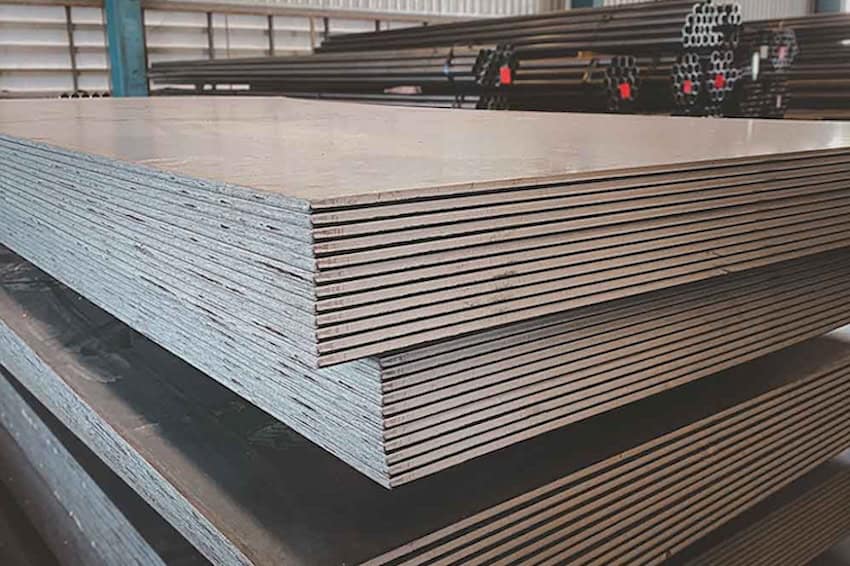
Speaking to business leaders on Thursday at the 78th Assembly of the National Iron and Steel Industry Chamber (Canacero), Ebrard said the tariffs, which range from 10% to 35%, will protect Mexico’s domestic industry from unfair imports from Asia by renewing duties on 220 steel products from South Korea, Vietnam, China and other nations.
Since April 2024, the tariffs have been applied to 1,466 products (220 of which were steel products) from various industries, but the program was scheduled to expire next month.
“We must make a special effort to protect and defend the industry,” Ebrard said, adding that President Claudia Sheinbaum has already ordered that the extension be applied.
Ebrard also mentioned the tariffs imposed on steel products by the United States, calling them “illogical.”
“This is unprecedented, that a 50% tariff is imposed on a product for which you have a trade surplus,” he said. “There is no other example in history. Tariffs are normally imposed when you have a deficit.”

The economy minister said he will address this issue next week when Mexico begins the first round of negotiations ahead of the formal review of the US-Mexico-Canada trade pact (USMCA).
“We will seek to strengthen and standardize the treaty’s legal instruments to address unfair trade practices, primarily from China and other Asian countries,” Ebrard said.
Mexico is keen on reducing its dependence on imports from Asia and the new policy of favoring national content over cost is designed to do just that, while also lending support to the domestic steel industry.
In this regard, Sheinbaum has also asked the Economy Ministry to review the IMMEX program, which allows companies to temporarily import materials tax-free.
As a result, Ebrard said, some temporary imports of steel products will be eliminated from the program.
Felicidades a la CANACERO en su 78 Asamblea , éxitos a su nueva dirigencia !! pic.twitter.com/iUM0nSCOQ6
— Marcelo Ebrard C. (@m_ebrard) March 12, 2026
“We hope this helps to ensure that purchases of domestically sourced materials are used in public works by the federal and state governments,” he said.
In response, Sergio de la Maza, the new Canacero president, expressed support for the measures, saying government cooperation will allow Mexican steel to compete “in a complex trade environment featuring market distortions primarily due to overcapacity and unfair trade.”
With reports from El Economista and Reforma