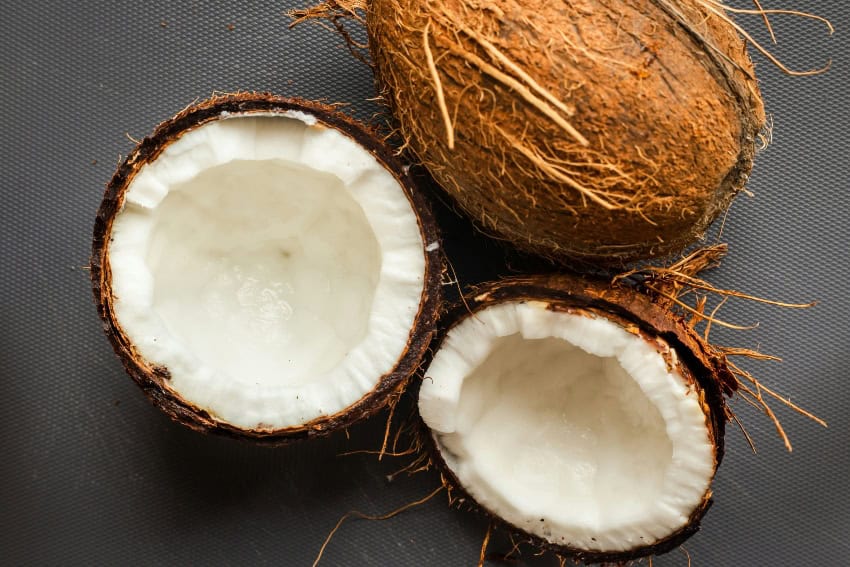
You have to try the coconut candy,” says Kerry Skinner, manager of Playa Viva, an eco-friendly resort tucked into Guerrero’s wild coast where I’m staying for a long weekend. I take her word for it and sink my teeth into the sweet, round patty, known here as a cocada. Made of shredded coconut, sugar and condensed milk, the candy is baked just enough to caramelize the rounded edges to a golden brown. It’s delicious.
As I contemplate how many I can reasonably eat without calling too much attention to my lack of willpower, Kerry points to the walls above the kitchen, adorned with colorful hand-painted masks carved from coconut shells, and I think about the homemade coconut milk I poured into my coffee this morning. I pop one more candy into my mouth and resolve to find out more — but later. The hotel’s “disconnect to reconnect” policy means the internet can wait.
How coconut came to Guerrero’s coast
Coconut is one of Guerrero’s historic coastal crops. Spanish settlers brought coconut palms from the Philippines to the Acapulco coast in the 16th century, where they thrived in a climate as humid as the one they’d left behind. Coconuts were used for food, drink and fermentable sap — in fact, producers in the Philippines discovered coconut wine, which was temporarily banned through a royal decree in 1612 to protect the Spanish grape wine industry. The ban didn’t stick. Filipino sailors soon introduced the lightly fermented coconut wine on their visits to Guerrero. It became known as tuba, and is still found in the region’s roadside stands and markets.
The crop that built — and broke — a coastal economy
If tuba unsettled colonial wine merchants, copra would go on to reshape entire coastal economies. Copra — the dried white meat of mature coconuts — quickly became an indispensable part of Mexico’s vegetable-oil and soap industry, used to make oil for soap factories, cosmetics, detergents, industrial lubricants and food manufacturing. For a long time, coconut was grouped in the “oilseeds” category with cacao and cotton.
In the 1930s, President Lázaro Cárdenas’ post-revolutionary agrarian reform folded coastal Guerrero into a national pro-oilseed push, aimed at supplying the country’s 100-plus soap factories and dozens of oil mills. The reform gave coastal land to ejidos — communal landholding groups — and to ex-Revolutionary soldiers, integrating them more deeply into copra production and tying entire communities to the fate of a single crop. By the 1950s, Guerrero had become Mexico’s principal coconut-producing state, and it remains as such. Yet, it still ranks near the bottom on development indicators, making it a resource-rich region suffering from entrenched poverty.
When coconut money turned violent
The coconut boom came with violent undertones. Monoculture — the practice of producing just one crop over large areas — invited pests, pesticide dependence and soil exhaustion. As prices swung on global markets, middlemen and mills set the buying price of copra, taking the largest share of the value chain. At the same time, small producers absorbed the shocks of price crashes, rising input costs and costly upkeep of aging plantations.
In the 1960s, conflict involving copra money and producer unions led to Guerrero’s bloodiest memories: the “masacre de copreros” in Acapulco. A group of smallholder growers mobilized against a state-backed leadership they believed was skimming off profits and keeping prices low. The demonstration was met with bullets: dozens were killed or injured in and around Acapulco’s center, and no one in the chain of command was ever held responsible. The massacre radicalized a generation on the coast, feeding guerrilla movements and cementing coconuts’ place in Guerrero’s longer story of state violence and peasant resistance.

From roadside stands to resort spas
Roadside stands appear in abundance on the drive from Zihuatanejo — women selling rounds of cocada from plastic-covered trays, stacked on wooden stands under shady palms. The colonial-era confection has no single inventor, but has been claimed and reinvented by coastal communities across Mexico and Latin America for centuries. On Guerrero’s coast, they are inescapable in the best possible way — often flavored with guava, tamarind or pineapple.
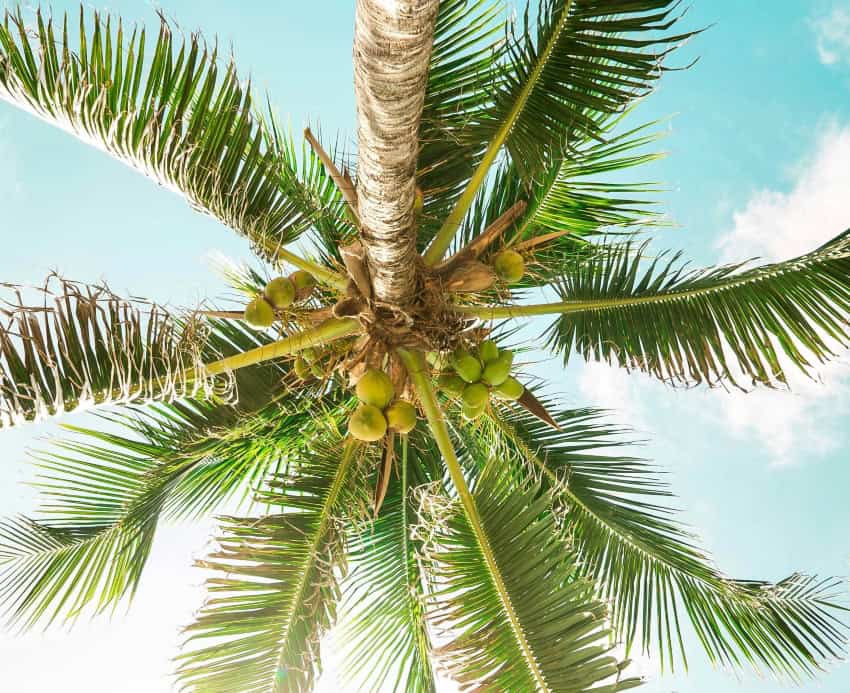
At Playa Viva, guests enjoy homemade coconut milk with coffee or poured over housemade granola. The resort obtains cold‑pressed coconut oil locally, extracted from coconuts grown in the grove using a small hand‑press. The oil shows up in the kitchen and spa, used for beachside spa treatments, often infused with lemongrass, rosemary and citrus leaves. The boutique sells bottles to take home, sourced through the Juluchuca Women’s Cooperative (a branch of ReSiMar, a watershed regeneration project), which also produces turmeric and moringa powders.
The masks on the kitchen wall are made by artisans who carve and paint coconut shells into suns, animals and carnival figures — Kerry mentions that guests commonly buy them as souvenirs, even though that wasn’t the initial intention. Near the kitchen is a small wooden stand selling fresh coconuts for water and as a snack, chopped and topped with lime, salt and tajin.
Reinventing a coconut’s contribution
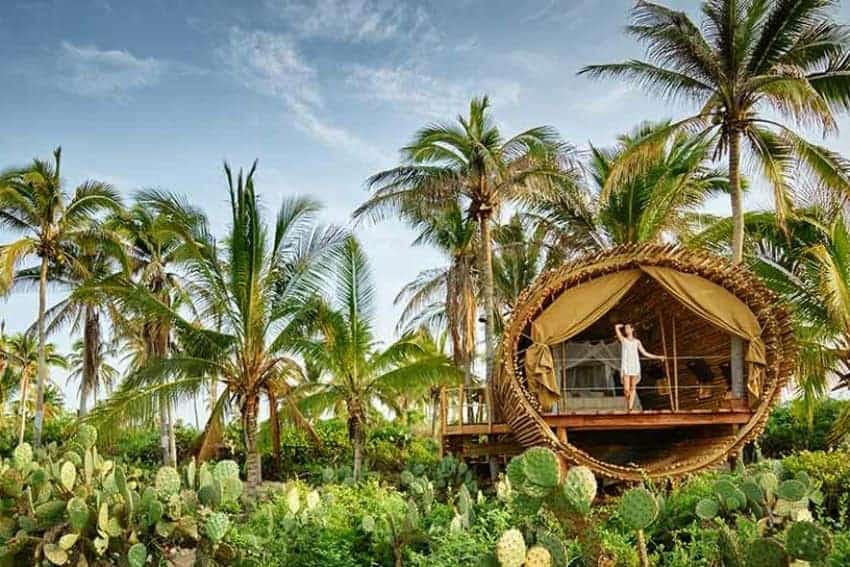
Coconut production plays another surprising role on the resort grounds. In 2021, Playa Viva added six new treehouses to its original 12, inspired by the Mobula manta ray migration that passes annually in front of the property. The structures aren’t supported by conventional foundations, but rather are suspended in mid-air by palm trees transplanted from the resort’s own coconut grove. Moreover, palm trees do their part to stop beach degradation by reinforcing sand dunes. “They don’t just look pretty holding up the treehouses; they also serve a purpose,” says Kerry.
Where copra once dominated, small producers and cooperatives are finding value in what used to be considered waste: shells made into masks and bowls, husks spun into fiber for rope, mats and brushes; plus bottled coconut water for drinking and oil cold-pressed for cosmetics and cooking. A single coconut that might once have been sold off cheaply for copra now has the power to create half a dozen higher-value products.
How to ethically buy coconut
Buying coconut doesn’t automatically mean supporting the people who grow it. Profits still tend to pool with mills and middlemen unless travelers deliberately seek out cooperatives and transparent producers — looking for labels that identify a community rather than just a brand, or asking hotels directly which groups they source from. Playa Viva, for its part, invites guests on permaculture farm visits, artisan workshops and local tastings where payment goes straight to growers and makers.
Standing in the shade of Playa Viva’s palms, ready to stuff yet another cocada into my mouth, I think about how easy it is to consume all of this without asking where it comes from. The coconut in my coffee, the oil on my face, the mask on the wall — all of it connects back to communities that have tended these fruits for generations, often without seeing much of the profit. The least we can do as travelers is ask who made it, and attempt to pay them fairly for it.
Interested in supporting Guerrero’s watershed regeneration project? Playa Viva adds a 2% Regenerative Trust contribution to each guest’s bill, which is directed to its ReSiMar watershed regeneration project and community initiatives. For more about ReSiMar, click here.
Bethany Platanella is a travel planner and lifestyle writer based in Mexico City. She lives for the dopamine hit that comes directly after booking a plane ticket, exploring local markets, practicing yoga and munching on fresh tortillas. Sign up to receive her Sunday Love Letters to your inbox, peruse her blog or follow her on Instagram.