Mexico registered foreign direct investment (FDI) of nearly US $23.6 billion during the first quarter of 2026, up from $21.4 billion in the same period last year.
The figure, released by the Economy Ministry on Monday, is a record high for any first quarter in Mexico and it comes despite geopolitical uncertainties and a tariff wall created by U.S. President Donald Trump.
“Foreign investors are reaffirming their confidence in Mexico, and FDI projects originating from the United States demonstrate the certainty in the long-term trade relationship under the US-Mexico-Canada Agreement,” Economy Minister Marcelo Ebrard said.
The new record in FDI was achieved even as Mexico’s economy contracted by 0.6% during Q1 2026.
The first-quarter performance continues a trend for Mexico, which attracted a record US $40.87 billion in FDI last year, a 10.8% year-on-year increase over 2024. And just last month, Kearney’s 2026 Foreign Direct Investment Confidence Index found that Mexico is one of the two fastest-growing FDI markets in the world.
Ebrard broke down the FDI data further: $1.705 billion came from new investments — an increase of 7.5% compared to Q1 2025 — while reinvestments rose 33.5%, to $22.2 billion, in Q1 2026.
New investments include those in fixed assets and working capital for the regular performance of commercial trade in Mexico, contributions to share capital of Mexican companies by foreign investors and the transfer of shares by Mexican investors to direct investors.

Inflows through reinvested earnings correspond to the portion of profits not distributed as dividends. They are considered FDI because they represent an increase in the capital resources owned by the foreign investor.
Additionally, Mexico recorded a divestment of US $336 million in intercompany accounts (transactions originating from debts between Mexican companies with FDI in their share capital and related companies residing abroad).
One of the most dynamic foreign investment destinations is the financial services sector, which increased year-on-year by 28.8%, rising from $5.321 billion to $6.851 billion.
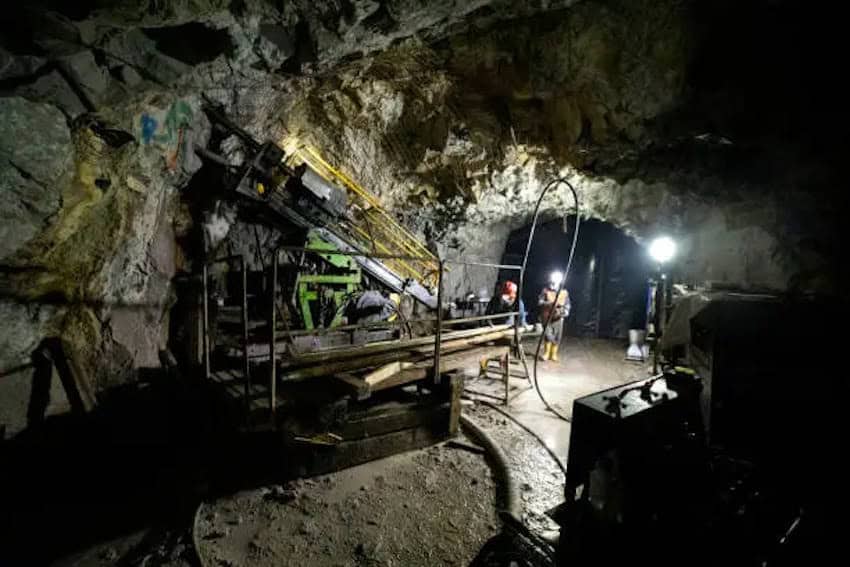
Additionally, FDI in vehicle manufacturing grew 20.4%, from $3.351 billion in 1Q 2025 to $4.033 billion this year, while investments in mining increased 39.7%, rising from $2.171 billion to $3.034 billion.
“This dynamism demonstrates that global investors continue to perceive Mexico as a platform for manufacturing expansion and regional integration,” Ebrard said.
As in previous years, Mexico City was the main recipient of this investment, followed by Nuevo León, México state, Baja California and Jalisco.
The United States is the main country from which FDI originates ($10.21 billion), followed by Spain ($3.804 billion), Australia ($1.446 billion), Japan ($985 million) and Canada ($894 million).
With reports from La Jornada, El País and El Economista