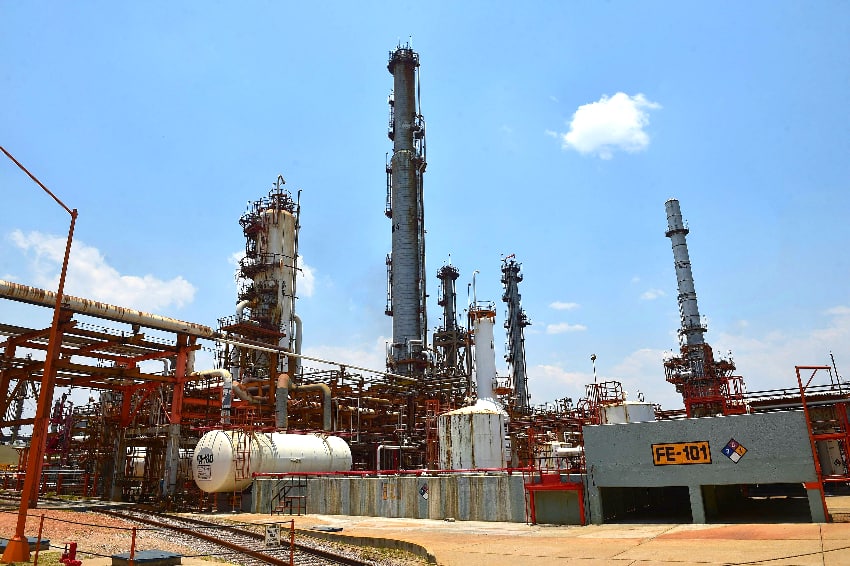
President Andrés Manuel López Obrador issued a decree on Friday that orders the “immediate temporary occupation” by Pemex of a privately-owned hydrogen plant in Hidalgo.
Pemex, Mexico’s state oil company, sold a hydrogen plant within its Tula, Hidalgo, refinery complex to French company Air Liquide for US $52.7 million in 2017.
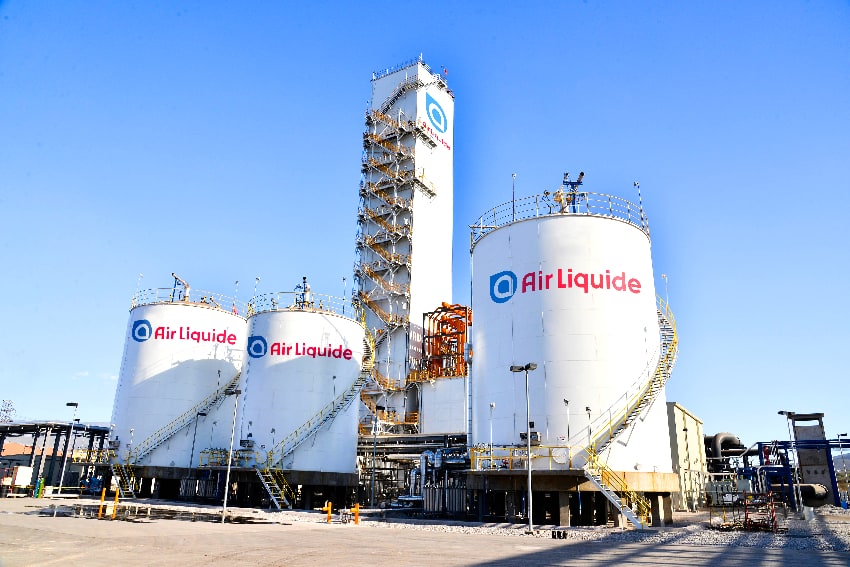
On Friday, López Obrador published a decree in the government’s official gazette that declared the supply of hydrogen from the plant a matter of “public interest.”
The decree ordered the immediate takeover of the plant by Pemex Transformación Industrial (TRI), the state oil company’s refining arm. It didn’t say how long the occupation would last.
Several Mexican media outlets have reported the takeover as an expropriation. The decree cites Mexico’s Expropriation Law, which stipulates the conditions under which a “temporary occupation” can occur.
The decree notes that “all refineries need hydrogen for the production of gasoline and diesel,” adding that “to achieve the federal government’s objective of reaching energy sovereignty … through self-sufficiency in the production of petroleum, it’s necessary to have autonomy in hydrogen supply at the Miguel Hidalgo Refinery in Tula, Hidalgo.”
The current “dependency on a third party” for hydrogen at the Tula refinery places the production of gasoline and diesel at risk, the decree says.

It also says that the “temporary occupation for a reason of public interest … complies with the requirements of the law” given that “it responds to economic and social needs for the benefit of the population.”
TRI must compensate Air Liquide in accordance with an appraisal made by the Institute of Administration and Appraisal of National Assets, according to the decree.
In accordance with the Expropriation Law, the French company has the option to initiate legal action within 10 business days for “the sole objective of disputing the compensation amount,” the decree says.
In 2021, Pemex CEO Octavio Romero said that López Obrador had ordered negotiations to buy back hydrogen plants within the state oil company’s refinery complexes in Tula and Ciudad Madero, Tamaulipas.
The plants were privatized during the 2012-18 presidency of Enrique Peña Nieto, whose government opened up Mexico’s energy sector to foreign and private companies.
López Obrador, a staunch energy nationalist, has long criticized the previous government’s energy reform, and implemented policies to favor Pemex and the state-owned Federal Electricity Commission.
Mexico is currently engaged in a long-running dispute with the United States and Canada over its energy policies.
The U.S. and Canadian governments claim that American and Canadian energy companies that operate in Mexico are being treated unfairly by the Mexican government in violation of the USMCA trade pact.
During López Obrador’s presidency, the government has shut down privately-owned fuel terminals, and in March the navy temporarily took control of a United States-owned marine terminal in Quintana Roo, a move U.S. Secretary of State Antony Blinken said could have a “chilling effect” on future U.S. investment in Mexico
With reports from Reforma