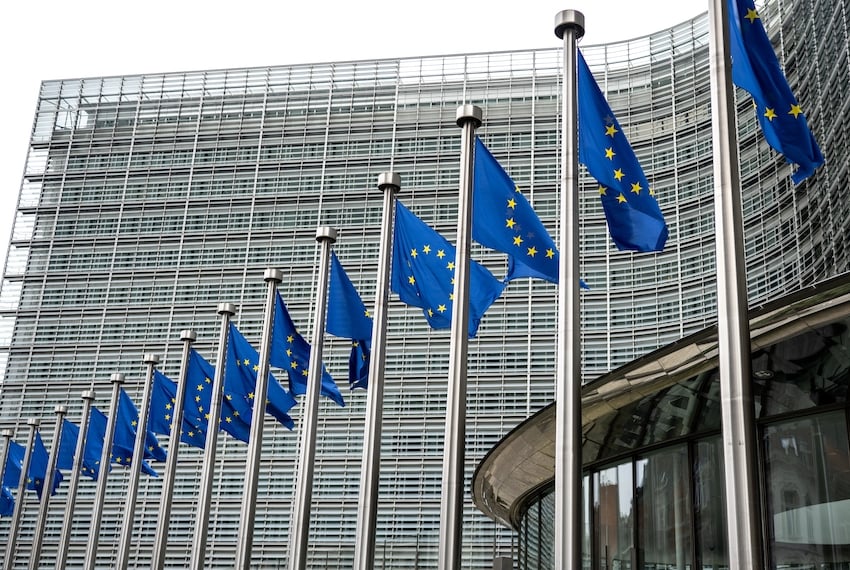
The updated Mexico-European Union trade agreement that is set to be signed in Mexico City this Friday will pave the way for the creation of a tribunal that will be tasked with settling investment disputes.
The Investment Dispute Resolution Tribunal will settle disputes related to European investment in Mexico and Mexican investment in Europe. Bilateral (e.g., Mexico-Spain or Mexico-Germany) mechanisms for the resolution of investment disputes will be phased out.
📌 Conoce todo sobre el Acuerdo Global Modernizado México – Unión Europea, que será firmado este viernes entre nuestros países.
🇲🇽🤝🇪🇺 pic.twitter.com/hTVg9ZKRJS
— Relaciones Exteriores (@SRE_mx) May 19, 2026
A key aim of establishing the tribunal is to provide greater legal certainty to European companies that operate in Mexico and Mexican companies that operate in Europe.
The newspaper El Economista reported that the design of the tribunal will ensure “transparency, speed and predictability” in the resolution of disputes.

“The mechanism includes clear procedures for filing claims, sets strict deadlines, and establishes precise rules of evidence. Decisions will be based on consistent interpretations of the treaty,” the newspaper reported, referring to the Mexico-EU Modernized Global Agreement (MGA) that Mexican and EU officials will sign on Friday.
Investment Dispute Resolution Tribunal panels will be made up of three people, including at least one representative from Mexico and one representative from the European Union. One of the three panel representatives will serve as the panel’s president.
A panel must hand down a final report on the dispute it was tasked with resolving no more than 120 days after it was established.
El Economista also reported that under the terms of the MGA — a pact that has been in the works for a decade — EU companies in Mexico and Mexican companies in the EU must receive the same treatment as local companies.
“If Mexico grants a license to a national company under certain terms, it is obliged to give equivalent terms to a European company,” the newspaper reported.
European Union green-lights a trade deal with Mexico, with summit set for May 22
The MGA also seeks to establish a level playing field by stipulating the uniformity of bureaucratic procedures and tax obligations for Mexican and European companies operating in Mexico and Europe. It will allow Mexican companies that operate in the EU to return profits to Mexico without restrictions, while European companies in Mexico will be permitted to do the same.
According to the European Commission, two-way trade in goods between the EU and Mexico totaled €86.8 billion (US $100.76 billion) in 2025.
“The EU was Mexico’s second-biggest export market after the US (€33.9 billion) in 2025. The EU’s key imports from Mexico are machinery and appliances, mineral products, chemical products, transport equipment, and base metals,” the European Commission said.
“The EU was Mexico’s third-largest source of imports in 2025 (€52.9 billion), after the U.S. and China. Key EU exports to Mexico include machinery and appliances, chemical products, transport equipment, base metals, and mineral products.”
Mexico received just under US $10 billion in foreign direct investment (FDI) from EU countries last year, accounting for almost one-quarter of total FDI that flowed into the country.
With reports from El Economista