
Mexico has become the leading exporter of electric vehicles to the United States, surpassing automotive giants such as Japan and South Korea, according to the third EvolvX Mexico Mobility Report conducted by Latam Mobility.
The report, presented this week, reveals that Mexico exported some 145,000 electric vehicles (EVs) to the U.S. last year, mainly models by General Motors, Ford, Stellantis and Toyota. The figure represents threefold growth and exceeds the number of units exported by traditional auto export leaders Japan and South Korea, at 135,000 each.
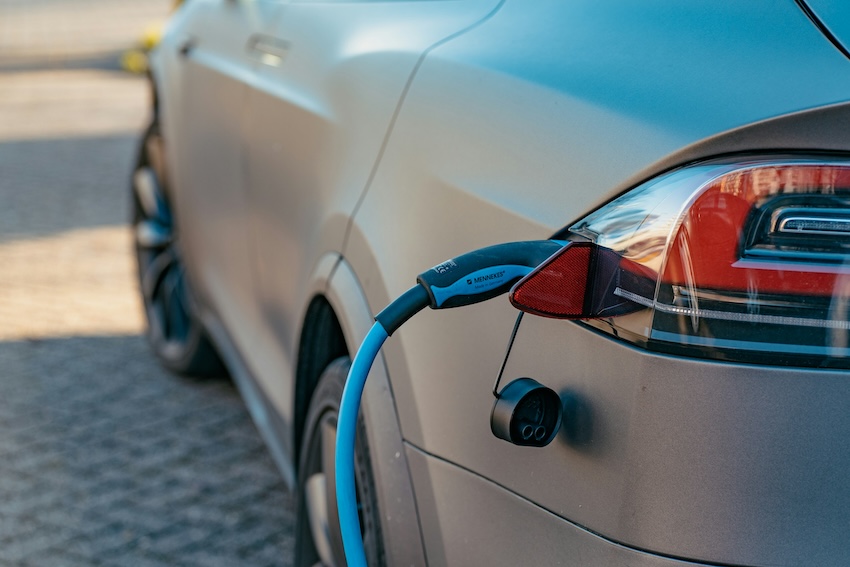
In addition to increasing its export capacity, Mexico doubled its production in 2024, reaching 220,000 units.
And it appears headed to surpass that total this year. Data from the National Institute of Geography and Statistics (INEGI) reveals that Mexico’s production of EVs and hybrid vehicles has reached 214,203 units through September, representing a 39.3% increase compared to the same period in 2024.
“This change confirms Mexico’s strategic role as a key player in the clean mobility supply chain in North America, supported by its competitive manufacturing base, human capital, and expanding charging infrastructure network,” Rebeca González, co-founder of Latam Mobility, said.
González added that international investment in Mexican advanced-manufacturing plants and the strength of the national automotive industry were key factors for its growth.
The EvolvX report says that Mexico has one of the highest ratios of EVs per public charging point in the world, with 40 units per charger. That ratio reflects an accelerated pace of adoption of electricity-powered vehicles but also demonstrates an urgent need to expand the charging network.

“Mexico faces similar challenges to Australia or New Zealand, characteristic of markets transitioning from moderate growth to massive expansion,” González explained. “The challenge and opportunity for the country will be to align its manufacturing leadership with a charging infrastructure that matches its potential in sustainable mobility.”
Additionally, the report revealed that in Mexico, eight out of every 100 buses sold in 2024 were electric, compared to just over 1% in 2023.
Overall, the Mexican automotive industry represents one of the pillars of bilateral trade with the U.S., with annual exports exceeding US $78.5 billion and a share of nearly 40% of total U.S. automotive imports.
With reports from Mexico Industry and El Economista