The Mexican peso depreciated nearly 1% against the U.S. dollar on Thursday, the day after U.S. President Donald Trump announced he would impose a 25% tariff on imports of vehicles made outside the United States starting next week.
The peso closed at 20.30 to the dollar, according to the Bank of Mexico (Banxico), a depreciation of 0.8% compared to its closing position of 20.14 to the greenback on Wednesday.
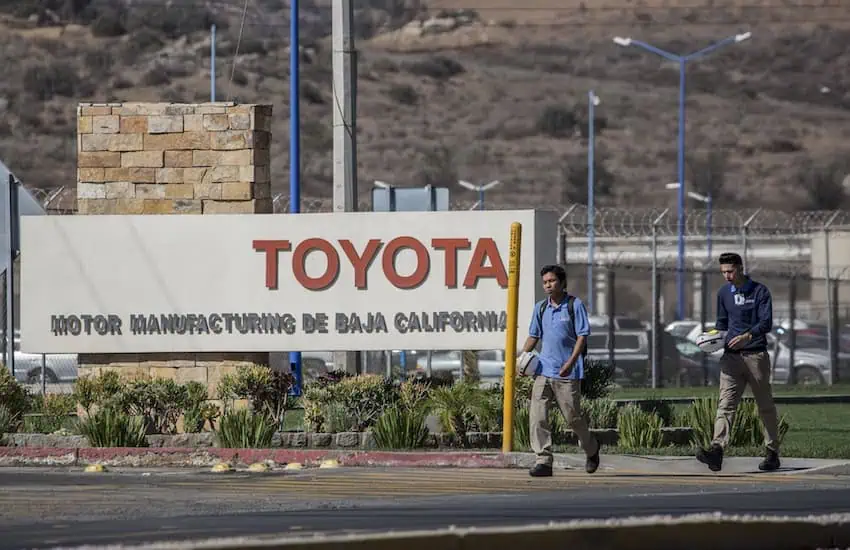
The depreciation might have been more pronounced if vehicles made in Mexico were to be subject to the full 25% tariff.
As U.S. content in vehicles assembled in Mexico will be exempt from the duty, the effective tariff on Mexican-made vehicles will be lower — 15% on a car with 40% U.S. content, for example.
The peso’s depreciation on Thursday puts the currency at its weakest position since March 10.
On March 14, the peso exchange rate appreciated to a four-month high of 19.84 to the dollar. It is now 2.3% weaker than that level.
Bank of Mexico cuts key interest rate to 9%
The Bank of Mexico’s governing board voted on Thursday in favor of lowering the central bank’s key interest rate by 50 basis points to 9%.

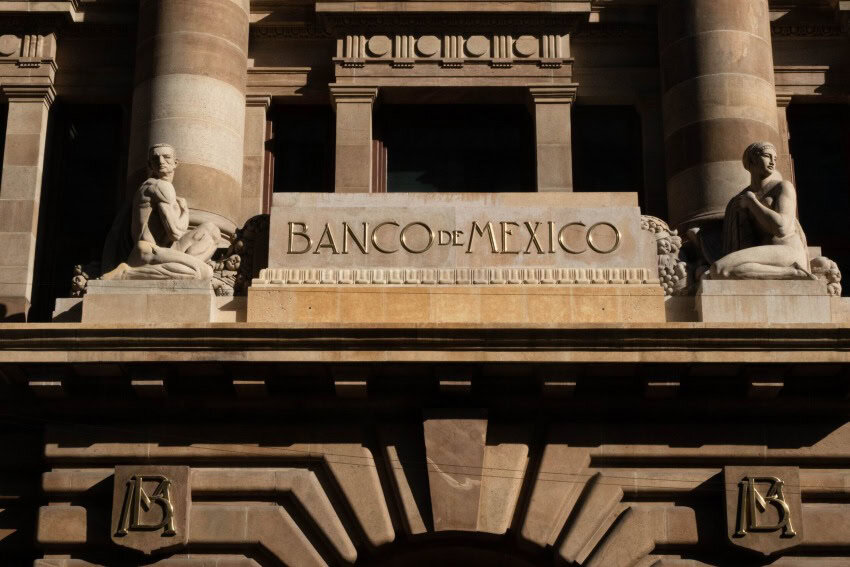
The decision came three days after the national statistics agency INEGI reported that Mexico’s annual headline inflation rate declined to 3.67% in the first half of March.
Banxico targets 3% inflation with a tolerance of 1 percentage point in either direction.
The unanimous decision of the Bank of Mexico board members to cut the benchmark rate by 50 basis points came after a reduction of the same size in early February.
In a statement, Banxico said that its governing board “deemed that the disinflation process remains well on track and reiterated that the fight against inflation is at a stage where the aim is to bring inflation from its current level, around its prepandemic historical average, to the 3% target.”
“… The board estimates that, looking ahead, it could continue calibrating the monetary policy stance and consider adjusting it in similar magnitudes. It anticipates that the inflationary environment will allow it to continue the rate-cutting cycle, albeit maintaining a restrictive stance,” the bank said.
“[The board] will take into account the effects of the country’s weak economic activity. … Actions will be implemented in such a way that the reference rate remains consistent at all times with the trajectory needed to enable an orderly and sustained convergence of headline inflation to the 3% target during the forecast period,” Banxico said.
When Banxico’s lower rate takes effect on Friday, official borrowing costs in Mexico will be double those of the United States, where the Federal Reserve’s federal funds rate is currently set at a range of 4.25%-4.5%.
The Mexican peso was supported for an extended period by the difference between the interest rate in Mexico and that of the Fed, but depreciated sharply in late 2024 after the ruling Morena party’s comprehensive victory in last June’s federal elections.
Mexico News Daily