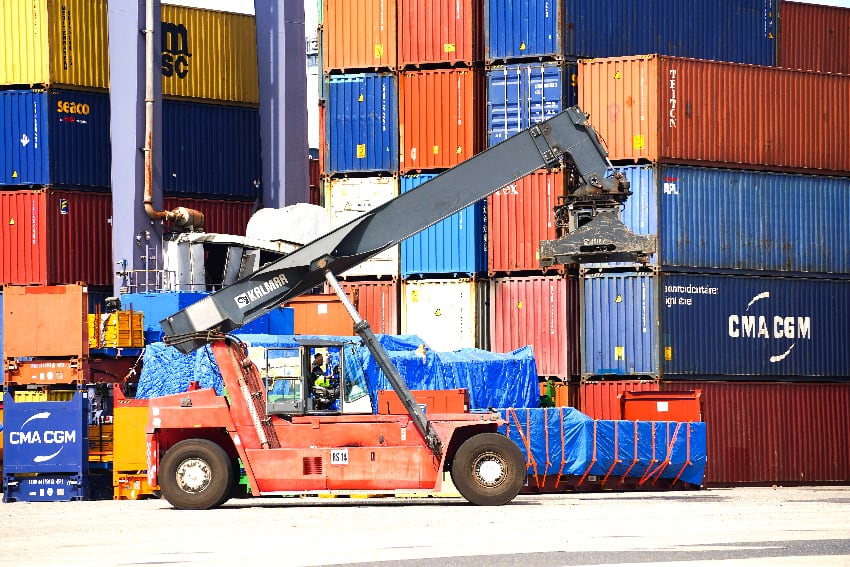
Mexico retained the enviable title of top exporter to the United States in January, sending products worth more than US $38 billion to its North American neighbor, according to U.S. government data.
Mexico also remained the United States’ top trade partner in the first month of the year, with two-way trade between the countries increasing just under 1% in annual terms to $64.52 billion, the highest figure ever for the month of January.
The U.S. Census Bureau and the U.S. Bureau of Economic Analysis published data on Thursday that showed that Mexico’s exports to the United States were worth $38.04 billion in January, a 2.8% increase compared to the same month of 2023. That was Mexico’s highest ever revenue total for exports shipped to the United States in the month of January. The value of Mexican exports to the U.S. has now risen during nine consecutive months.
Mexico ranked ahead of China and Canada as the No. 1 exporter to the U.S. in January. While the value of Mexican exports to the U.S. increased, the value of those from both China and Canada fell.
In 2023, Mexico surpassed China to become the top exporter to the United States, ousting the East Asian economic powerhouse from a position it had occupied for two decades.
In January, 15% of all exports to the United States came from Mexico, which ships a range of products to its USMCA trade partner including cars, auto parts, electronics, crude oil, alcoholic beverages and agricultural products.

The total value of those exports easily exceeded the value of Mexico’s imports from the U.S. in January. United States exports to Mexico were worth $26.48 billion, down slightly from a year earlier, leaving Mexico with a trade surplus of $11.56 billion with the U.S. in the first month of 2024. Mexico’s surplus in January was just over 15% higher than it was in the same month of last year.

In 2023, Mexico was the United States largest trade partner for the first time in four years, dislodging Canada from the position it occupied in 2022.
Mexico’s exports to the U.S. were worth $475.6 billion last year, a 4.6% increase compared to 2022, while two-way trade totaled $798.8 billion, up 2.5% compared to the previous year.
Mexico’s exports to the United States and the rest of the world are expected to continue increasing in coming years as more and more foreign manufacturing companies establish a presence here, including firms from China seeking to circumvent U.S. tariffs on Chinese-made goods.
With reports from Reforma and El Financiero