The Mexican peso wobbled and the nation’s stock market exchange plunged early Friday after China announced retaliatory tariffs against the United States, fanning fears of a global recession.
Markets around the world plunged for a second day after Beijing escalated a trade war ignited by U.S. President Donald Trump’s sweeping “reciprocal tariffs” which were made public on Wednesday.
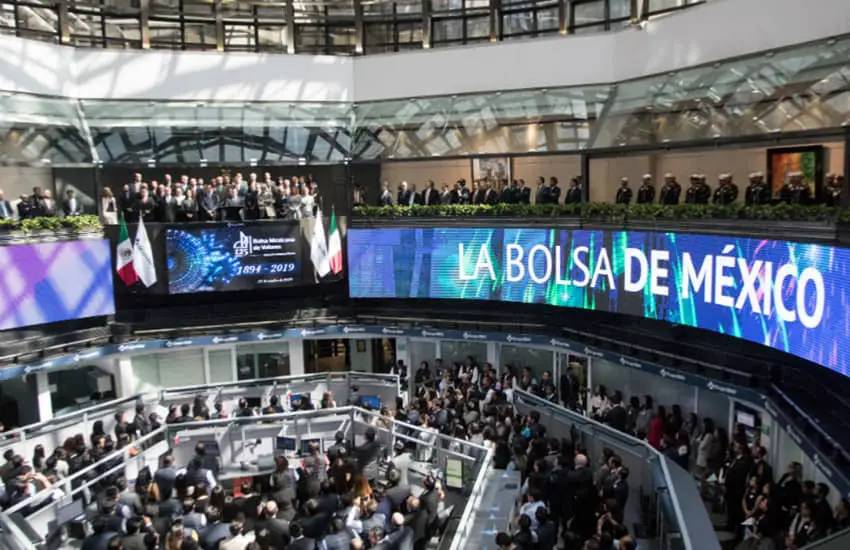
In mid-morning trading Friday, Citibanamex reported that the peso was trading at 20.99 to the US dollar at bank windows, significantly weaker than its 19.94 opening value.
After dipping to 19.91 early on, by 2 p.m. Friday the spot rate for the Mexican peso had recovered to 20.46. At the same time, the main index of the Mexican Stock Exchange had lost 5.18%.
Before its Friday instability, the peso started the week strong. After Mexico was left off Trump’s global tariffs list, announced Wednesday afternoon, the peso gained value against the dollar on Thursday.
While global markets tumbled, the peso appreciated to less than 20 pesos to the dollar for the first time since mid-March,as investors speculated that Mexico had emerged relatively unscathed, according to the news agency Reuters.

Christian Admin de la Huerta, an economist at Finamex, was less sanguine, however, telling Reuters earlier this week that “an announcement implying a significant deterioration in the trade outlook could put additional pressure on the exchange rate.”
China’s retaliatory strike — punitive 34% tariffs on all goods imported from the U.S. — served as that announcement, and global markets again went into a tailspin. The peso did not escape the effects.
“The peso depreciated owing to risk aversion as there is a higher probability of global recession due to Trump’s tariff policies,” Gabriela Siller, director of economic analysis at Banco Base, told newspaper El Financiero.
Friday’s release of a stronger-than-expected U.S. jobs report — 228,000 jobs added in March — further weakened the peso against the U.S. dollar.
A volatile scenario for Mexico’s currency
Earlier in the week, Reuters forecast that the peso would experience a stable trading environment through the summer. This was welcome news because Mexico’s currency was battered in 2024, dropping nearly 23% over the course of the year.
As Mexican President Claudia Sheinbaum negotiated moderate terms in Trump’s initial tariff pushes in January and February, the peso recovered, rising 1.8% through Monday.
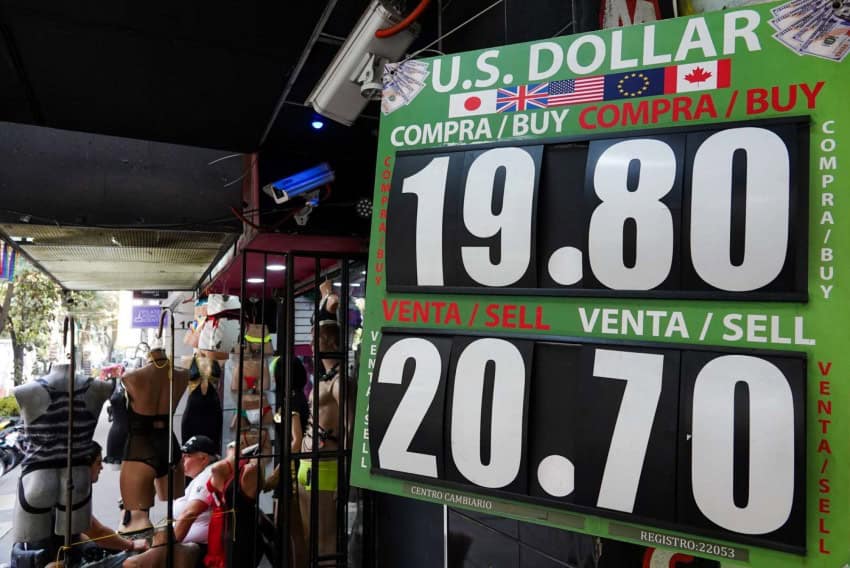
But it has been a roller-coaster ride. On Feb. 2, the peso depreciated to 21.30 before Trump paused a 25% tariff on all Mexican imports.
The peso steadily strengthened through mid-March, hovering around the 20-to-1 mark until Trump threatened to impose a 25% tariff on imports of Mexican automobiles, weakening the currency by 1% to 20.30 on March 27.
The peso depreciated modestly last week, opening Monday at 20.46. On Tuesday, Reuters reported that foreign exchange specials projected that the local currency would depreciate marginally 0.4% to 20.55.
But that was before China roiled markets, and investment bank J.P. Morgan stated that it foresees a 60% chance of a global recession by year-end, up from 40% previously.
With reports from El Financiero, El Economista and Reuters