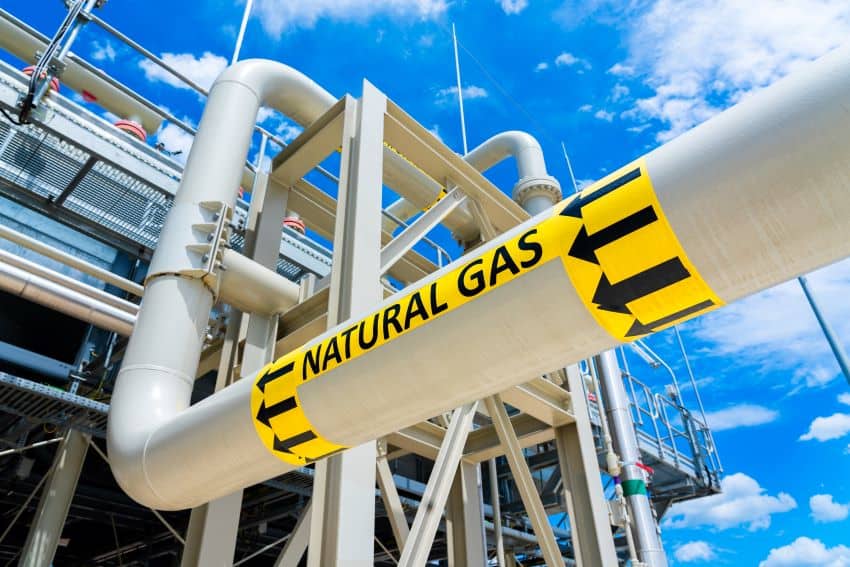
Mexico’s imports of natural gas from the United States continue to rise year over year, increasing by 2.7% over the first four months of 2025 to a record high of 6.261 billion cubic feet per day, according to U.S. Energy Information Administration figures.
At the same time, gas production by the highly indebted state-owned Petróleos Mexicanos (Pemex) decreased 6.3% year-on-year to 3.534 billion cubic feet per day (Bcf/d) from January to May 2025, marking a second year of decline.
Mexico is the main buyer of U.S. natural gas and U.S. exports of natural gas to Mexico have risen every year since 2011, except in 2022.
Those increases, along with the dip in domestic production, have prompted worries that Mexico is ever more vulnerable to the aggressive trade policies of U.S. President Donald Trump. Mexico uses gas to produce around 60% of its electricity, so its heavy dependence on U.S. gas has left experts worried that Trump may weaponize gas exports to put greater pressure on Mexican President Claudia Sheinbaum.
“An interruption of the flow of gas to Mexico would be beyond chaotic,” W. Schreiner Parker, managing director for Latin America at the energy intelligence firm Rystad Energy, told The New York Times. “It’s truly one of the unspoken reasons why Sheinbaum has been so accommodating to Trump.”
In 2024, imported natural gas, mostly from the United States, contributed 74.6% of Mexico’s demand, at an average of 8.7 Bcf/d, according to data from the Mexican Energy Ministry. This is almost 35% higher than the 2014 average.
Average domestic gas production through May was 15% below the 4.163 Bcf/d goal outlined by President Sheinbaum in November 2024, when she presented the National Strategy for the Hydrocarbons and Natural Gas Sector.

The top 3 challenges facing Mexico’s energy sector: An interview with the Institute of the Americas
Sheinbaum’s energy policy pursues production of over 4.7 Bcf/d of gas starting in 2027 and reaching 5 Bcf/d by 2030. Those goals appear increasingly unlikely as Pemex’s oil fields mature, drilling equipment becomes outdated and service providers delay projects over non-payment.
Long-term, Mexico could invest in new domestic unconventional gas reserves, which could take several years and a significant investment. Or it could diversify its energy mix through renewable energy expansion, something Sheinbaum’s predecessor refused to do.
With reports from El Economista, The New York Times, Energy Magazine, Reuters and Oilprice