Foreign direct investment (FDI) in Mexico hit a record high of over US $29 billion in the first half of 2023, according to preliminary data published Wednesday.
The Economy Ministry (SE) reported that FDI was US $29.04 billion between January and June, a 41% increase compared to the same period of last year if spending on the Televisa-Univisión merger and the restructuring of Aeroméxico is excluded from the investment total.
FDI was 5.5% higher in the first six months of 2023 compared to that received a year earlier including spending on the television industry merger and the restructuring of Mexico’s flag carrier.
The SE said that FDI in the first half of the year came from 2,189 Mexican companies funded by foreign capital (such as subsidiaries of foreign firms), 2,631 trust agreements and one foreign company.
The lion’s share of the $29 billion in FDI —78% — came from reinvestment of profits, while 15% stemmed from loans and payments between companies of the same corporate group. Just 7% of the FDI total — $2.1 billion — was new investment, the SE said.
The ministry said that the FDI data for the first half of the year is indicative of “investors’ confidence to maintain and increase their investments in the country.”


The United States was by far the biggest source of foreign investment in Mexico in 2023. Hover over each segment to see the monetary amounts invested by each country.
President López Obrador said Tuesday that “the environment for investment is very good in Mexico.”
“There are unbeatable conditions,” he said, adding that Mexico is the world’s “preferred” country for foreign investment.
SE data showed that the United States was the biggest investor in Mexico in the first half of the year, with 43% of the $29 billion in FDI, or $12.4 billion, coming from that country. Spain ranked second, contributing 15% of the total, followed by Germany (9%), Argentina (8%), Japan (7%), the Netherlands (4%), Canada (4%) and the United Kingdom (3%).
Five federal entities received 60% of the FDI: Mexico City was the biggest winner, getting $10.22 billion or 35% of the total, while Nuevo León secured 10% and each of Baja California, Jalisco and México state obtained 5%.
Nuevo León has made major announcements this year about big foreign companies investing in the state, but Mexico City saw more than three times the state’s FDI in 2023’s first semester.
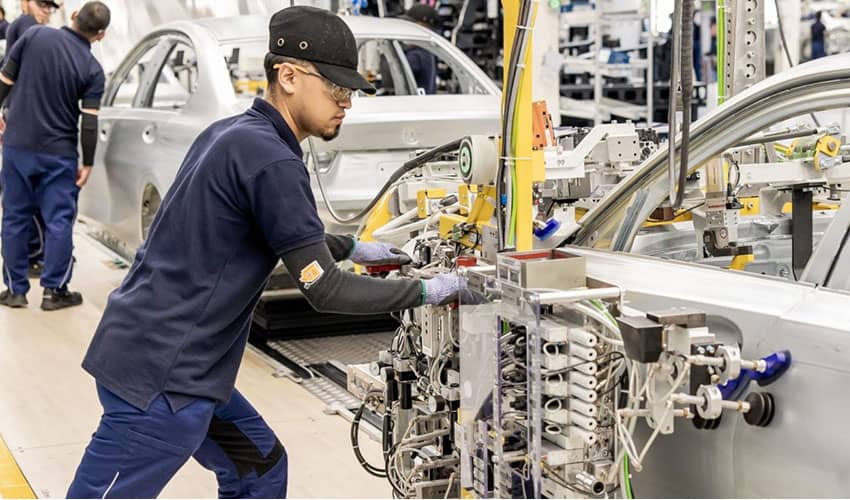
The SE said that 57% of the FDI total between January and June was directed to Mexico’s manufacturing sector. Among the manufacturing subsectors that benefited were the automotive, chemical, food and beverage and electronics industries.
The financial services sector received 27% of the FDI total, while the temporary accommodation, mining, construction and transport industries got 5%, 3%, 2% and 2%, respectively.
Numerous foreign companies announced investment in Mexico during the first half of 2023, money that will boost FDI totals in the near future.
They included electric vehicle manufacturer Tesla, steel manufacturer Ternium and automaker BMW.
Mexico News Daily