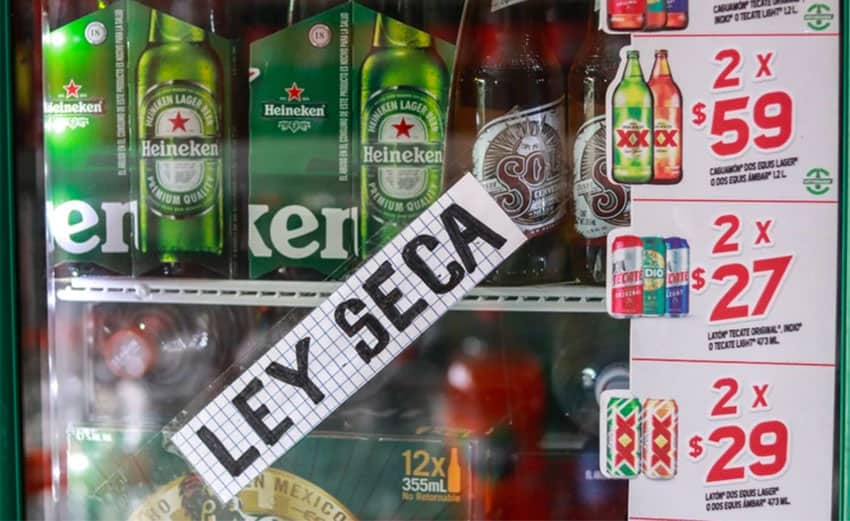
“Dry laws” that put restrictions on alcohol sales, commonly enacted during elections, are popping up in communities across the country, triggered by the month-long coronavirus emergency.
The laws range from restrictions on hours of sale to all-out prohibitions on the sale and consumption of alcohol.
State and local authorities in Tabasco, Baja California Sur, Sonora, Campeche and Quintana Roo are the most recent to announce that they will restrict or prohibit alcohol sales, following a trend that began on Thursday in Nuevo León.
The strictest regulations in the country have been applied in Tabasco, where even consuming alcoholic beverages has been prohibited for the duration of the emergency period. The governor announced the restrictions in a taped recording on Wednesday, but did not explain what the benefits of the measure might be.
Municipal authorities in Los Cabos, Baja California Sur, announced the prohibition of alcohol sales beginning on Monday, threatening any businesses that fail to comply with fines ranging from 8,600-16,800 pesos (US $345-$673).
Also in Baja California Sur, the municipality of Comondú announced on Friday the immediate prohibition of alcohol sales for the remainder of the month-long emergency declaration, with sanctions running from fines to shutting down businesses.
Less restrictive actions were announced in Sonora, Campeche and Quintana Roo, which will take lighter measures such as restricting the hours in which alcohol can be sold.

Authorities in Sonora said the temporarily adjusted sales schedules would be based on population sizes in the municipalities.
Alcohol sales in Campeche will be prohibited from noon to 6:00 p.m., making beer, wine and spirits available in the evening.
In a move contrary to its very raison d’être, Quintana Roo, the home of such popular tourist and party destinations as Cancún, Tulúm and Cozumel, will also restrict alcohol sales, but only slightly.
The prohibition will only restrict the sale of alcoholic beverages from 10:00 p.m. to midnight from Monday to Saturday in certain municipalities, including those in which the state’s popular tourist destinations are located.
Alcohol sales will continue to end at 5:00 p.m. on Sunday in the state and normal sales hours will resume on April 10.
The only reason that has been given for the dry laws was offered by Nuevo León Governor Jaime Rodríguez, who predicted physical conflicts arising among people imbibing while cooped up in their homes due to the coronavirus quarantine.
President López Obrador weighed in on the subject at his press conference on Friday, indicating that health officials would have to decide whether alcohol consumption should be restricted during the coronavirus emergency.
But he suggested the value of doing so appeared doubtful.
Beer drinkers in areas that have not enacted dry laws may still have reason to worry about the availability of the beverage as major beer makers have announced they will halt production after the government deemed the industry “nonessential.”