As part of an exploration into Mexico’s long and rich history, Mexico News Daily has teamed up with one of the country’s top Maya experts to examine the ancient world that flourished across Mesoamerica.
In our first installment, we talked about the beginnings of Mayan culture during the Preclassic period in what is now Mexico and further south into modern entities like Guatemala, Belize, Honduras and El Salvador. That early era culminated in the rise of the ancient city we call today El Mirador, the great metropolis of the Preclassic period, located in the Petén area of modern-day Guatemala.
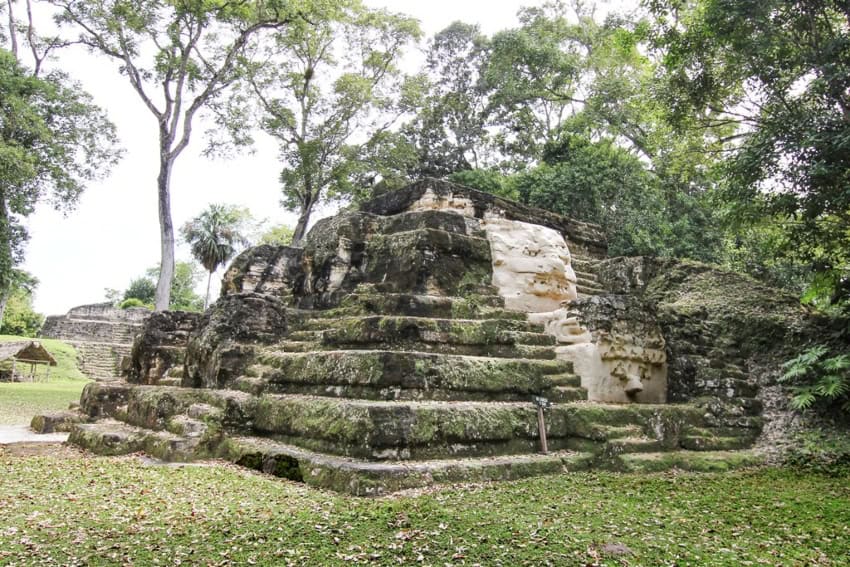
However, all great things come to an end, and so it did for El Mirador, when around A.D.150, the city suffered a major sociopolitical crisis, theorized to have been driven at least in part by increased building activity, which meant increased deforestation to fuel the wood-fired kilns that helped the Maya make stucco for their buildings.
This widespread deforestation had inevitable environmental consequences and was likely a key factor in El Mirador’s decline, as was likely competition from newer cities that had already begun to emerge.
Transition from the Late Preclassic
By the Late Preclassic period (approximately 450 B.C. to A.D. 250), many political entities had begun to emerge in the southern Maya Lowlands, cities that were growing in both construction and population, notably through the building of astronomical commemoration groups and large triadic pyramidal structures.
These entities were developing large-scale hydraulic engineering, as well as communication routes, so these cities were interacting with each other and trading materials. Archaeological findings of luxury goods that had to have traveled long distances to be placed in their burial offerings not only point to increased interaction between these centers but also an increase in class differentiation within cities, as well as a high degree of sociopolitical control led by power groups.
Archeologists have also found that the production of stelae, altars and ceramics increased during this period, signaling innovations in the standardization of production, something which would have required specialized labor.

The Early Classic period (A.D. 250–550)
As Maya civilizations left the Preclassic period and moved into the Early Classic period, we see huge advancements: The building of stelae increased exponentially, and these monuments featured new iconographic and calligraphic styles, suggesting advancements in writing and astronomical knowledge — skills previously adapted from other Mesoamerican peoples.
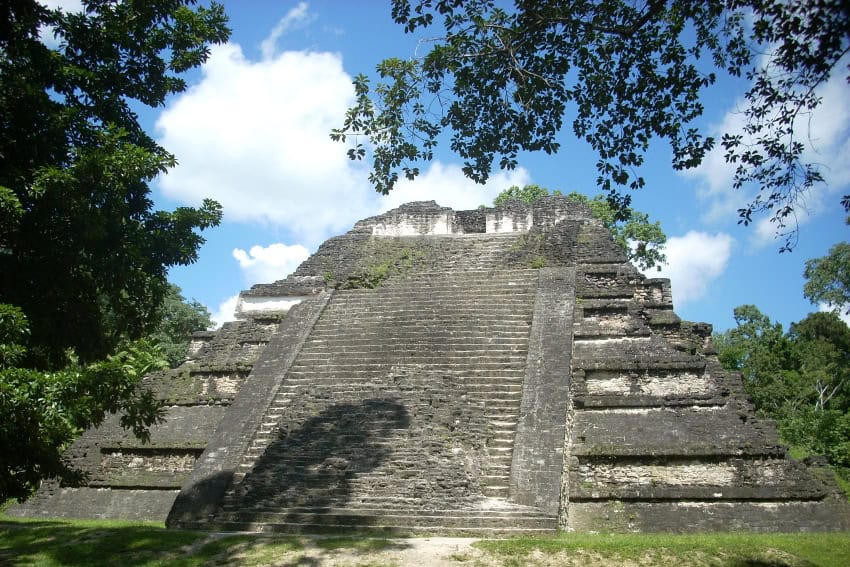
New settlements emerged, led by power groups who needed to legitimize their position. This likely drove the increase in hieroglyphic narratives and the complexity of a worldview where the ajaw (rulers) established divine dynastic lines linked to ancient or mythical times.
During this time, cities such as Uaxactún, Tikal, Naranjo, Caracol, Naachtun and Dzibanché rose to prominence. Each ruling family asserted its importance through the “emblem glyph,” a specific hieroglyphic compound used to distinguish their lineage.
Evidence of defensive constructions, such as walls and moats, also increased toward the end of the Late Preclassic. Recent research using LiDAR technology has helped study these defenses in cities like Tintal, El Mirador and Holmul.
This friction likely arose from the struggle to control natural resources, sharpening the social changes that followed a crisis around A.D. 150.
An unexpected arrival in Tikal changes Mayan history forever
Stelae in the Guatemalan Petén point to escalating regional conflicts, particularly between the neighboring cities of Uaxactún and Tikal, located just 25 kilometers apart. Following decades of warfare in the fourth century, Tikal achieved regional supremacy when King Chak Took’ Ihch’aak defeated Tz’akbu Usiij of Uaxactún, an event recorded on Tikal’s Stela 39.
However, the political landscape shifted dramatically on Jan. 16, in A.D. 378.
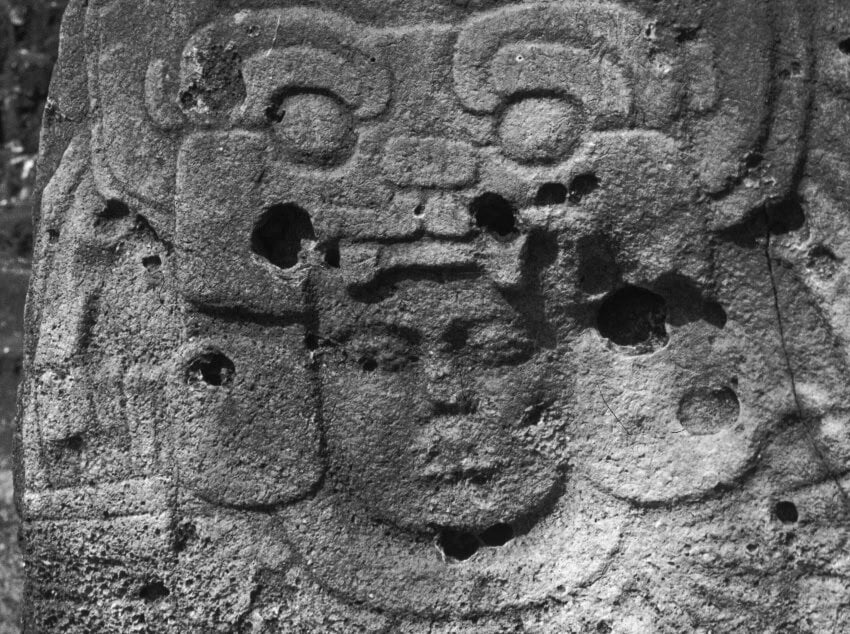
Monuments at Tikal and Uaxactún record the arrival of foreigners from the distant metropolis of Teotihuacán (located northwest of modern-day Mexico City). Known in academic literature as “The Entry” (La Entrada), this group was led by figures named Sihyaj K’ahk’ and K’inich Mo’.
According to Stela 31 in Tikal, the Teotihuacans then imposed a new ruler, Yax Nuun Ayiin, who was the son of a high-ranking Teotihuacán citizen named Jatz’o’m Kuy. This event fundamentally changed the Maya’s history, introducing Teotihuacán artistic symbols, deities and power structures that Maya rulers later used to legitimize their authority.
The rise of the serpent dynasty
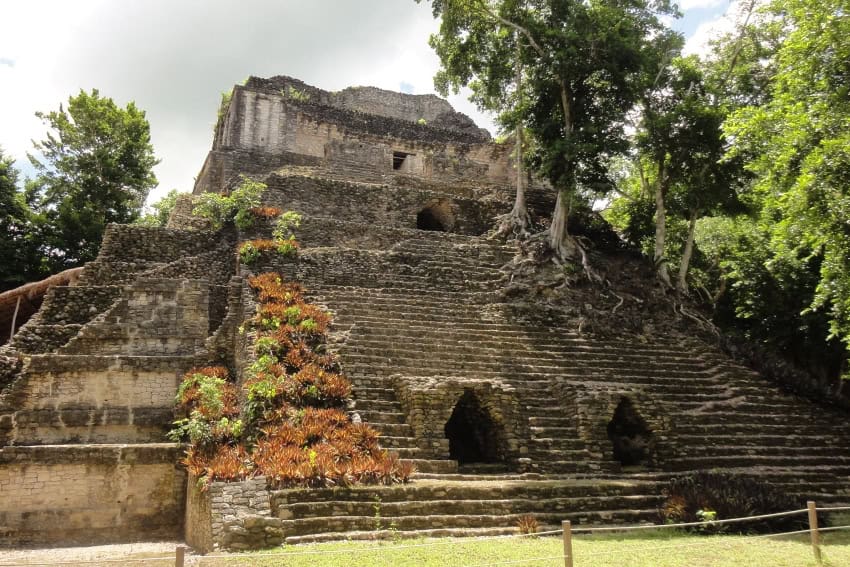
By A.D. 500, population growth and warfare intensified across the region. In the modern-day state of Quintana Roo, the settlement of Dzibanché rose to power as the capital of the Kanu’l dynasty (the “Place where Snakes Abound”), identified by the Snake Head emblem glyph. Hieroglyphic stairs in Dzibanché’s “Captives Building” depict bound men, likely the result of territorial expansion campaigns.
The Kanu’l dynasty eventually engaged in a massive conflict against Tikal, involving multiple regions. While Caracol was initially subordinate to Tikal, in A.D. 562, the Kanu’l of Dzibanché supported Caracol in a war against Tikal.
The Kanu’l coalition was victorious, establishing a vast network of alliances with cities like Naranjo — in modern-day Guatemala — and Caracol, in modern-day Belize. This victory triggered Tikal’s decline and marked the beginning of the Late Classic period, an era when the institution of divine supreme leaders, i.e., “sacred lords,” would reach its peak.
Pablo Mumary holds a doctorate in Mesoamerican studies from UNAM and currently works at the Center for Maya Studies at IIFL-UNAM as a full-time associate researcher. He specializes in the study of the lordships of the Maya Lowlands of the Classic period.