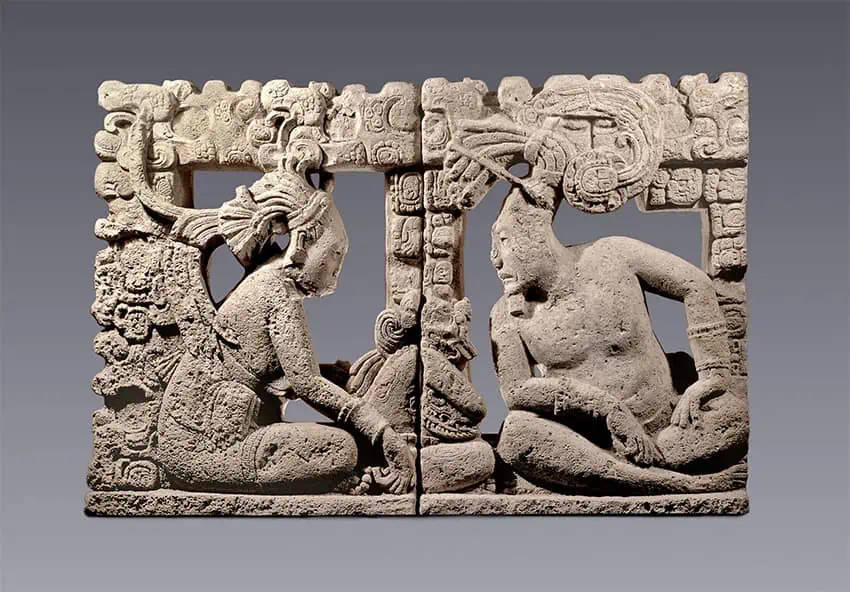
Nearly 100 landmark Maya works are on display at the New York Metropolitan Museum of Art (commonly known as the Met) in an exhibit that opened Sunday and will run until April.
“Lives of the Gods: Divinity in Maya Art” is the museum’s first major exhibition in a decade to focus on the aesthetic sophistication of Maya art. It was organized by the Met and the Kimbell Museum of Art, with the participation of the National Institute of Anthropology and History (INAH).
In the Maya tradition, some gods could die while others could be born anew, embodying the concepts of regeneration and resilience. Addressing those qualities, the exhibit features rarely seen pieces crafted by master artists of the Maya Classic period (A.D. 250-900) who lived in royal cities of what is now Mexico, El Salvador, Honduras, Guatemala, and Belize.
The sculptures, which range from monumental to miniature, depict gods at all stages of life: from the moment of their creation in a sacred mountain, to maturity, old age and, in some cases, rebirth. Some transformed into blossoming flowers or fearsome creatures of the night. Other works, like finely painted ceramics, reveal the eventful lives of the gods in rich detail.
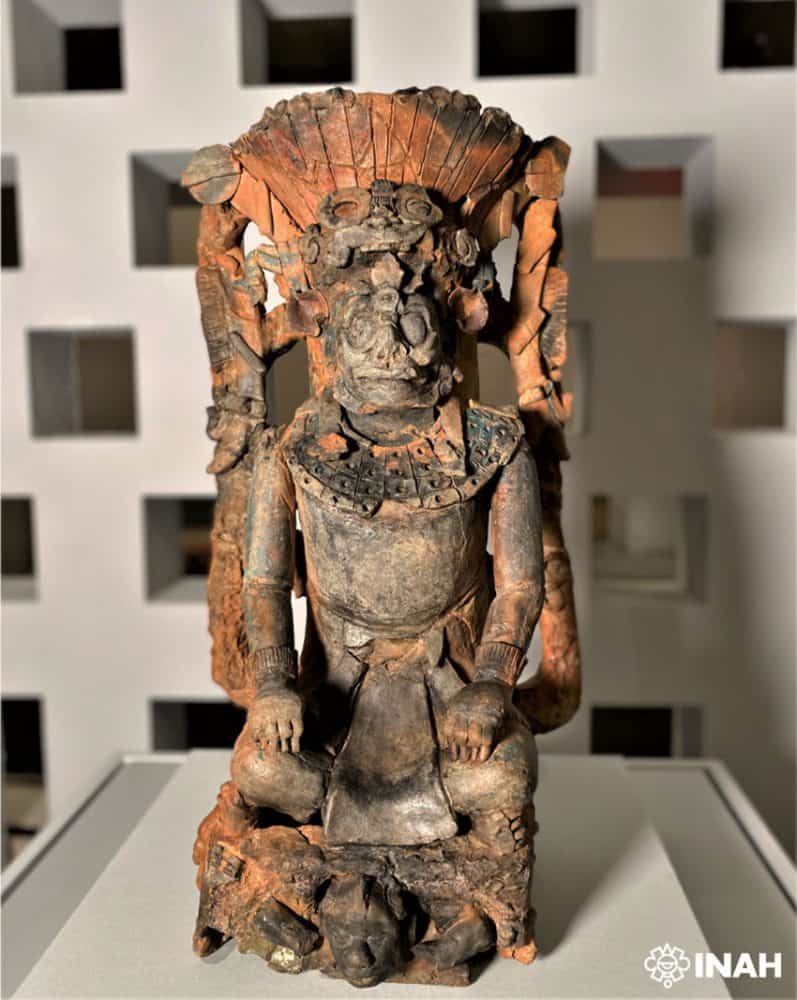
Among the exhibited pieces, 19 belong to the INAH’s collection, others come from Europe and Latin America, and the rest belong to the Met — with some of them having been discovered just recently.
Recent advances in the study of Mayan hieroglyphics have made it possible to identify the names of artists from the Classic period. For the first time, some of them will be credited for their pieces.
The exhibition was first proposed by James Doyle, the Met’s former assistant curator for Arts of the Ancient Americas. It was made possible by the William Randolph Hearst Foundation, the Placido Arango Fund, the Diane W. and James E. Burke Fund, the Gail and Parker Gilbert Fund, the Mellon Foundation, and The International Council of The Metropolitan Museum of Art.

With reports from El Economista, Met Museum and INAH