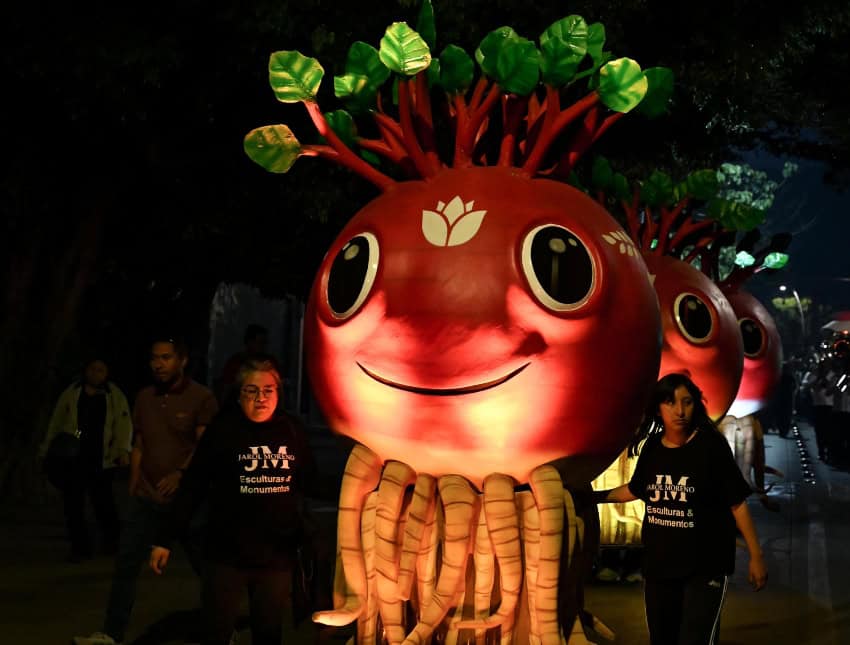
This year, Oaxaca has doubled up on its celebration of the humble radish. On the night of Dec. 22, the city introduced the first parade in honor of the radish. The party started at 6 p.m. at the Fuente de las Ocho Regiones. From there, people carried giant effigies of radishes down through the city towards the zócalo. The event was filled with music, color and traditional floats. There were also fireworks and an extensive police presence.
However, this vibrant, radish-themed parade (Convite de la Noche de Rábanos) was just a prelude to the main event: Night of the Radishes, held Dec. 23.
Night of the Radishes
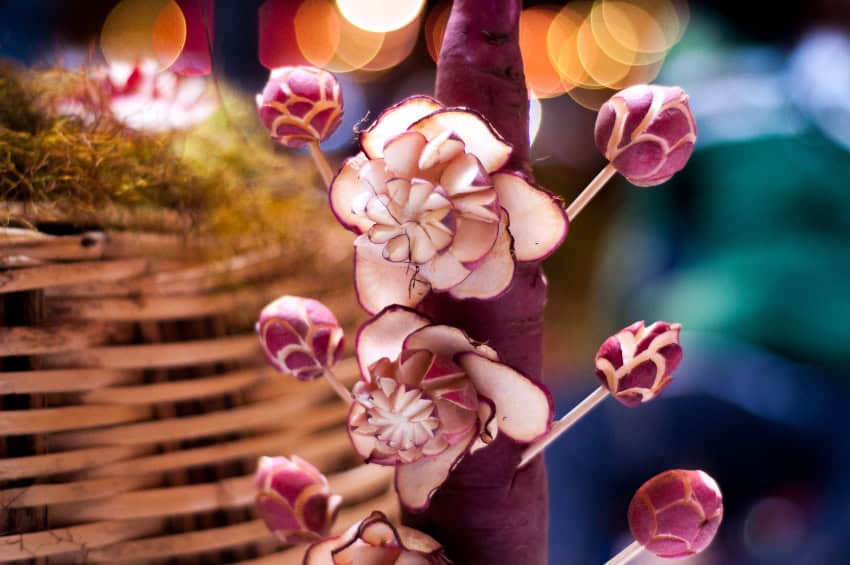
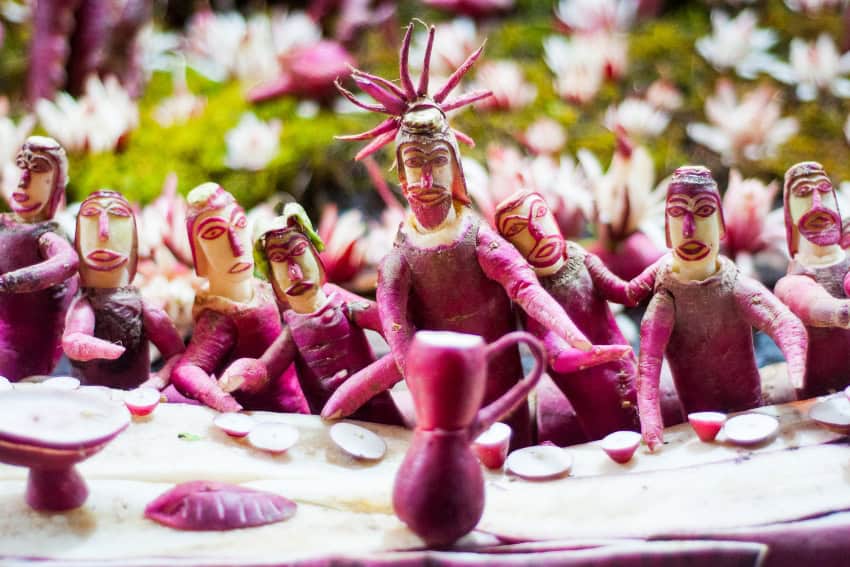
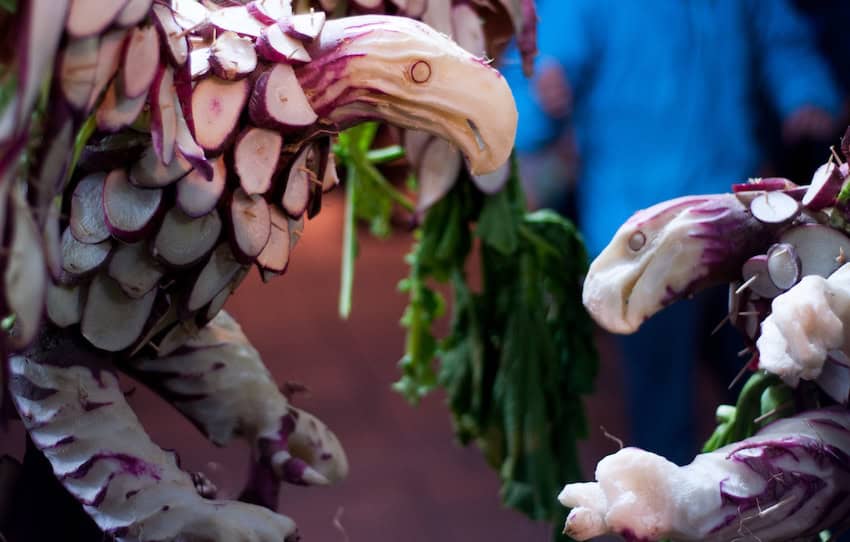
Night of the Radishes is an annual festival where local artisans carve giant radishes into sculptures, competing for prizes. They often form religious scenes such as the Last Supper or the Virgen de Guadalupe. Sculptures are completed and displayed in the afternoon of Dec. 23. Visitors can view the competition entries that evening.
Naturally, the perishable nature of radishes means they can only be displayed for a short time.
The tradition dates back to the 1600s, when Dominican monks encouraged Oaxacan farmers to use oversized and strangely shaped radishes to make attractive displays to draw people to their stalls during the Christmas Eve market, held in the zócalo. At that time, the radishes were cultivated in the village of Trinidad de las Huertas. It became an official festival and annual competition on Dec. 23, 1897, and was formalized by Mayor Francisco Vasconcelos.
A tradition not to be missed
Despite being a bit of a gimmick, the idea grew in popularity over the decades. Nowadays, the radishes are bigger than ever (as long as 50 centimeters, or 20 inches). They are grown in fields near Tequio Park, which are allocated for these giant vegetables. Each artist receives a stipend for entering the competition. The winner receives a cash prize, which is approximately 30,000 pesos (approximately US $1,666).
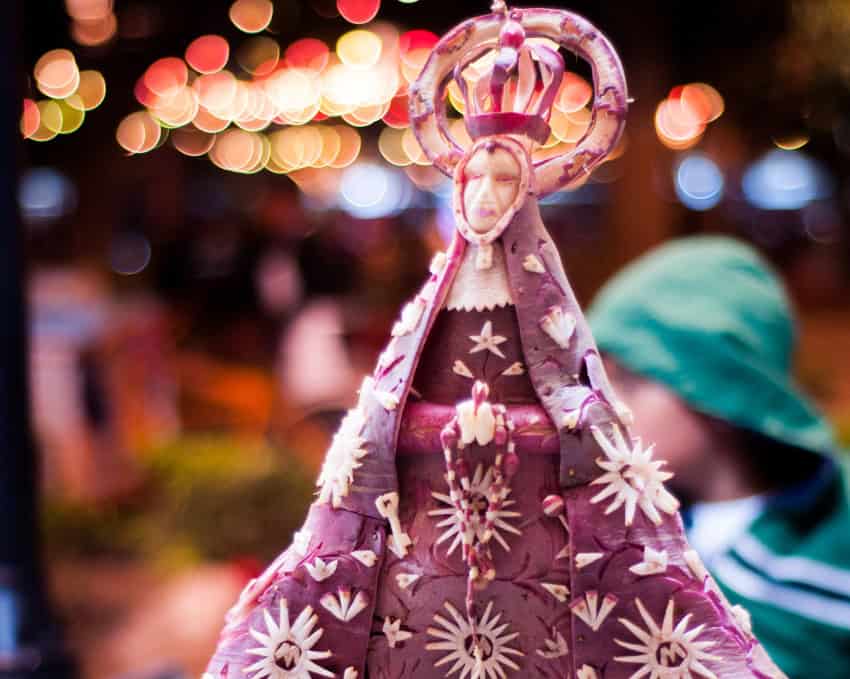
The radish parade and festival attract both locals and tourists. It is a chance to enjoy the creative radish carvings along with traditional foods, and the celebration ends in a fireworks display. Night of the Radishes is thus a unique cultural experience in Oaxaca — and one not to be missed!

Anna Bruce is an award-winning British photojournalist based in Oaxaca, Mexico. Just some of the media outlets she has worked with include Vice, The Financial Times, Time Out, Huffington Post, The Times of London, the BBC and Sony TV. Find out more about her work at her website or visit her on social media on Instagram or on Facebook.