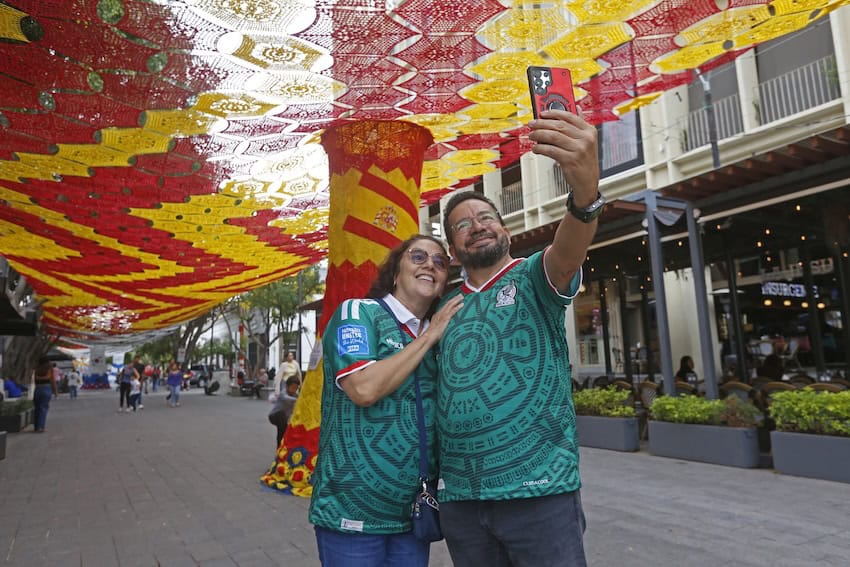
A massive and colorful hand-embroidered canopy has been installed over a pedestrian street in the municipality of Zapopan in the urban area of Guadalajara, Jalisco, as part of the host city’s World Cup decorations.
Dubbed the “Woven Sky,” the monumental installation extends over 220 meters of the pedestrian corridor of Andador 20 de Noviembre in Zapopan’s historic center, from the Arches of Zapopan to the entrance of the main square.
Lo que se hizo en Zapopan merece reconocimiento. Más de 250 mujeres de Etzatlán tejieron una obra monumental que hoy luce rumbo al Mundial 2026. Trabajo, talento, identidad y tradición mexicana. Quedó espectacular. Felicidades a quienes hicieron posible este proyecto. pic.twitter.com/TK8Luwhxkn
— José Ramón Fernández (@joserra_espn) June 10, 2026
Made of 1,400 kilometers of thread, the canopy honors the seven national teams that will play at the local Estadio Akron (named Estadio Guadalajara during the tournament) with motifs and colors from the flags of Colombia, South Korea, Uruguay, Spain, Czech Republic, Democratic Republic of Congo, and Mexico.
The crochet design features an Aztec serpent that travels along the pedestrian walkway shedding its skin as it passes the totems of each country. Each tree-like totem is covered in even more colorful hexagons, evoking the connection between heaven and earth.
Beyond serving as a decorative element, the Woven Sky provides shade for pedestrians and those sitting on the terraces of the cafes and restaurants that line the street.

The magnificent canopy is the work of over 200 women artisans from the Etzatlán Weavers Association, a group of artisans from the nearby town of Etzatlán, who in 2019 broke the Guinness World Record for the largest crochet canopy.
Following the women’s collective receiving the Guinness World Record, Zapopan has decorated the Andador 20 de Noviembre with various canopies several times to showcase Jalisco’s diverse cultural expressions.
The canopy has become a tourist hotspot ahead of the tournament, with families traveling from neighboring states to see the display.
With reports from El Informador and El Universal