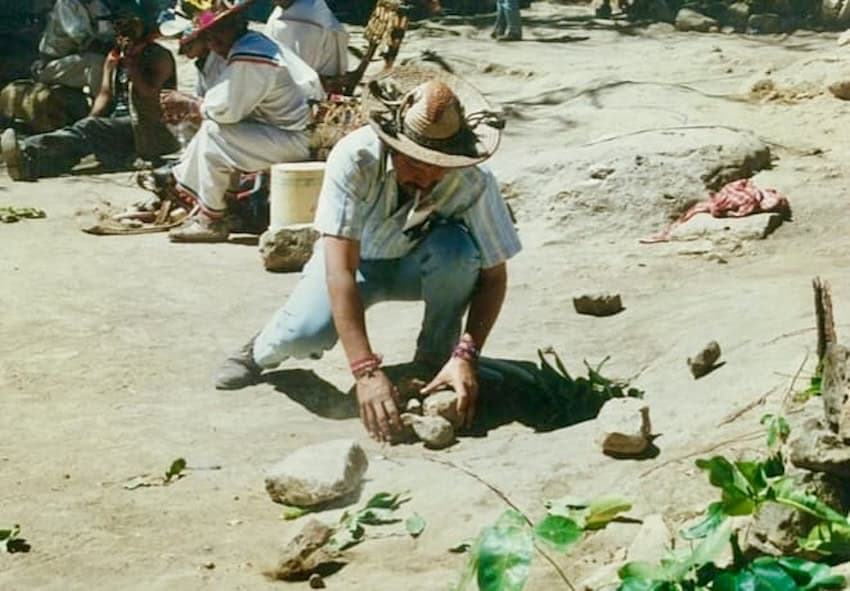
In my family, we called him Super Carlos. Together with the Wixárika people and his team of dedicated attorneys, he changed the map of Mexico.
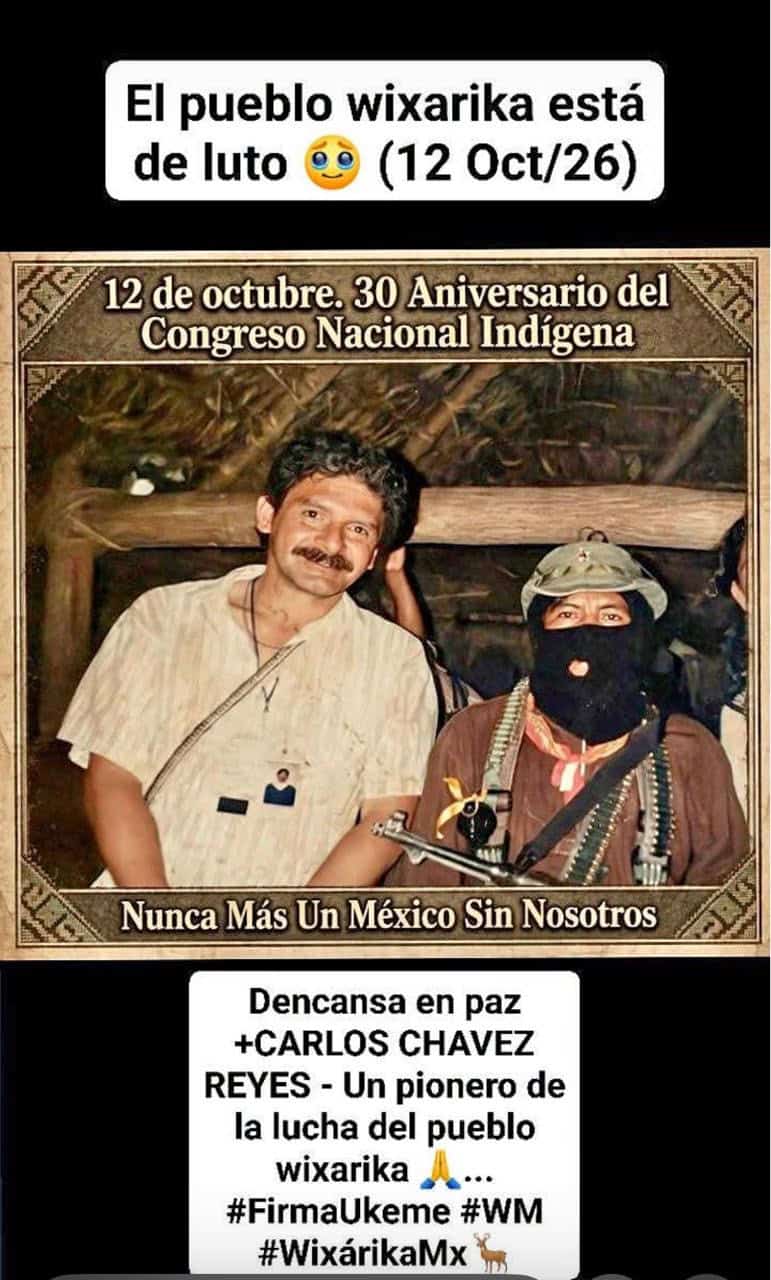
Carlos Chávez Reyes, who died in October at the age of 72, was a pioneer in Mexico’s Indigenous rights movement. Working alongside the leadership of the Wixárika — the Indigenous group also known as the Huichols — and a team of attorneys, researchers and technicians, he led the recovery of 65,000 hectares of stolen land, according to his son Cristian — and trained a generation, Indigenous and not, to carry on the work. The effort also recovered land in the disputed borderlands between Jalisco and Nayarit — territory lost to ranchers backed by the government in Tepic, which prompted the Nayarit governor to declare Chávez persona non grata and suggest he was Subcomandante Marcos.
“Carlos Chávez educated us. He woke us up when we were terrified — when we had no knowledge, no wisdom to defend ourselves,” said Maurilio Haiwiye Ramírez, general coordinator of the Wixárika Regional Council. When Carlos arrived, he added, “there was no one who could speak on our behalf.”
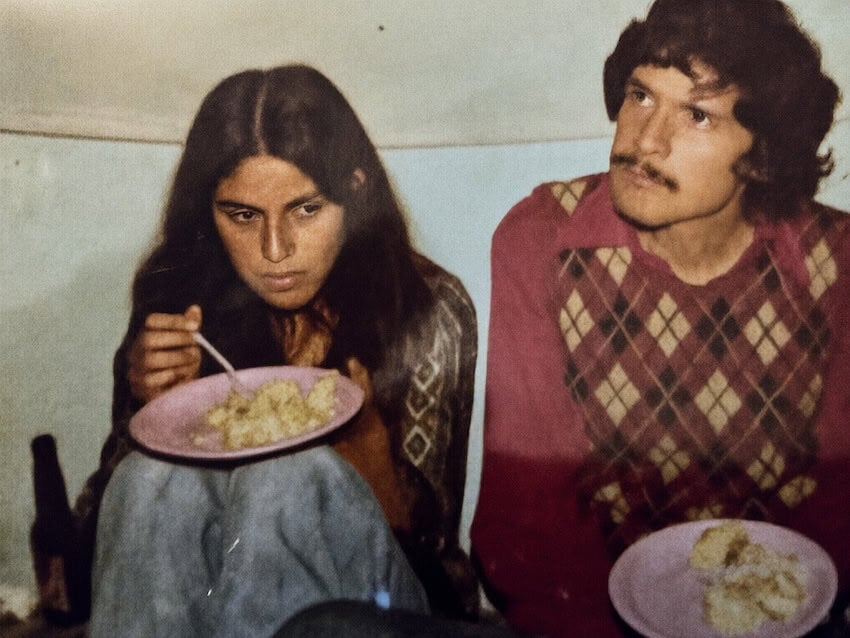
Chávez was one of a generation who chose to drop out of the system and look to Nature — and, increasingly, to those who lived closest to it — for answers.
As UC-Berkeley geographer Diana Negrín tells it, Carlos belonged to a first generation of “huicholeros de corazón” (“Huichol supporters of the heart”) who came to the sierra as collaborators rather than researchers or bureaucrats. Among them were Rocío Echevarría and Diana Negrín’s own parents, Juan and Yvonne.
The late 1970s were a hinge for the Wixárika communities. “The first roads had been built, and the logging companies were coming in with a vengeance,” explained Diana.
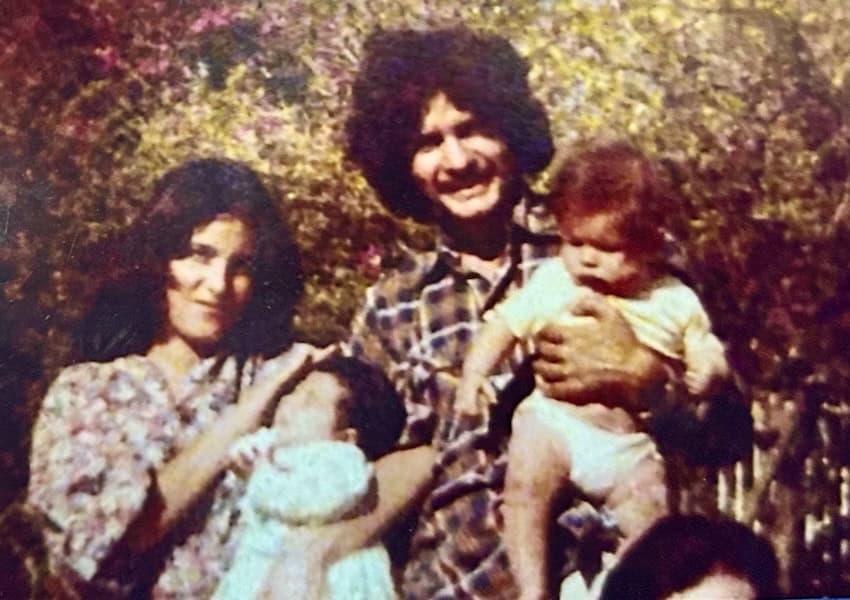
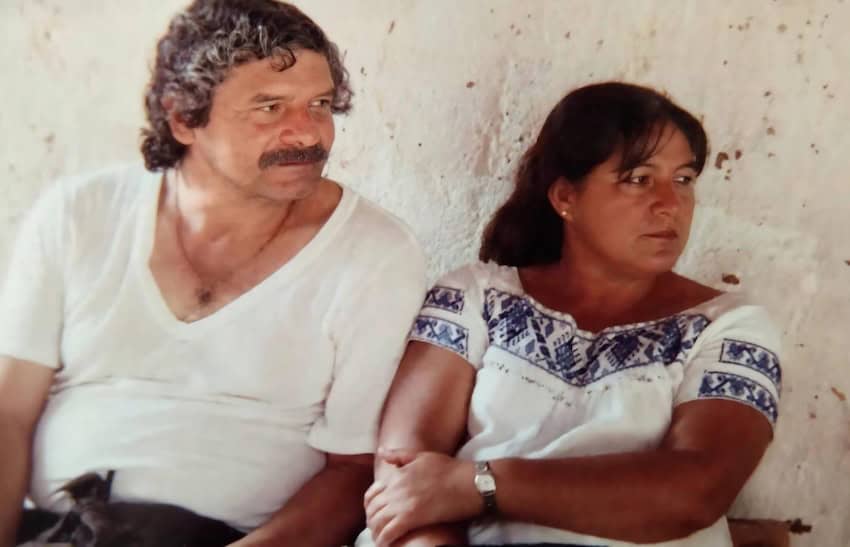
In 1977, at the age of 23, Chávez met Eulalia González Ávalos, his beloved Lala; together the two had five sons, each of whom carries on his legacy. Tunuary and Cristian, his twin sons, have gone on to earn degrees in environmental science, deepening and broadening the territorial defense that their father began.

Carlos and Lala launched a natural medicine project in the countryside outside of Guadalajara, exploring the healing properties of plants and treating people for miles around. His search for plant medicines led him to the Wixárika, and to the mara’akate (shamans).
Rocío Echeverria, a registered nurse who ran the health center in San Andrés Cohamiata for six years before founding Casa Huichol, remembers those days fondly, having logged many miles with Carlos.
“Those were crazy, crazy times,” she recalled. In their first journeys, the highways to Wixárika territories had not yet been built, so reaching the communities meant a plane and then days on foot. There they accompanied the people to other dimensions, sitting around Tatewari, Grandfather Fire, through long nights of music, dance, sacrifice and vision.
Indigenous families in medical crisis find a second home in Casa Huichol
They walked with local medicine men and women through the Western Sierra Madre, learning the Wixárika pharmacopeia. But the most important medicine did not grow in the Sierra Madre. Hikuri, the Wixárika word for peyote, is gathered in their annual pilgrimages to Wirikuta, one of the five most sacred sites in their millennial cosmology.
In those journeys, Carlos and Rocío observed the terrible poverty of the people, a bare subsistence that left them vulnerable to hunger and common illnesses that could quickly turn deadly with the lack of care. And as Carlos himself told the story to this reporter on a long-ago journey to the Sierra in his trusty grey Toyota pickup truck, the people told him repeatedly that what they really needed was their land — the best land, taken by neighboring ranchers to harvest timber, graze cattle and, in the worst cases, grow marijuana and poppies for the cartels.
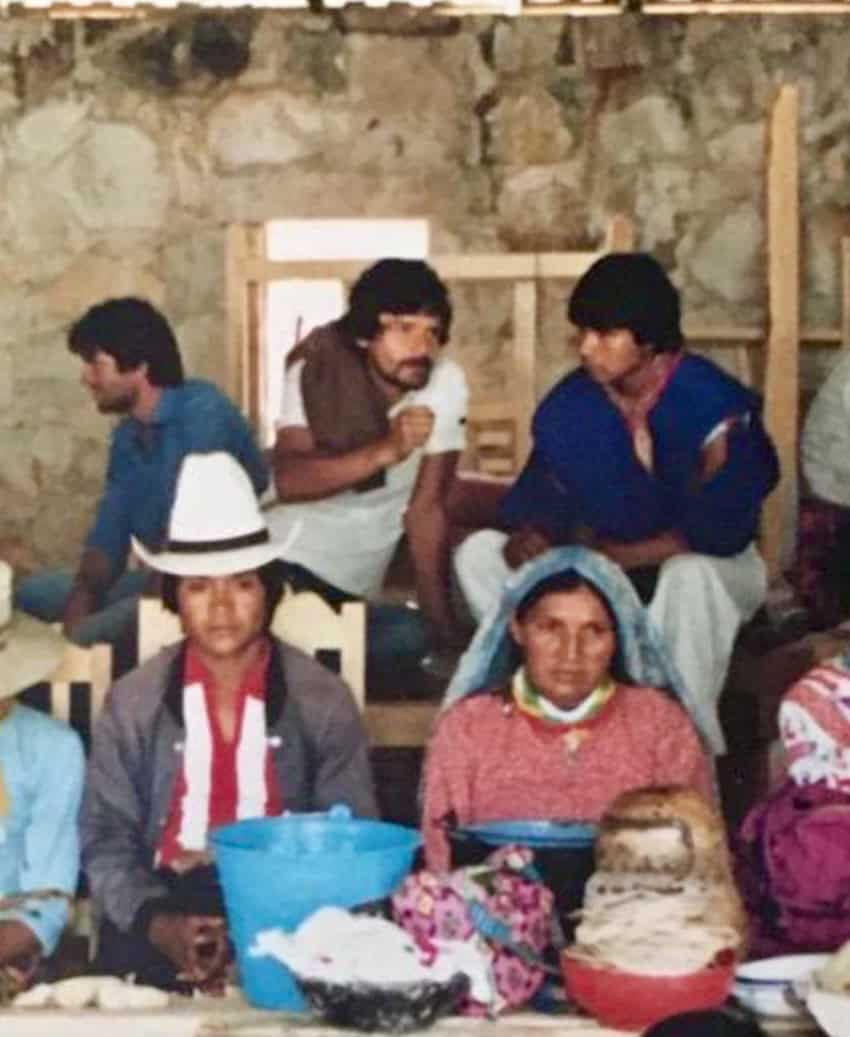
They needed an advocate, not an herbalist. In his travels, he met Juan Negrín, another pioneering figure who came to the same conclusions. Juan, roughly a decade older, had already built the organizations through which Chávez learned institutional work, and the two joined forces. In 1990, he helped found the Asociación Jalisciense de Apoyo a Grupos Indígenas (AJAGI), which would become the legal and technical backbone of the Wixárika land struggle for the next three decades.
Paul Liffman, an anthropologist who served as an expert witness in a number of AJAGI’s land cases over two decades, remembers Carlos describing the realization himself. He had begun believing healing came through medicine. “But then he understood that for people to be healthy, they first had to eat well. And to eat well, they needed maize. And to have maize, they needed land.” The illness and the landlessness were the same problem.
Under a blanket in the back of a pickup
The danger was not abstract. Yvonne Negrín, Juan’s widow, learned that a $25,000 bounty had been placed on her husband’s life. “Every time my husband went to the sierras, I didn’t know if he would come back.”
A decade later, as the Wixárika community of Bancos de San Hipólito in Durango planned an amparo against illegal logging, Maurilio Haiwiye Ramírez was hiding Chávez under a blanket in the back of a pickup so the ranchers who controlled the road through San Juan Peyotán would not see him.
“We hid him because we didn’t want the mestizos who were against us to know,” Ramírez said. Meetings were held at night for the same reason: “So no one could find out.”
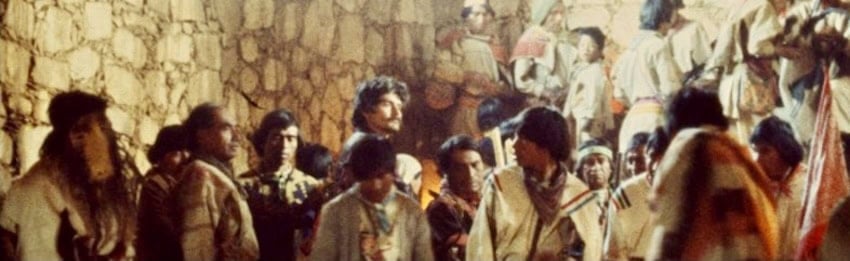
The danger was not abstract to me, either. In the winter of 2010, as I rode with Carlos through the night toward Bancos de San Hipólito, he told me plainly that the road ahead ran through territory controlled by narcos, and that if I wanted to get out and run now, he would understand.
He said it wryly, the way a man says something he has said before, to other passengers, on other nights. “Vamonos,” I said. He put the truck in gear and drove.
New trail program to connect the Wixárika communities in Jalisco
Five little boys and a washboard
What held was Lala. Yvonne Negrín remembers driving past the couple’s place in the countryside and seeing her at a washbasin, “scrubbing diapers on a washboard for five little boys,” the clothesline so full she never forgot it. Tunuary described parents who never let their children see the strain — not when Lala was ill, not when Carlos was. “They decided to resolve it themselves, so that we could grow up without having to resolve their affairs.”
The children kept codes and false names; Carlos saved each of them in his phone under someone else’s name, and the habit outlasted the danger. What healed the family, Tunuary said, was Wirikuta. He dropped out of school at 15 and asked his mother to let him go to the desert. She put him on a train.
A seat at the Zapatista table
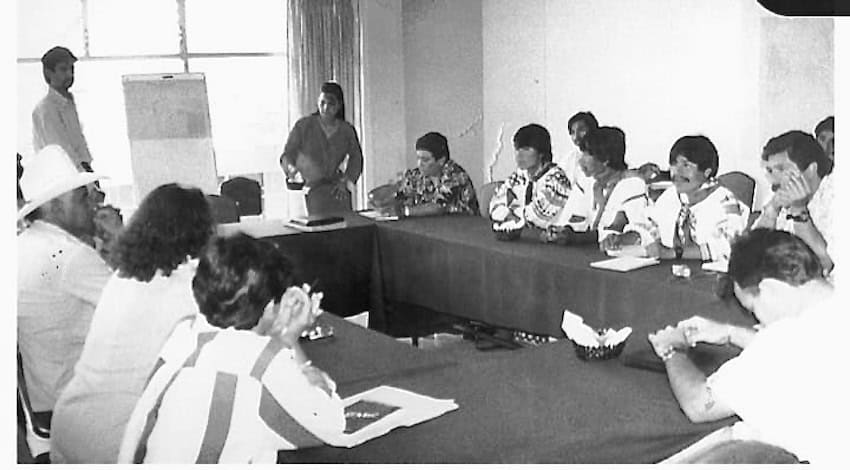
In 1996, when the Zapatista army and the Mexican government sat down in Chiapas to negotiate the terms of constitutional recognition for Indigenous rights, Carlos Chávez and the lawyer Ángeles Arcos, of AJAGI, were named advisors to the dialogue tables held in San Andrés Sakamchén de los Pobres. The Zapatista uprising two years earlier — an armed rebellion in the south of the country that captured the attention of Mexico and the international community and placed Indigenous rights at the center of the national agenda — had turned the negotiation into a national event, and the list of advisors was published in the national press.
“Without a doubt, the Indigenous movement was never the same after the Zapatista uprising,” Arcos said. “It put the question of constitutional recognition of the collective rights of the pueblos at the center of the federal agenda.”
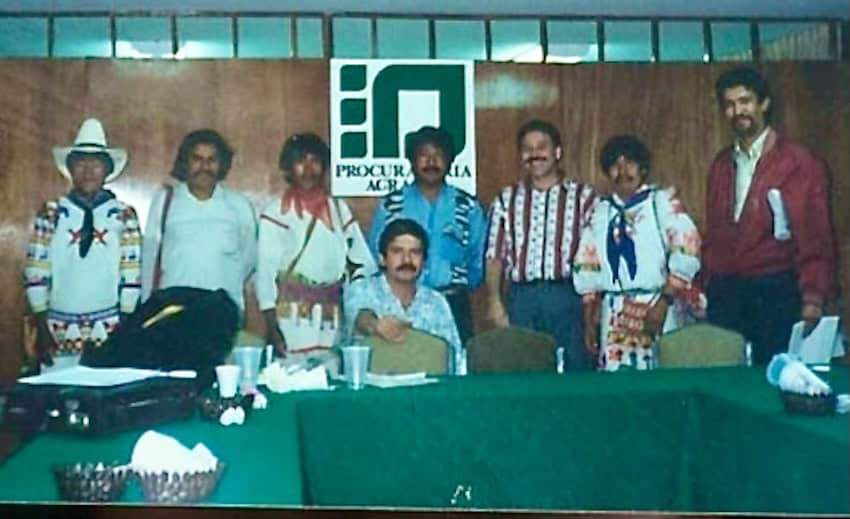
What the Wixáritari brought to those tables were territorial claims argued under AJAGI’s most powerful weapon: Convention 169, the International Labour Organization treaty on Indigenous and tribal peoples’ rights, which Mexico had ratified in 1990. What they took away was something less tangible: the Wixárika delegations traveled to Chiapas and spent time with the Zapatistas, and Arcos remembers it as a period of mutual enrichment.
“The Wixáritari occupied a very important place in the demands the Indigenous movement put to the Mexican government,” she said. “Their territorial struggle was iconic, and the EZ (Zapatistas) also showed them new forms of struggle.”
‘He didn’t want to be indispensable’
What made Chávez effective was not only conviction but method. Agustín del Castillo, who has covered agrarian conflicts for top Guadalajara media outlets for 38 years, argues that his contribution was strategic rather than moral. “He gave the struggle a component of intelligence, of a sense of strategy,” del Castillo said. “Many can fight. Fighting with intelligence, with strategy — that’s the merit I attribute to Carlos.”
What distinguished Chávez, del Castillo said, was that he deliberately made himself unnecessary.
“He didn’t want to be indispensable. He wanted the communities to take their own destiny in hand.” By the time of Wirikuta, del Castillo said, “I no longer saw him in the leading role he had in the ’90s. I saw him as an accompanist” — and that, he insists, was the triumph of the model rather than its failure.
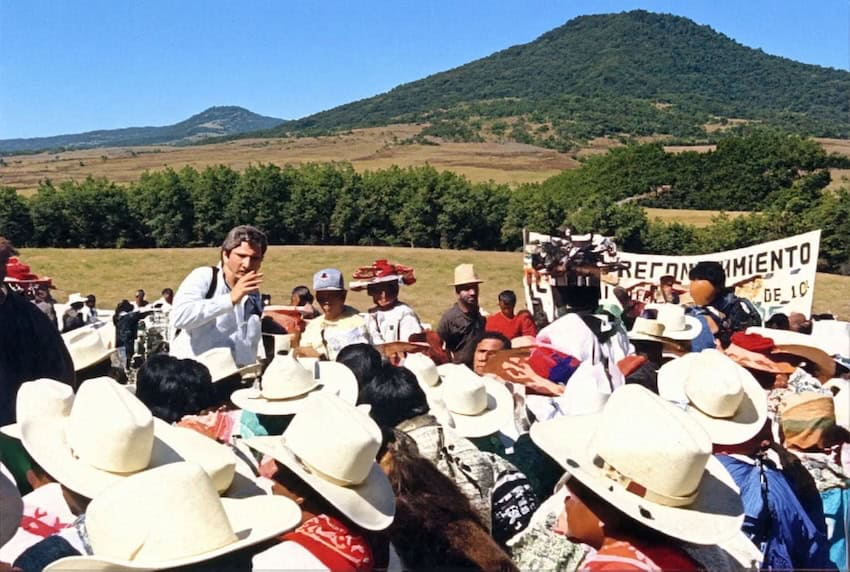
What Liffman remembers is a seemingly fearless man who was “as much a moral as an intellectual example” — and he doubts the communities would have trusted him otherwise.
The communities describe something more concrete. Ramón González López, a community member from Tuxpan de Bolaños, remembers the workshops on Convention 169 and the agrarian law. “That was what opened our eyes,” he said. “We realized we had many rights — and many obligations, too.”
The money was modest and came from far away. Outi Hakkarainen, a Finnish researcher who met Chávez in 1995 while studying civil society in Jalisco, spent two decades channeling funding to AJAGI — much of it from a student union at the University of Turku.
“Our money was not much,” she said, “but it was essential for this work,” because it could be directed at what most donors avoided: litigation over land tenure.
She was candid that the finances were chaotic. “We understood that his way of working was chaotic too, but we couldn’t change it.” What she never doubted was that the funds went where they were meant to.
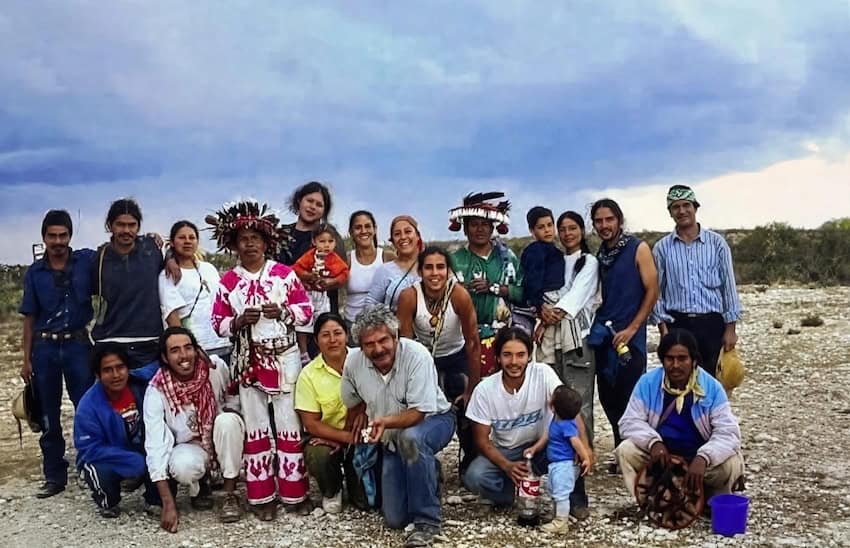
Lalo Guzmán, who worked alongside Chávez for years in the Wirikuta Defense Front and has defended the desert for decades, rejects the accusations that have circulated about the money. He is a witness, he said, that the family never enriched itself — that everything Carlos raised went into the struggle, sometimes at the cost of his own household.
“That will sound bad to others,” Guzmán said. “To me it speaks well of him.”
Quetzal Prado, a lawyer who joined AJAGI in December 2012, described an organization built around a division of labor: a technical team, a legal team, and Chávez holding the political and strategic vision.
“You present him with a problem and he was very good at understanding the whole broad picture of it — not just the present moment, but how we can project it into the future.” She recalled leaving meetings and having Chávez decode them afterward: “No, this person told us such-and-such, because what he actually means is this.”
Raymundo Vázquez Sánchez, an agrarian lawyer from San Sebastián Teponahuaxtlán, described the years before AJAGI as stalled. Petitions went nowhere, and the community had no legal footing.
What Carlos left behind, he said, was a generation that could argue its own case.
Next week, Part II: ‘They don’t see with their eyes’ — Carlos Chávez’s last 15 years, from the fight for Wirikuta to the fire that sustained him.
Tracy L. Barnett is an independent journalist and founder of The Esperanza Project. She worked with Carlos Chávez on the Wirikuta Defense Front’s communications team for two years, and loved him and his family like her own. She counts him, as do countless others, as a mentor and a guide.