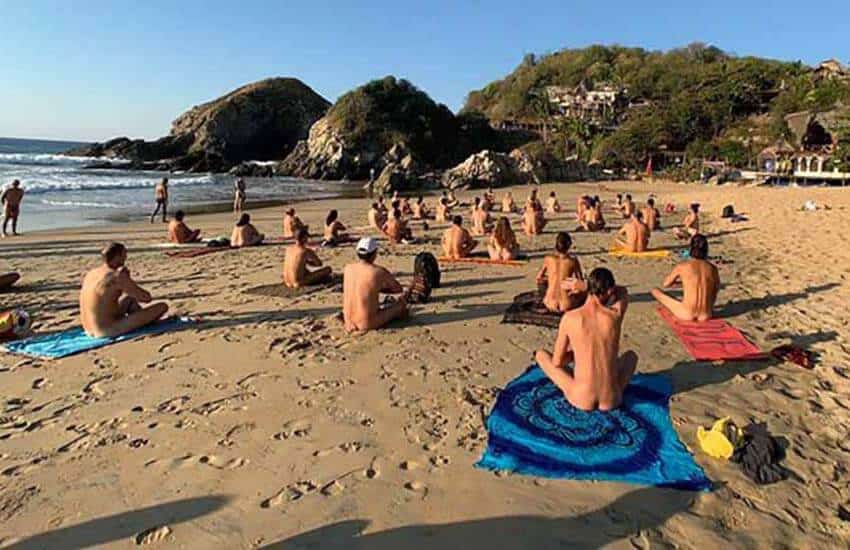
Zipolite — the famed nudist beach along the Oaxacan Riviera known for its naked festivals, yoga, volleyball matches and more — is now making a serious effort to expand its offerings to another kind of open expression: the fine arts.
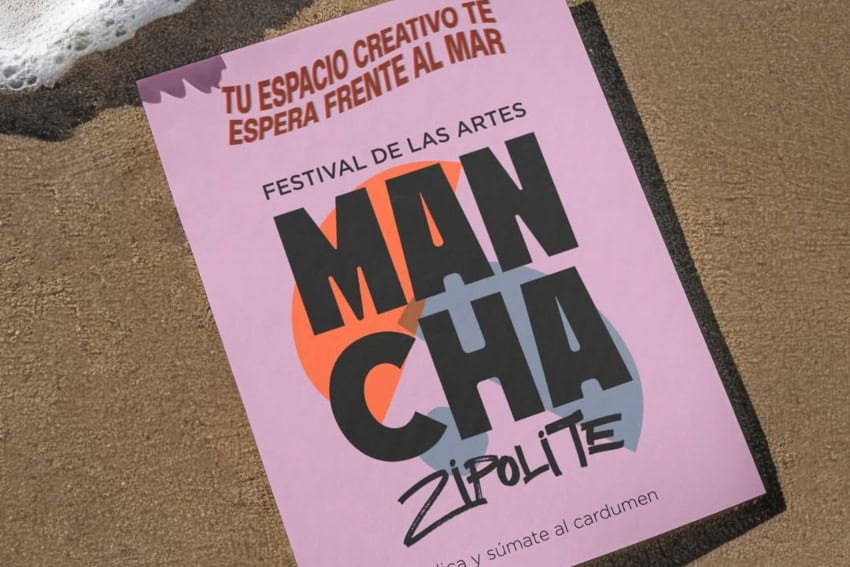
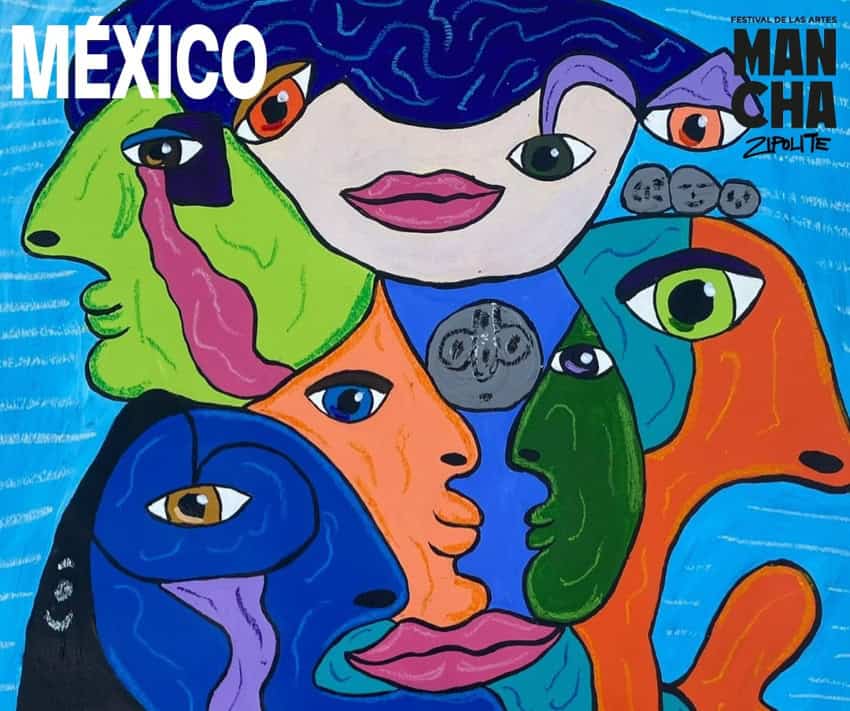
Leading this charge is MANCHA Arts Festival, which was publicly inaugurated in 2023 by a series of local artists and organizers who aimed to turn Zipolite into a veritable art destination.
A spotlight on Zipolite’s ‘orange economy’
The idea sprouted in 2022 behind the leadership of Gallery 175 Uno Siete Cinco, an art showroom and workshop that opened six years ago behind the vision of Cheram Morales, a multidisciplinary artist originally from Tijuana who has dedicated himself to fostering a community of creative radicals on Mexico’s Pacific coast, where he has lived for the past five years.
With MANCHA is the Spanish word for “stain” or “spot,” but is also term fisherman call the mark of water when a school of fish is passing by — Morales and the gallery are hoping to leave their mark, so to speak, on the regional art scene and economy with the area’s largest arts festival of its kind.
“Zipolite is a magical paradise, and it has been since the hippie days (of the 1960s). It’s considered the only legally nude beach in all of Mexico, and that has helped to turn the region into a place that creative and open-minded people enjoy. Naturally, there is lots of liberty in that,” says Morales. “It’s a port for artists, and now we’re trying to organize and unite the different areas of creativity to turn it into something bigger. We want to make it a more notable art region.”
On Feb. 5, the four-day festival will kick off by unveiling 30 artists (selected from a free, open-call submission process in December and January). The festival will take place along Playa Zipolite, a 2-km stretch where artist-vendors will be showcasing a range of their artwork — from acrylic paintings and ceramics to fabrics and weavings.
Art, live music and regional gastronomy
Aside from the visual arts, MANCHA will feature live musicians, regional gastronomy and family-friendly workshops geared toward engaging children and teenagers. It’ll all be free and open to the public, with an emphasis on bolstering Zipolite’s “orange economy” — that is, the creative, cultural and intellectual sectors of the economy.

When the festival started out three years ago, it only featured six artists and 11 activities scattered throughout the city. This time around, they’ve ballooned to nearly five times the participants and offerings, partnering with restaurants, hotels, the local tourism board and various artists from around the country — and the world — to deliver the second annual edition after a three-year hiatus.
View this post on Instagram
The festival was originally intended to occur biannually, but due to logistics, planning and strategically waiting for Zipolite’s high season for tourism, MANCHA hasn’t occurred again — until now.
‘Everyone is welcome’
Guest artists will be arriving from near and far, including Oaxaqueña Viviana Lorenzo, who will be opening this year’s festival with her inaugural exhibition.
Zurdo Valdez, an artist from Tecate, Baja California, will be performing live art in real time throughout the festival, a four-day project in which he will be painting interactively for an audience. There will also be a group of traditional artisans from nearby Pinotepa, a town known for its Oaxacan textiles.
“The idea behind bringing artists from (all over) was very intentional,” Morales says. “It’s meant to blur the lines between territories and highlight Mexico as one singular people, rather than thinking about the northern or southern regions as vastly different.
“Our message is clear: Everyone is welcome at this beach; there are no differences here. That’s the spirit of MANCHA.”
Zipolite’s storied history
It’s a liberal philosophy that builds on Zipolite’s storied reputation as Mexico’s earliest nudist getaway. Before the 1960s, the area was a mostly remote area of fishermen and Indigenous locals. In the following decades, travelers began to arrive in search of adventure and freedom of expression, which informally led to the town’s modern development. Spots like Lola’s (opened in 1968) and Shambala (in the early 1970s) set the tone for what was to come in future years.
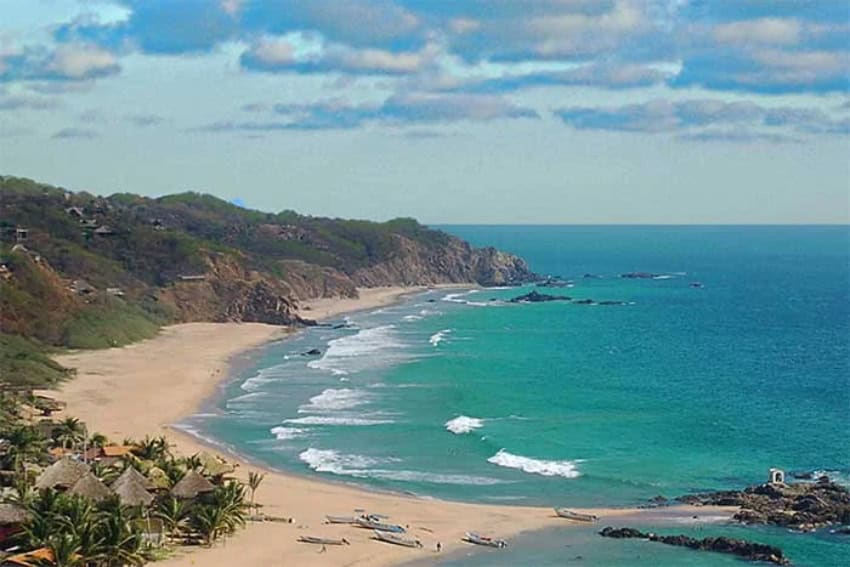
In those early days, Morales estimates, it would have taken up to 12 hours to reach the coast, a journey through vegetation and mountainous terrain, but groups of hippies arrived to revel in their isolation. As word of the clothing-optional beach began to spread, Zipolite flourished into a slow-paced, laid-back haven for a growing collective of free-spirited wanderers, marked by the opening of local institutions such as Lo Cósmico — a group of rustic hut lodges overlooking the beach that opened in 1984.
In the 1990s, the region was hit by multiple hurricanes, and Zipolite endured a large fire in 2001 that wiped out many of the palm-thatched palapas and rudimentary cabins. Nevertheless, the town rebuilt and even grew.
Around that time, Mexican director Alfonso Cuarón’s cult film, “Y tu mamá también,” was released — a movie largely centered on travel and sexual exploration. Starring the young duo of Gael García Bernal and Diego Luna, one of the closing scenes takes place at Playa Zipolite, which further reinvigorated the beach’s popularity and lore. Nowadays, emblematic hotels and eateries like El Alquimista, Naked, Tap Room La Deliria and Mezcaleria Gota Gorda continue to increase the destination’s appeal.
Art as a tool for community engagement
MANCHA is the cherry on top: The festival is a culmination of ongoing grassroots efforts and community engagement through art.
“Art is a tool,” says Morales. “It’s not only about the gallery. Artists like Mario Calavera have been doing work in the community for years. There are lots of seeds that have been planted through art here. We have been assessing and strengthening it all over time, looking at it closely and improving it to make it more visible and professional.”
“We are a collective and community-minded group,” he adds. “That kind of involvement allows people to think about art differently. It opens dialogue and exchange to improve things between tourists and locals.
“There are arts festivals in the central part of Mexico, but not many like this along the coast.”
The party will last until Feb. 8.
To find out more about events at the festival, follow its Instagram page.
Alan Chazaro is the author of “This Is Not a Frank Ocean Cover Album,” “Piñata Theory” and “Notes From the Eastern Span of the Bay Bridge” (Ghost City Press, 2021). He is a graduate of June Jordan’s Poetry for the People program at UC Berkeley and a former Lawrence Ferlinghetti Fellow at the University of San Francisco. His writing can be found in GQ, NPR, The Guardian, L.A. Times and more. Originally from the San Francisco Bay Area, he is currently based in Veracruz.