Researchers in the northern state of Sonora have uncovered a pre-Columbian village that predates the nearby Cerro de Trincheras archaeological zone and offers rare evidence of cross-modern-border ties with ancient cultures in what is now Arizona.
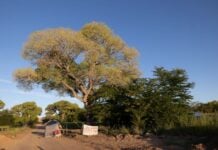
In northern Sonora’s Cocóspera River valley and canyon — about 100 miles south of Tucson, Arizona — specialists from the National Institute of Anthropology and History (INAH) have identified an earthen village they say was occupied roughly 1,000 years ago.
The find emerged during archaeological salvage work tied to construction of the Ímuris-Nogales railway bypass, a controversial rerouting of Sonora’s “ghost train” line that has drawn environmental concerns.
Identified as La Ciénega (The Marsh), the village has been linked to the Trincheras people, a farming culture in northern Sonora that built extensive terraced hillsides, dug irrigation canals and produced distinctive ceramics from about 800 to 1500 CE.
Archaeologists pegged La Ciénega to 800-1200 CE, which predates the nearby Cerro de Trincheras (Trench Hill), a hilltop settlement of more than 900 stone-built terraces considered one of the most important archaeological sites in northern Mexico. INAH pegs its occupation to 1200-1500 CE.
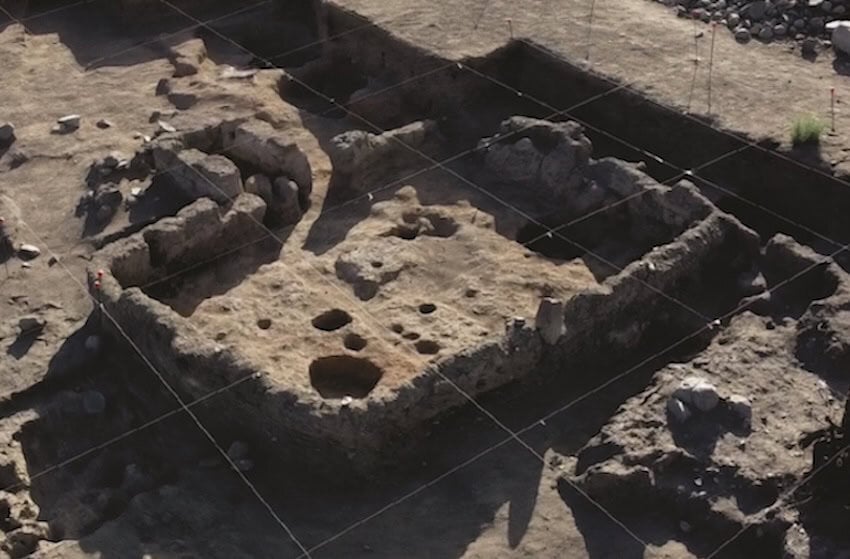
The newly found site, in a green river corridor of Sonoran Desert country, includes foundations of up to 60 dwellings, a cemetery with 40 human remains and 28 urns holding the ashes of people who were cremated, according to INAH.
Analysis of ceramics also points to contact with the Hohokam people, whose descendants include the Pima and Tohono O’odham of southern Arizona, according to the U.S. National Park Service.

INAH said the find “confirms this region was a cultural meeting place and a corridor connecting [Sonora to what is now] the southwestern U.S.”
Archaeologist Júpiter Martínez Ramírez said earlier surveys in 2008 had registered 10 houses, but new excavations reveal a far larger community.
“The architectural evidence is spread across the entire plateau, an area 250 meters long by 250 meters wide,” he said during a recent INAH “Coffee Afternoons” lecture series.
Researchers with the SALFIN project (SALFIN is the acronym INAH is using for the archaeological salvage of the Ímuris-Nogales railway bypass) excavated three residential compounds and documented dozens of burials of children and adults tied to the Trincheras tradition.
The oval and rectangular semi-subterranean houses, dug up to more than 2 meters below the surface and with internal walls, formed neighborhood-like clusters of multi-generational families.
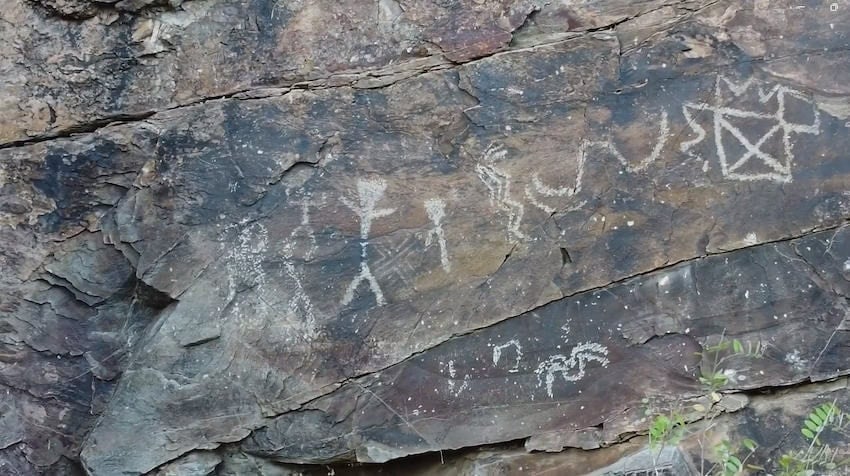
As part of the same project, archaeologists also recorded two smaller Trincheras settlements, Ojo de Agua and La Curva, and two petroglyph sites — Babasac and Bear’s Footprints — that likely date to 800-1400 CE.
With reports from Artistegui Noticias, El Sol de Hermosillo, Border Report and INAH