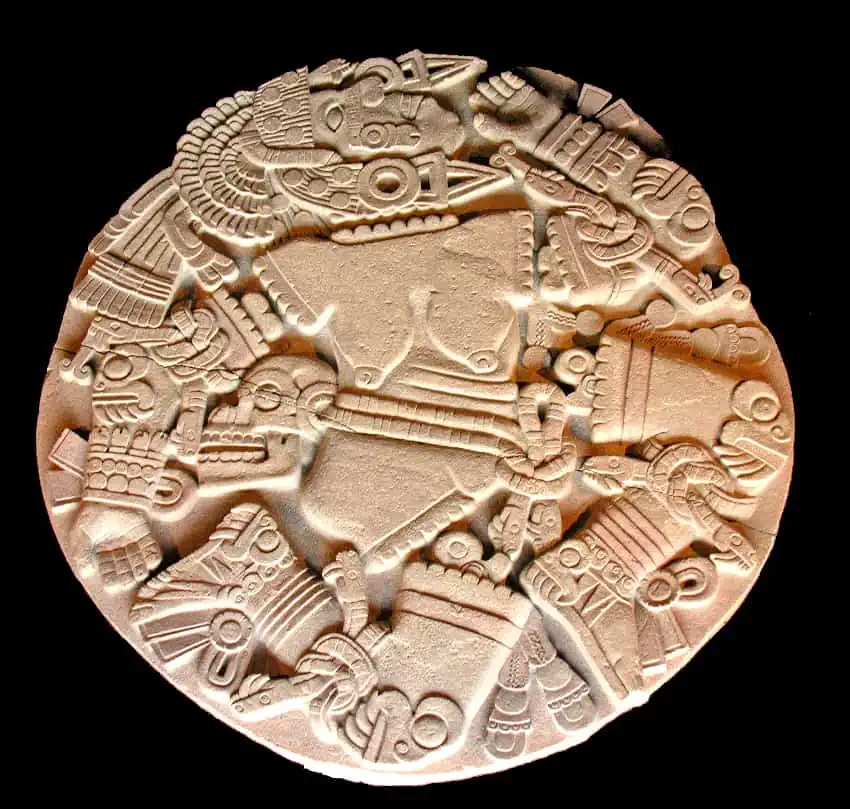
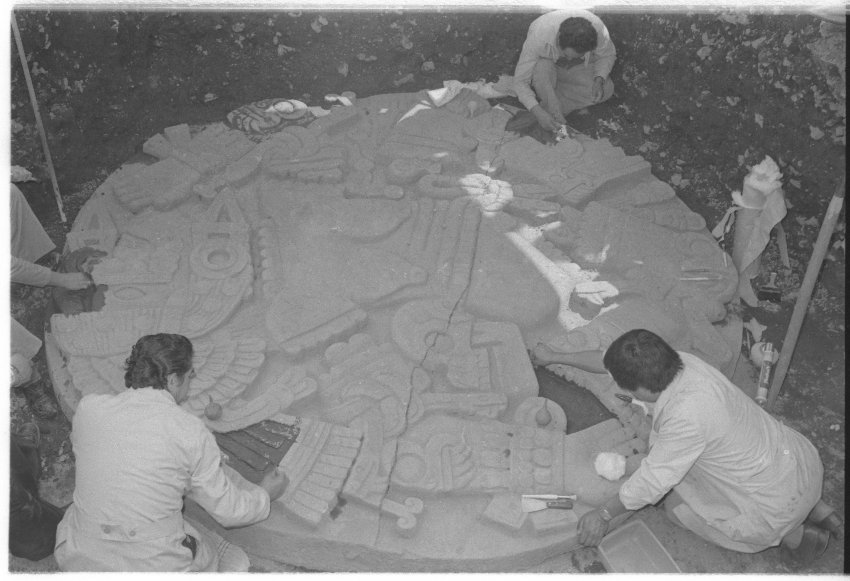
In 1978, the monumental Mexica (also known as Aztec) sculpture called the Coyolxauhqui stone was discovered at the site of the Templo Mayor in Mexico City.
An exhibit commemorating the 45th anniversary of the monolith’s discovery and exploring Mexica mythology opens today at the site’s museum.
The giant stone disc depicts the Mexica myth of Coyolxauhqui, the goddess of the moon, who was slaughtered by her brother Huitzilopochtli, the god of war.
The stone was found at the foot of the main temple of the Templo Mayor site in the ancient capital of Tenochtitlán, now Mexico City. It dates from around 1473, during the reign of Axayacatl.
The exhibit (running Feb. 22 to Jun. 4) includes a large format model of the sacred enclosure of Tenochtitlán to better understand the birthing myth of Huitzilopochtli, patron god of the Mexica, and the defeat of his sister Coyolxauhqui.
An artistic illumination will be projected onto the model based on the myth’s translations by Alfredo López Austin and narrated by the renowned archaeologist who headed up the Templo Mayor excavation, Eduardo Matos Moctezuma.
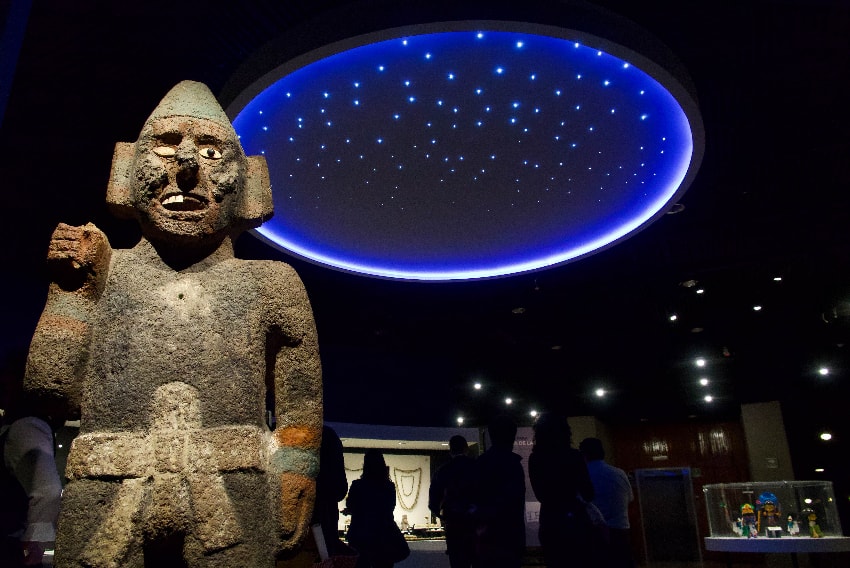
Among the 158 objects on exhibit are gold ornaments related to the lunar cult of Coyolxauhqui and the skeletal remains of a child dressed in the insignia of Huitzilopochtli unearthed in 2005.

According to archaeologist Patricia Ledesma Bouchan “this is an important finding, since the representations of [Huitzilopochtli] that have appeared to date can be counted on the fingers of one hand.”
The exhibit is included in the access ticket to the museum and the archaeological zone.