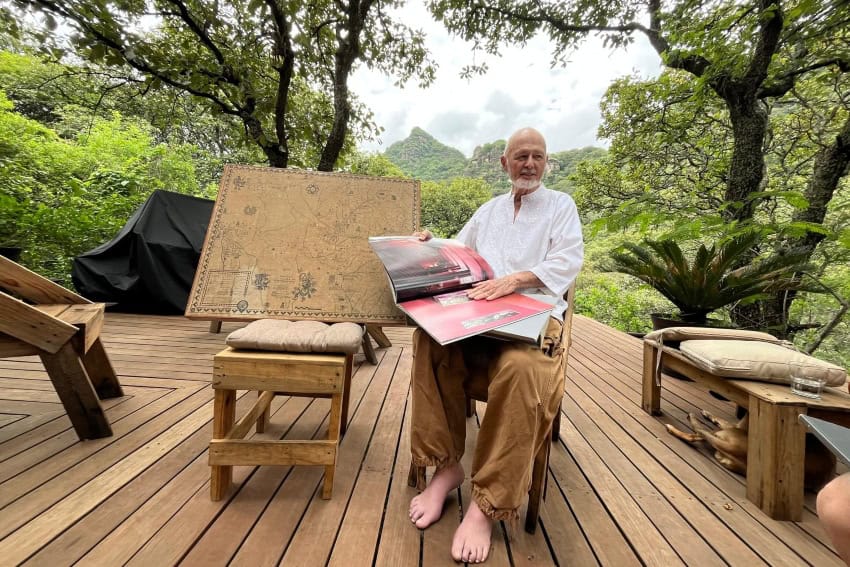
This was not your typical interview. Speaking with Diego Villaseñor, the architect, was the most special interview experience I have ever had. This legend, considered one of the 100 best living architects, invited me to visit one of his most recent works in Amatlán de Quetzalcóatl, Morelos. After walking down a gorgeous, winding road lost in the woods, I arrived at a house that seemed to be a continuation of the surrounding trees, with a terrace that seemed to float among them.
Villaseñor sat with an edition of four books containing pictures of some of his greatest works among the more than 100 he has created in his 84 years. He took the time to convey to me the essence of his architectural philosophy, which he views as a tribute to beauty, emotion and nature.
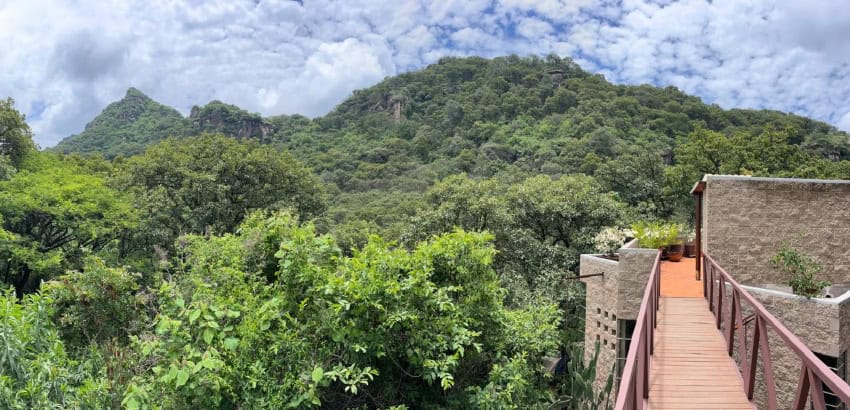
The architect spoke about his work as if he were seeing it for the first time, feeling surprised, passionate and in awe of a creation he admired. The most extraordinary aspect is that in every picture of his work, nature is the protagonist. His passion is evident in his designs, which are created to exalt nature.
The importance of emotion and beauty in feeling alive
Villaseñor was born in Tlaquepaque, Jalisco. He was friends with Luis Barragán and artists like Chucho Reyes. For Villaseñor, architecture is about using beauty to create emotional states that bring out the best in humanity. He sees the home as an extension of nature: “I am a framer of the landscape,” he says.
“Humans should have the right to beauty,” he notes, becoming emotional as he expounds. For him, feeling accomplished is important, and we can achieve that state through the spaces we inhabit. “We need to eat so our bodies function, and similarly, we need to feel in harmony to give our best.” In this sense, spaces are crucial in bringing us to states of contemplation, gratitude and plenitude through beauty.
Villaseñor believes that visual chaos is an aggression because it strays from our true nature. However, the beauty he creates, with nature as the main factor, is also inspired by daily life. During our interview, he mentioned popular songs, poems, and traditional clay or pre-Hispanic kitchens, such as the tlecuil — the traditional Mexican stove or brazier — as sources of inspiration.
Many of his masterpieces can be attributed to a curious mind. He is interested in all forms of life, as well as ideas from philosophy and science. “It is important for human beings to feel moved. When you are moved, you connect with something greater — you are no longer just an individual. Beauty that stirs the emotions gives life more meaning and creates moments of fulfillment.”

Architecture as a tribute to nature
Diego Villaseñor’s architecture is not merely about including nature; it blends harmoniously with it. In fact, his work highlights the area’s natural beauty and views. Additionally, his buildings prioritize the use of local natural materials, such as stone and wood crafted by Mexican artisans.
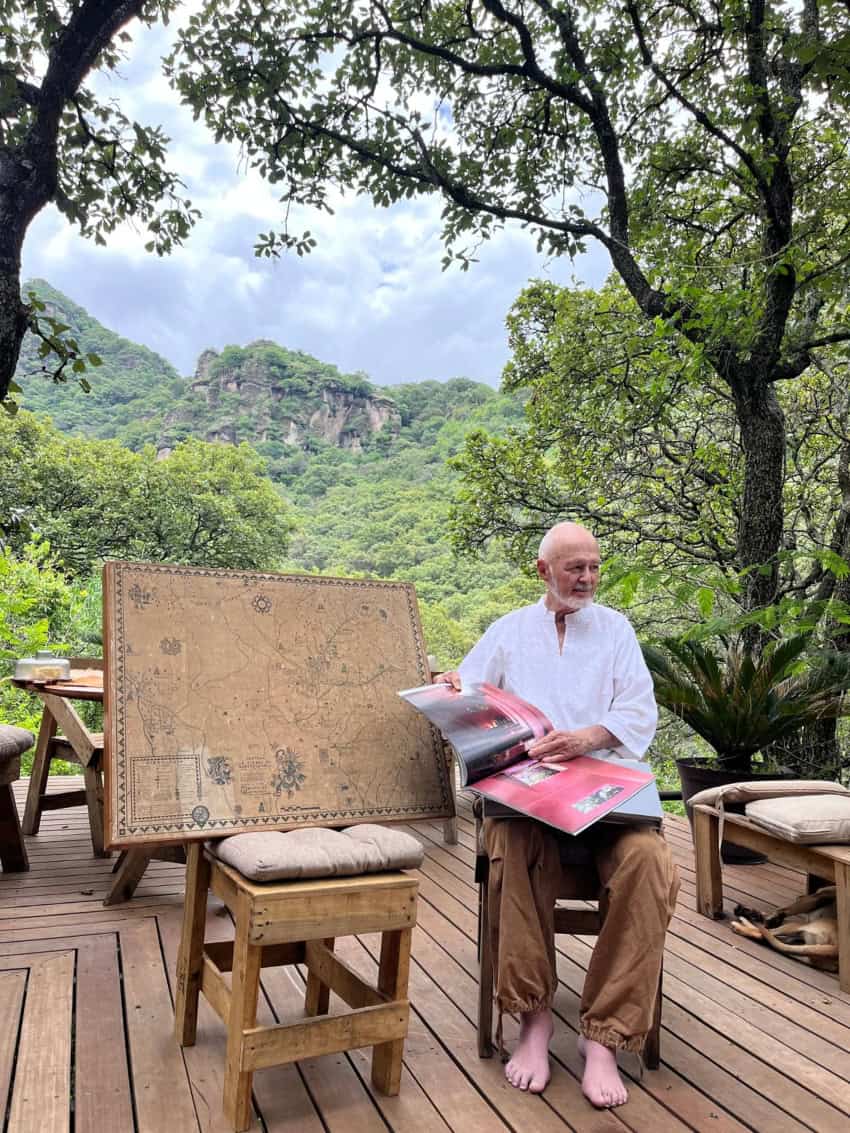
Moreover, when he designs a house in a natural landscape, he creates a shape that respects the surrounding vegetation, causing minimal disruption. His main goal is to honor nature while promoting the well-being of its users, so he incorporates current weather conditions, temperatures, winds and light into the design.
For Villaseñor, the journey to a house is as important as the house itself. This is why arriving at one of his creations is like a trip through nature. “How you feel throughout the process of finding a home is very important,” he claims. To him, a house is a natural extension of the landscape, a place that protects and nurtures our well-being.
Regarding the challenges facing young architects today, Villaseñor — who has been building with wooden blocks since the age of six — is clear: “Provide local solutions to local problems.” He believes that appreciating and utilizing local culture, rather than chasing global trends, is essential for creating practical designs in harmony with the environment. For him, it is also a powerful way to honor a region’s cultural richness.
Ana Paula de la Torre is a Mexican journalist and collaborator for various outlets, including Milenio, Animal Político, Vice, Newsweek en Español, Televisa and Mexico News Daily.