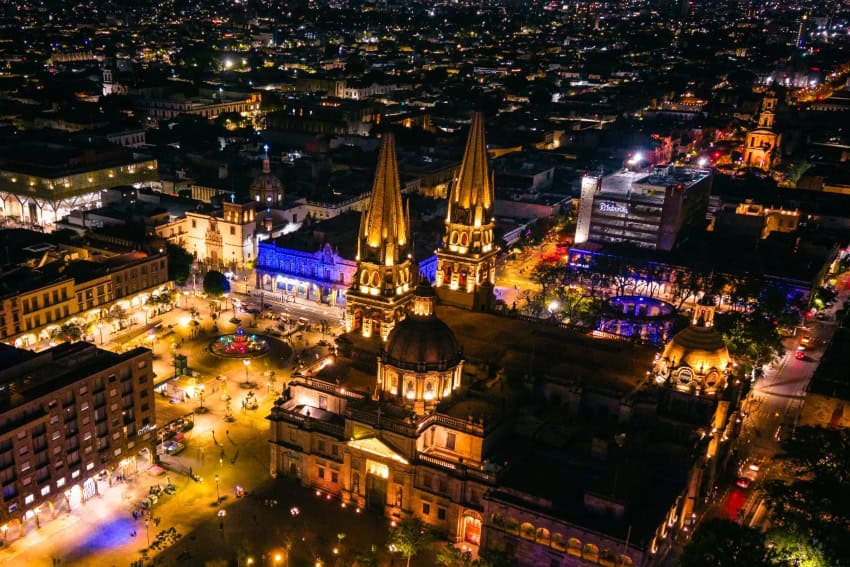
By the time the mariachis packed up on Avenida Chapultepec, a different kind of gathering was just beginning. Inside a narrow courtyard that looked a bit like a used bookshop’s imagination were string lights, mismatched chairs, walls papered with photocopied, purple-threaded zines and a nervous, electric humor.
We’d only heard about this place some 20 minutes prior, but we decided to give it a go. So, we arrived at a night library in Guadalajara, and it was everything it had promised to be.
Part salon, part speakeasy, part DIY classroom and entirely alive.
Poetry and the city
We were with about 25 strangers when the organizer flipped a small, battered lantern on and announced the first reader. A hush dropped, as if everyone had agreed to hold the city’s usual clamor at bay for an hour or two.
The first voice was raw and close, speaking poetry that smelled of late buses and street tacos. Laughter broke out in the right places, then silence where a line landed like a small, slow fist.
We could see heads tilt, eyebrows lift and phones stealthily put away. People leaned in because nothing was padded for virality. It was immediate. It was intimate. And it was entirely human.
Guadalajara’s night libraries are less a single model than a constellation.

One week, you’ll find a pop-up in a mezcalería where writers read between orders of sal de gusano palomas. Another night, a colectivo hosts an open archive night in a reclaimed storefront, where attendees trade xeroxed pages and oral fragments of local histories.
‘A thrilling lack of polish’
University students slip into municipal cultural centers to host clandestine readings of banned or hard-to-find texts. Older readers bring musty paperbacks and the kind of critique sharpened by decades of listening.
No two events look the same, but they all share a low-cost, high-affect DNA. They’re a space where speech doesn’t require a PR firm or an institutional grant.
What keeps these salons pulsing is a thrilling lack of polish.
There’s no curatorial cushion here. If you can stand up and read, you’re in. So, I did! That democratic aspect makes for risky nights when experimental prose derails into laughter and political rants spill over into planning notes for a neighborhood action.
Each risk is a small wager on community, and on the idea that people will show up, stay and feel accountable to the room. The risk is also the point.
Night libraries and the art of conversation
In a city rapidly remaking itself through the gentrification of blocks, the redeploying of public spaces and the importing of glossy cultural programming, night libraries feel like cultural oxygen. They stake claim to the nocturnal hours in a way that’s less about commerce and more about conversation.
For many participants, these salons are where they test lines they’ll later place in literary magazines, plot points they’ll refine into novels or organizing strategies they’ll take to the street.
Take Sofía, a final-year journalism student, who from time to time shows up at a rotating salon in a courtyard.
“When I read my first thing here, people told me what landed and what didn’t,” she said. “I want to publish one day, so I rewrote the piece three times because of what I heard. That honest feedback is precious.”
The content is deliciously eclectic. Some nights are literary and experimental through translated fictions and fragmented memoirs. Other nights tilt political via testimonies from neighborhood activists, performative manifestos and readings of court documents.
‘Scarcity breeds inventiveness’
There are evenings dedicated to Indigenous languages, where oral storytelling traditions are performed, recorded and sometimes awkwardly translated in real time. Elsewhere you’ll stumble on media-art performances that stitch field recordings of Guadalajara’s streets into a living soundscape.
The night library’s loose format lets form and message collide in ways mainstream venues rarely accommodate.
Planning is part improvisation, part grind. Organizers rely on WhatsApp threads, Instagram stories and old-fashioned word-of-mouth to gather crowds. Many hosts are small networks of writers, artists and students who rotate responsibilities for sound, seating and the inevitable cleanup.
Money is scarce, so door donations are accepted, and tip jars for the space are dotted about. But scarcity breeds inventiveness.
Sofía told us that one group staged a night in a defunct photocopy shop, converting an old risograph press into a zine-making station where attendees could print work on the spot to read aloud and then trade it.
There are ethical tightropes, too.
‘A training ground for new cultural leadership’
Guadalajara isn’t exempt from the realities of public order and political risk. Some nights exist under an understood anonymity. There are no names printed on flyers, consent forms for recording are used, and there’s a tacit promise from attendees not to amplify vulnerable voices.
Organizers often wrestle with balancing openness and safety in terms of how to invite new listeners without exposing people who speak about migration, state violence or repressive landlords. No photos were allowed.
Yet the payoff is tangible.
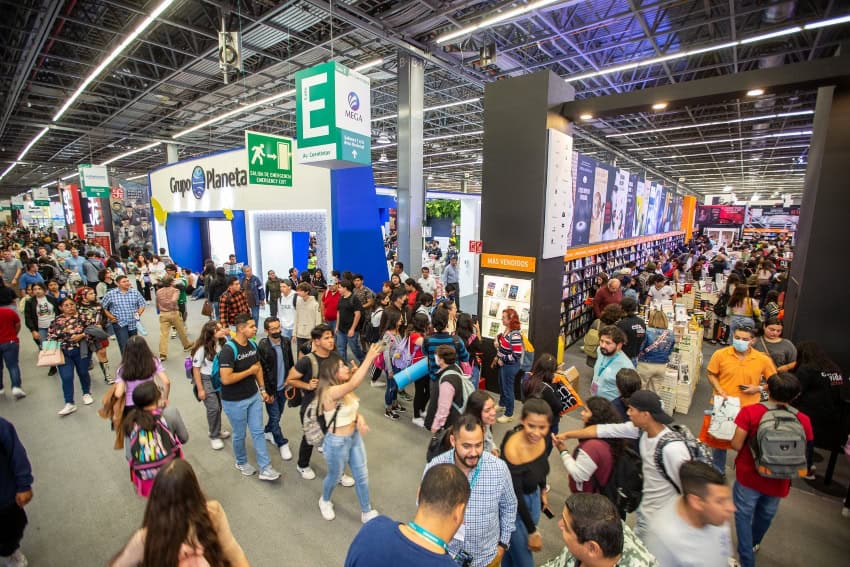
Night libraries are a training ground for new cultural leadership. They incubate experimental radio shows, and they funnel talent into larger festivals like the Guadalajara International Book Fair — and often with more authenticity than programs shaped by municipal funding. More quietly, they produce a different civic grammar. Think of neighbors who can translate despair into a poem, witnesses who can turn testimony into a pamphlet and activists who learn rhetorical strategy alongside verse.
The power of ‘contraband wisdom’
If there’s a single image that keeps returning to me, it’s of the humble photocopy. One sheet becomes many, and those many are folded, stapled and passed around like contraband wisdom. The photocopy stands for everything night libraries value: accessible reproduction, makeshift distribution and the radical belief that culture can circulate without permission.
By sunrise, the courtyard was a scatter of coffee cups, pasted flyers and a small cart of unsold zines. I left with the ease of someone who’d been in a room that mattered. We all made our way back into a city that might not notice what happened there, but the city had shifted in small ways through ideas getting repeated and seeing a poet gain confidence.
I saw so clearly that night libraries in Guadalajara aren’t just nightlife. They’re a rehearsal for a different public life, played out in the hum under the city’s louder lights.
They’re in most major cities across Mexico, and I hope you go searching for one. Just look for the photocopied flyers taped to doorframes, the tiny Instagram posts with cryptic times and the mezcal bottles that double as candleholders.
Walk in, say hello and maybe bring a poem. The night, if you let it, will teach you how loud a whispered reading can be.
Charlotte Smith is a writer and journalist based in Mexico. Her work focuses on travel, politics and community. You can follow along with her travel stories at www.salsaandserendipity.com.