The people of Cisteil were tired. After years as a Spanish district, they depended heavily on the municipality of Yaxcabá, located in what is now the state of Yucatán. Despite being a relatively small town, it had a fiery population that wanted to free itself from the Spanish yoke.
Cisteil lasted no more than eight years under this abusive regime. Little did the Spanish know that this small Yucatecan town would spark a major Maya anti-colonial uprising, led by a Maya man named Jacinto Canek.
From student and Maya physician to revolutionary leader
Long before Miguel Hidalgo began the Mexican independence revolts in Dolores, in what is now the Bajío region, southeastern Maya communities were already seeking to rid themselves of Spanish invaders.
Despite his standing as a prominent figure of Maya resistance, little is known about the early life of Jacinto Uc de los Santos Canek. Born in the 18th century, he led the “most important Maya rebellion in Yucatán during the colonial era,” according to the Great Maya Museum in Yucatán.
Documentary evidence shows he was born around 1731 to a poor family in the southeastern state of Campeche. Historical records indicate he studied Latin, history and Christian doctrine at the Convento Grande in Mérida before being expelled for his rebellious nature. Canek had a strong knowledge of Christian doctrine, joined a religious organization in his hometown of San Francisco de Campeche and practiced traditional Maya medicine learned through oral tradition.
After the 1761 rebellion, “Jacinto Canek chose a name of historical significance for the Maya,” according to a study by Robert W. Patch from the University of California, Riverside. He proclaimed himself king of the movement to reclaim “political and religious domination of the Yucatán Maya.”
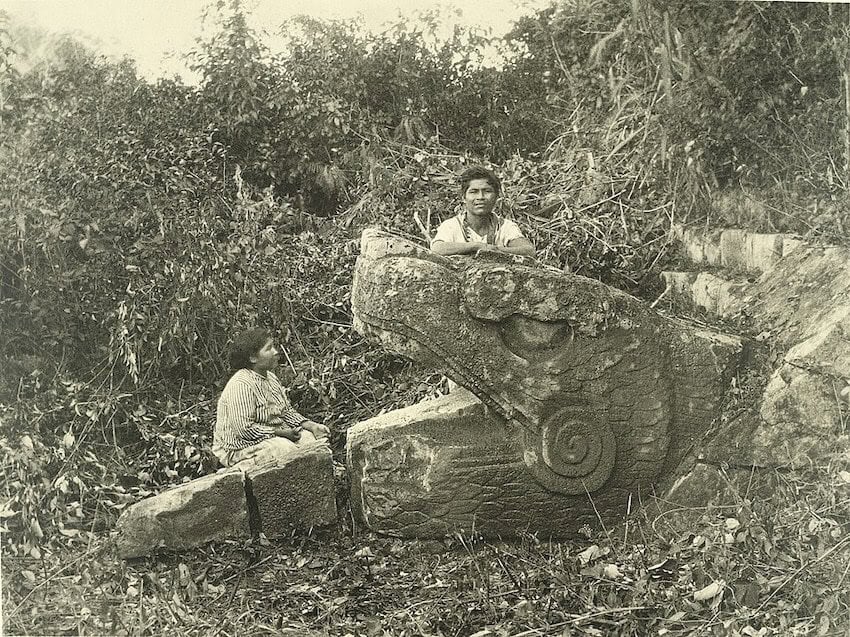
Thousands of Indigenous people recognized his authority and viewed him as an incarnation of Kukulkán, the sacred serpent of the Maya pantheon. Researchers note the movement sought to revitalize Maya culture after two centuries of colonialism, with revolutionaries believing the days of Spanish rule were numbered.

Jacinto Canek: Kukulkán and Christ, embodied in a Maya revolutionary
No other significant anti-colonial movement had taken place in present-day Mexico to this point. However, as a review of a criminal trial resulting from the rebellion emphasizes, “it was a highly serious rebellion, with a strong anti-colonialist content.”
Beyond establishing stronger trade ties with former Maya chiefdoms, the people of Cisteil wanted to reclaim their culture, traditions and religion. “The Maya continued to believe in a cyclic version of history,” the study points out, “which led them to think that one day in the future they would overthrow the Spaniards.”
Canek took a name sacred to two religious traditions: Maya and Christian. From 1761 onward, he was known as Jacinto Uc de los Santos Canek Chichán Moctezuma. He embodied the man-god myth of Mesoamerican tradition, presenting a syncretic Maya-Christian figure blending Jesus Christ and Kukulkán. Under that name, he summoned the highest rulers of Cisteil to wage revolution.
How the Maya remember Jacinto Canek
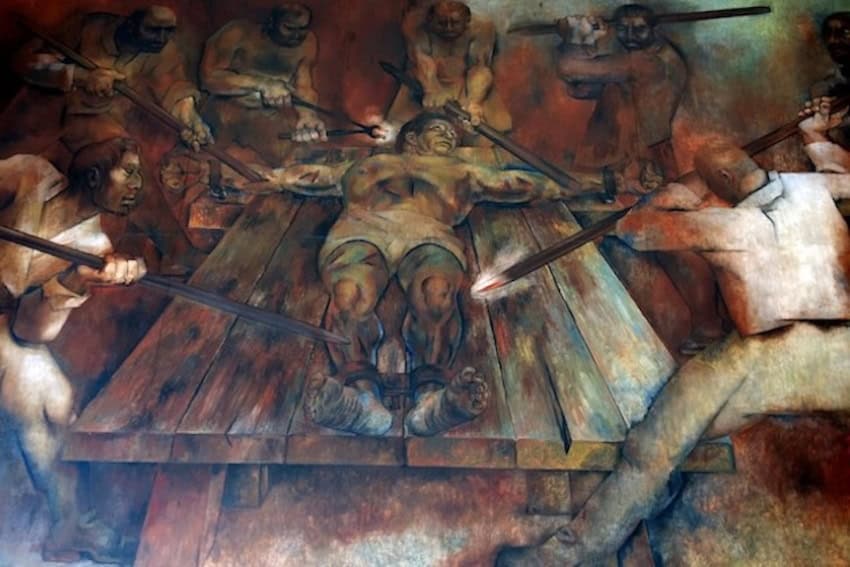
Yucatán Governor José de Crespo y Honorato ordered the arrest of the revolt’s leaders to quell the movement. Spanish forces captured Canek and took him to Mérida, where he was condemned to be “broken alive” — having his limbs broken with iron bars — before being executed on Dec. 14, 1761. His body was burned to ashes after his death.
Many followers were killed alongside him. Following the execution, Spanish commanders suppressed the rebellion before it could spread beyond central Yucatán.
The Spanish then launched a campaign to delegitimize the revolutionaries, framing the event as a “drunkards’ riot,” according to UNAM records. Among the Maya, however, it remained “a noble uprising against colonial exploitation.”
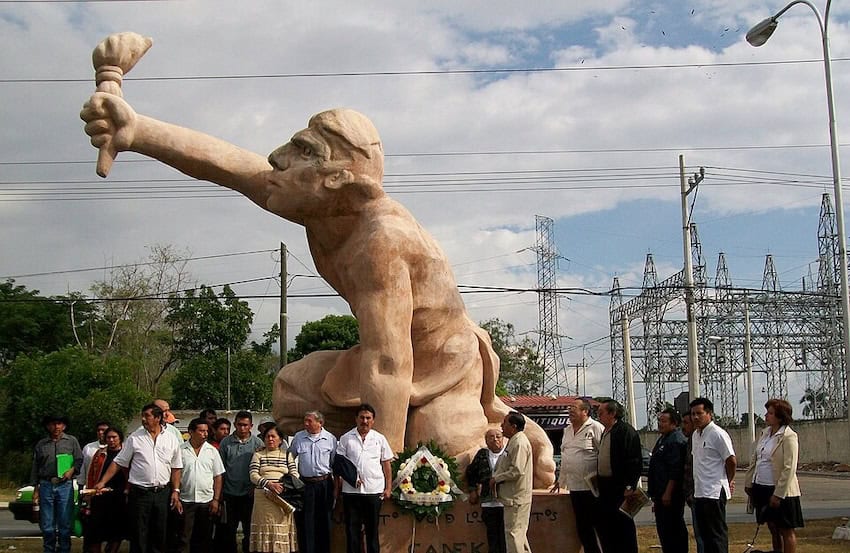
Today, Canek is remembered as “one of the most significant figures in the history of Yucatán” and as someone who “lives in the hearts of the women and men of the Maya people.”
Andrea Fischer contributes to the features desk at Mexico News Daily. She has edited and written for National Geographic en Español and Muy Interesante México, and continues to be an advocate for anything that screams science. Or yoga. Or both.