Dwight Morrow was not the first American ambassador to arrive in Mexico with the
promise of restoring order and protecting U.S. interests. But he was the rare one who
tried to do it without threatening an invasion. A century ago, in the late 1920s, this
Republican lawyer and former J.P. Morgan partner used breakfast diplomacy,
backchannel religious talks, and an early form of cultural soft power to defuse a
commercial crisis, mediate a religious war and help reshape how Mexico appeared in
the American imagination.
Mexico’s unrest, America’s money
To grasp Morrow’s significance, return to Mexico in the 1920s: a country still recovering
from revolution and rewriting the rules of sovereignty. The Constitution of 1917, notably
Article 27 declared that everything above, on and below Mexican soil belonged to the
nation. That principle directly challenged foreign oil concessions awarded during the
Porfirio Díaz era.
By 1920, Mexico was the world’s second-largest oil producer, home to Mexican Eagle (a
Royal Dutch/Shell subsidiary), Jersey Standard and Standard Oil. American and
European investors watched nervously: a nation with shifting politics and a new
constitution looked less like a neighbor and more like a precarious asset.
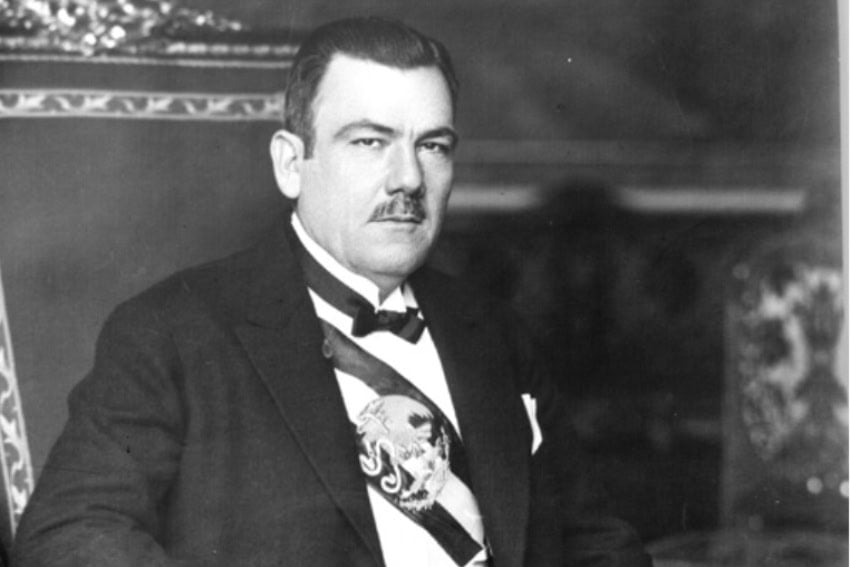
President Álvaro Obregón offered a stopgap in 1923, recognizing foreign property rights
in exchange for diplomatic recognition. His successor, Plutarco Elías Calles, later
deemed the agreement unconstitutional and issued fresh 50-year exploration permits,
enraging companies that believed their long-term claims had been secured.
Simultaneously, enforcement of Article 130 — curbing the Church’s political
role — sparked the Cristero War, a brutal conflict that drew appeals for U.S. intervention
from clerical networks. Mexico’s domestic battles had become entangled with foreign
business and public opinion.
The outgoing U.S. ambassador, James R. Sheffield, personified a hard line, reflecting
an older, force-first approach to Latin America. When Dwight Morrow, a senior partner
at J.P. Morgan & Co., which held much of Mexico’s US $514 million external debt, was
appointed ambassador in 1927, many Mexicans braced for “dollar diplomacy” in a
diplomatic coat and tails.


‘Ham and eggs’ diplomacy
Morrow arrived with a different playbook. His strategy rested on three deceptively simple
principles: respect Mexican sovereignty, cultivate genuine personal ties with Mexican
leaders, and recast conflicts as legal problems rather than theatrical confrontations.
American papers nicknamed him “the ham and eggs diplomat” for his routine breakfasts
with President Calles. The label belied the seriousness of those meetings. Over morning coffee, the two men tested ideas, lowered tensions and created a private space
for candid negotiation.
When Calles raised the oil question, Morrow answered not with threats but with a lawyer’s framing: this was “a question of law.” By urging legal channels — Mexican courts and legal process — he enabled Calles to reach a compromise without appearing to capitulate to foreign pressure.
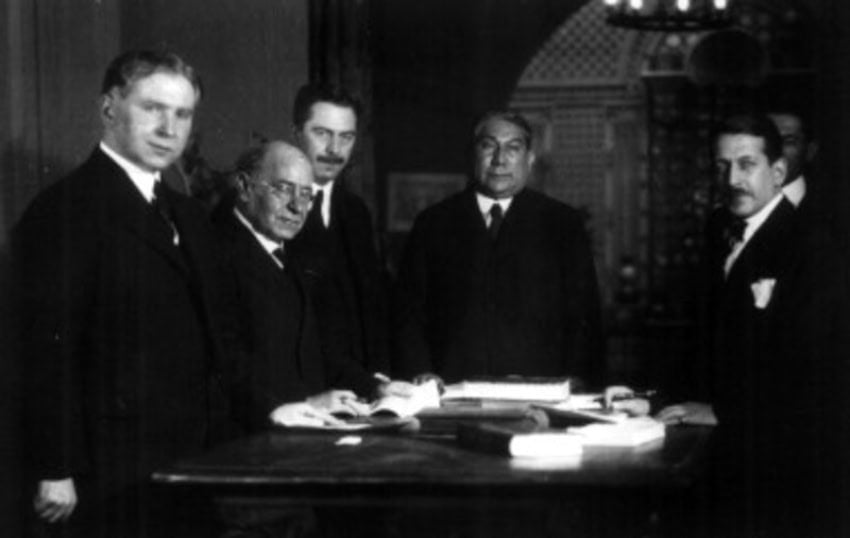
The 1927–28 oil settlement remains contested. In November 1927, Mexico’s Supreme
Court removed time limits on foreign concessions for companies that had undertaken
“positive acts” (drilling, infrastructure) before 1917. Nationalists denounced the decision
as a surrender to foreign interests; Morrow’s supporters hailed it as proof that diplomacy
and law could trump coercion. Historians today offer a nuanced view: Calles was by
then a pragmatic modernizer, and Morrow provided a diplomatic offramp that allowed
him to retreat from unsustainable positions while preserving domestic legitimacy.
Faith, violence and quiet deals
Morrow’s mediation in the Church–State conflict required a subtler touch than oil
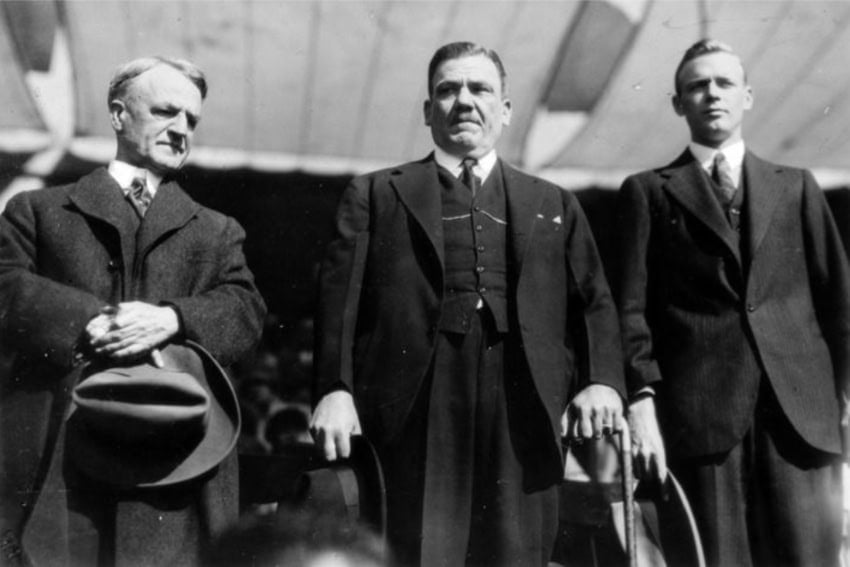
diplomacy. In 1927, he joined Calles on a northern tour. It was an image that startled some: an American Protestant banker riding beside an anticlerical revolutionary general. For Calles, the gesture signaled that Morrow was there to enable settlement rather than
dictate terms.
Between 1928 and 1929, Morrow quietly coordinated talks between Vatican envoys and
Mexican officials. The June 1929 “arrangements” did not restore the Church’s
prerevolutionary privileges, but they halted open hostilities: public worship resumed,
priests registered and the Church stepped back from direct political activity while the
state retained legal ownership of ecclesiastical property but allowed effective control
over church life. The deal reduced bloodshed, eased refugee flows and stabilized a
tense border situation. For Morrow, religious pragmatism was crisis management: a
peaceful Mexico was also a secure one.
Soft power, Mexican style
If breakfasts and back channels stabilized politics, Morrow’s most imaginative initiatives
targeted perception. He understood that shaping how Americans viewed Mexico would
be as important as resolving legal disputes. So he turned to spectacle, personalities and
museums to make Mexico legible and attractive to U.S. audiences.
In December 1927, Charles Lindbergh, fresh from his transatlantic triumph, flew to
Mexico at Morrow’s invitation. More than 150,000 people greeted him in Mexico City;
Calles publicly welcomed the aviator. Lindbergh toured Xochimilco, watched Revolution
Day parades and was feted for a week. It was an upbeat counterstory to headlines about
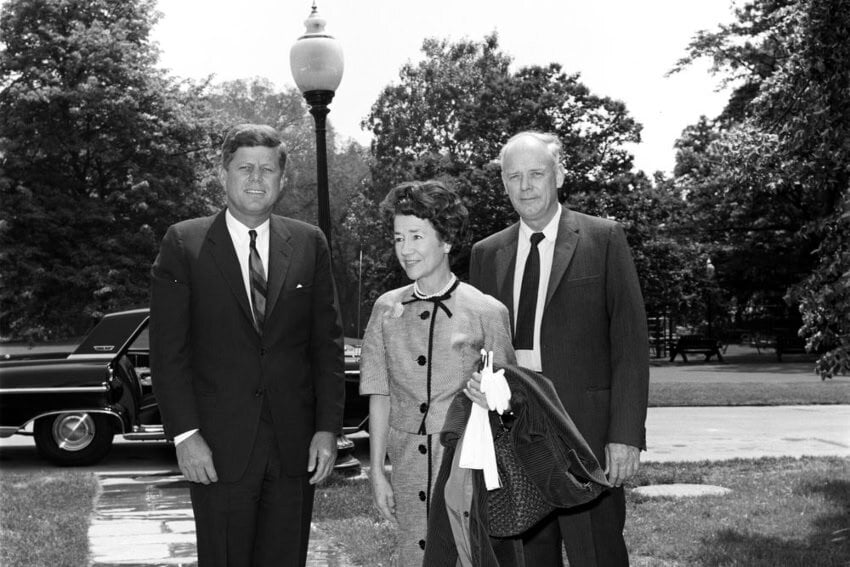
unrest. The visit also yielded a humanizing subplot: Lindbergh met and later married Anne Morrow, the ambassador’s daughter. The romance drew American attention and
softened public perceptions, mixing glamour with diplomacy.
Canonizing “Mexicanness”
Morrow’s cultural diplomacy reached institutional heights in 1930 when the Metropolitan
Museum of Art in New York opened “Mexican Arts,” a sweeping exhibition of roughly
1,300 objects that had debuted months earlier in Mexico City. Backed by the Carnegie
Corporation and the American Federation of Arts, and energetically supported by
Morrow, the show presented pre-Hispanic artifacts alongside colonial works, modern
muralism and popular crafts. Morrow lent pieces from his collection and helped secure
funding.
The exhibition offered a curated argument: Mexico had deep historical roots and a
vibrant contemporary culture. Touring U.S. cities for two years, it helped recast Mexico
in American eyes from a land of uprisings and banditry to a nation with a continuous
civilizational story and modern ambitions. The narrative aligned neatly with Mexico’s
postrevolutionary nationbuilding project — mixing Indigenous and European elements
into a celebratory mestizo identity — while also channeling that narrative through
American tastes.
Rivera, revolution and a banker’s check
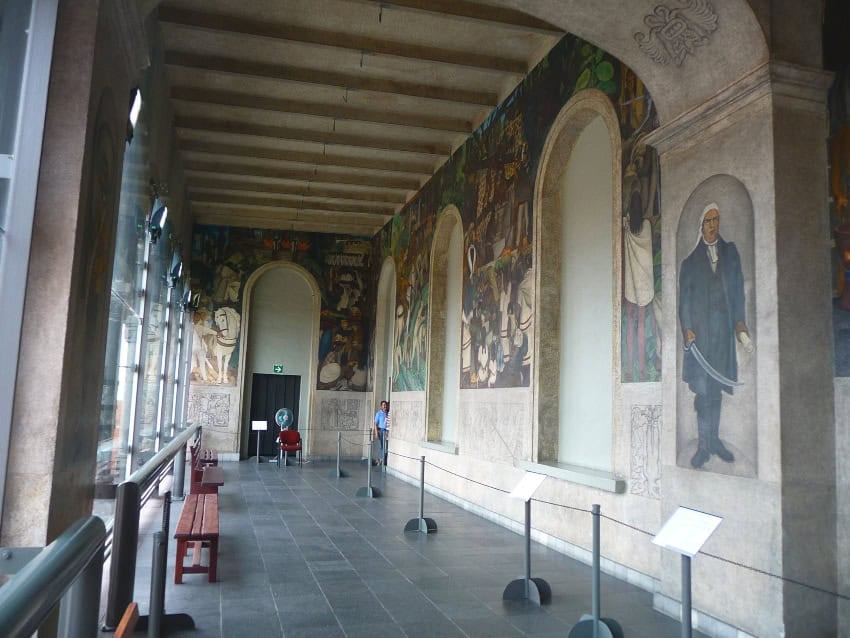
Morrow’s most provocative cultural gamble came in paint. In 1929, he commissioned
Diego Rivera’s mural “History of Morelos, Conquest and Revolution” for the Palacio de Hernán Cortés in Cuernavaca. Rivera and Frida Kahlo worked at Casa Mañana, the Morrows’
country home, while completing the fresco, which depicts conquest, exploitation and
peasant uprising with blunt political clarity. That a former J.P. Morgan partner would
finance a fresco criticising colonial domination looks paradoxical — and it was. Mexico’s
Communist Party accused Rivera of selling out; U.S. conservatives fretted that
American funds were underwriting radical art.
Morrow’s logic was pragmatic: supporting Mexican artists, even when their work was
politically charged, signaled respect for Mexico’s cultural autonomy and helped
normalize its government before foreign audiences. A portion of Rivera’s work later
toured U.S. museums, linking Mexican muralism to the American art world.
Elizabeth Morrow’s curated Mexico
Elizabeth Cutter Morrow was no mere hostess. She turned Casa Mañana into a living
display of textiles, ceramics and folk objects, organized exhibitions of Mexican crafts in
the United States and wrote for American audiences about Mexican art. Her aesthetic
smoothed Mexico into a cohesive mestizo image, one appealing and accessible to U.S.
patrons, but which tended to obscure the poverty and marginalization behind many crafts.
Still, her efforts connected artisans with collectors and institutions, institutionalizing a
form of bilateral cultural exchange that endured, however unequal its dynamics.
The shadow of J.P. Morgan
Morrow formally resigned from J.P. Morgan on taking the ambassadorship, but his
banking past mattered. The bank’s role in financing Mexico’s foreign debt and Wall
Street’s interest in Mexican stability gave his appointment immediate market effects:
bond prices rose on news he was taking the post. Morrow was, at bottom, a
businessman in diplomatic guise. He delivered what American capital wanted — manageable debt, protection for oil interests and no sweeping expropriations—yet did so through negotiation that preserved Mexican dignity.
A shared project of modernity
Plutarco Elías Calles was a pragmatic modernizer, not a radical like Zapata or Villa. He
sought to build a postrevolutionary state through schools, infrastructure and a cultural
program that recovered Indigenous pasts and fostered national cohesion. Morrow’s
diplomacy complemented that agenda. By promoting Mexican art and culture in the
United States, he lent international validation to Mexico’s nation-building narrative.
In return, Americans were offered a reassuring story of a neighbor on a path to stability.
Dwight Morrow embodied a paradox. He defended U.S. interests within an unequal
system, but he chose negotiation, legal process and cultural engagement over coercion.
He did not upend the power imbalance between nations, yet his methods reduced
violence and allowed Mexico’s postrevolutionary state to consolidate legitimacy without
the spectacle of foreign intervention.
A century on, Morrow’s tenure offers a practical lesson: diplomacy that respects
sovereignty, leans on law and pairs political negotiation with cultural exchange can
defuse crises and reshape perceptions. That approach does not erase the realities of
power; it simply shows that skillful, respectful engagement can prevent escalation and
open channels for mutual understanding.
In 1927, when military intervention remained conceivable, that was a significant achievement — and one worth remembering whenever international relations risk being reduced to slogans rather than solved through sustained, patient diplomacy.
Maria Meléndez writes for Mexico News Daily in Mexico City.