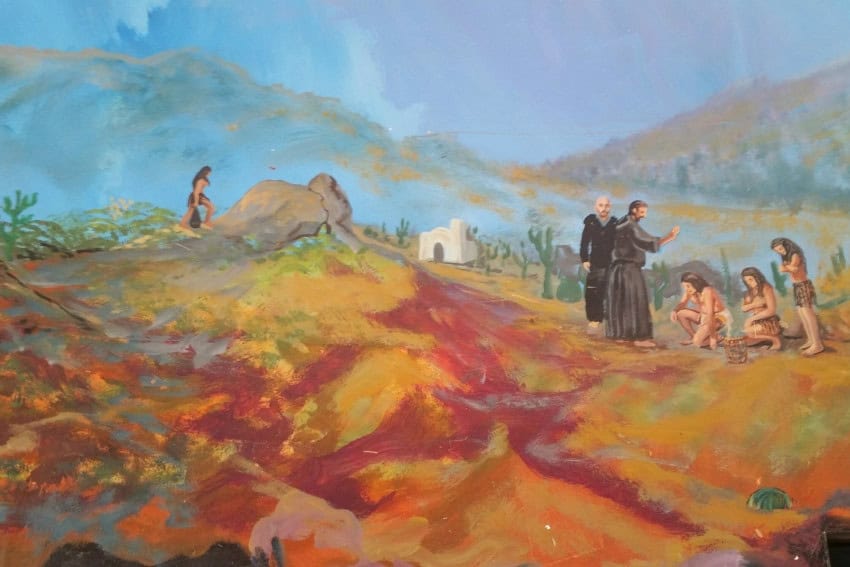
“Salvatierra, Venégas and the rest have furnished a copious account of the Jesuit period; Palóu and his associates have left satisfactory material for the Franciscan occupation, but the Dominicans have left no account of their labors. It would appear they accomplished nothing in California worth recording, even in their own estimation.”
So wrote esteemed American historian Hubert Howe Bancroft in his “History of the North Mexican States and Texas,” published in 1884, regarding the Dominican mission era on the Baja California peninsula.
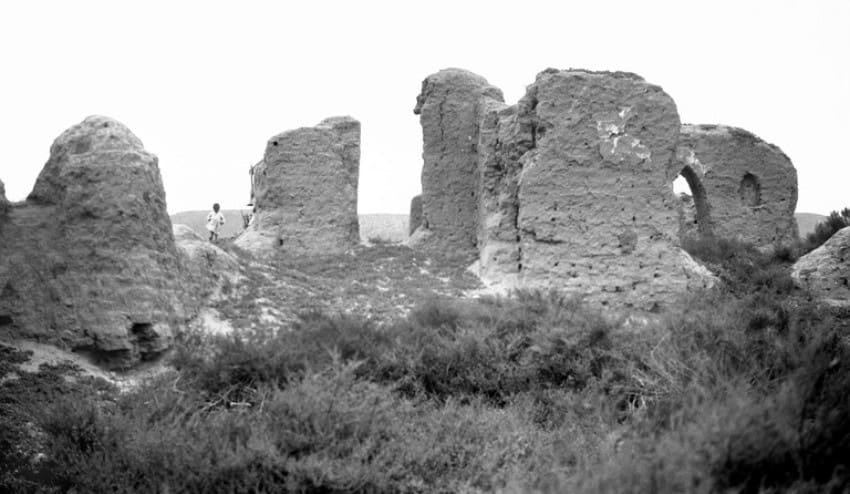
This period properly began with the arrival of 18 Dominican missionaries on the peninsula in May 1773. The missionaries were tasked with taking charge of Baja-based missions previously administered by the Jesuits and Franciscans. It was an undertaking that would be defined by challenges, from declining numbers of Indigenous converts and a poverty of resources to Mexican Independence in 1821, which resulted in the gradual secularization of missions over the following decades. However, it should not be imagined — despite Bancroft’s withering observation — that the Dominican padres accomplished nothing of value.
Connecting the chain of missions in Baja and Alta California
Most important among their achievements was the founding of missions to connect the Baja California peninsula missions to those founded by Junípero Serra and the Franciscans in Alta California. To this end, the Dominicans founded nine missions across more than half a century, from the Misión Nuestra Señora del Santísimo Rosario de Viñadaco in 1774 to the Misión de Nuestra Señora de Guadalupe del Norte in 1834, in what is now Baja wine country. These missions spanned nearly 250 miles and connected the mission frontier in the south to that in the north.
Notably, almost all of these were near the Pacific coastline. As Peveril Meigs explained in his 1935 work, “The Dominican Mission Frontier of Lower California”:
“Seven of these nine Dominican missions were within a short distance of the Pacific Coast, and only two were far in the interior. This unsymmetrical distribution came about in the first place because the coastal terraces provided the most easily serviceable route from Velicatá to San Diego. Secondly, the plentiful seafood resulted in a marked concentration of Indians near the coast. Thirdly, sites with favorable water and land were most numerous in this part of the area.”
Hardships in El Sur
As history shows, however, the Dominican padres were overly focused on missions in what is now the state of Baja California — the region where the vast majority of the surviving Indigenous inhabitants were found — at the expense of existing missions in the southern part of the peninsula.

In what would become Baja California Sur, related historian Pablo L. Martinez in “A History of Lower California,” the missions were left “completely in ruins.”
On the way to extinction
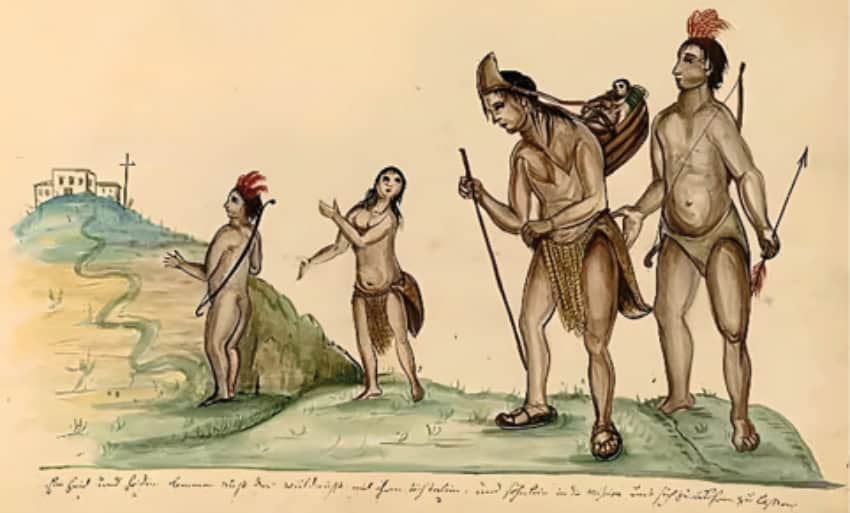
By 1786, Pedro Fages, who had succeeded Gaspar de Portolá as governor of the Californias, laid out the precariousness of the situation in no uncertain terms. “The missions of San José (del Cabo), Santiago, Todos Santos, San Javier, Loreto, Comondú, Cadegomo, Guadalupe and Mulegé are on the way to total extinction. The reason is so evident that it leaves no doubt. Syphilis has taken possession of both sexes to such a degree that mothers do not conceive, and if they do conceive, the fetus is born with little hope of living … In toto, there are three times as many adults who die as there are babies born.”
Santiago was so bereft of neophytes that by 1795 its mission was closed and the few Indigenous Pericú that remained there were transferred to San José del Cabo. The mission in San José had been destroyed by flooding in 1793 but was rebuilt with sturdier adobe by 1799, and the influx of Indigenous people from Santiago led to its highest population in years: 84 in 1800; 109 by 1808.
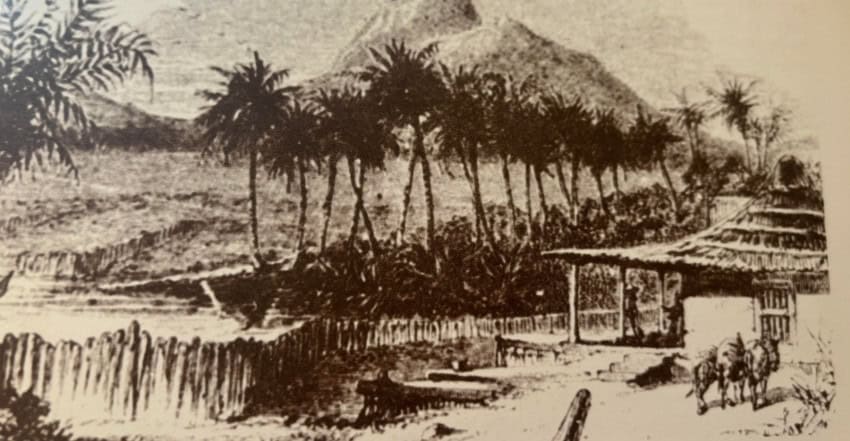
The final San José del Cabo mission, no longer extant, was described by Zephyrin Engelhardt in his “The Missions and Missionaries of California: Vol 1, Lower California” as measuring “58 varas in length, seven varas in width, and five varas in height, with a tule roof.” A vara was a Spanish measurement, which, when converted, describes a building 160 feet long by 20 feet wide, and 13 feet high.
How the Dominican mission period ended
The Californias were separated in 1804, so that Alta and Baja, or Upper and Lower California, were each administered separately. This was a time of great need for the missions of Baja California, a situation that would only worsen in the years to come.
French Emperor Napoleon’s occupation of the Iberian peninsula and his forced abdication of the Spanish monarch Ferdinand VII in favor of his brother Joseph in 1808 would set off a chain of events, both in Europe and in the Americas, that saw independence movements in the latter sphere gain momentum and ultimately prove successful almost everywhere save Cuba and Puerto Rico. Mexico’s independence in 1821, meanwhile, was followed by the sacking of San José del Cabo’s mission by captains under Lord Admiral Cochrane of the Chilean navy in 1822, under the pretense that it still flew the Spanish flag. In reality, it was a thinly veiled pretense for piracy.
The road to secularization
The missionaries had received little financial support from the beleaguered Spanish during the independence fight, and once it proved successful, the new governor, José María de Echeandía, pushed for secularization of all the Spanish missions. A few recalcitrant Dominicans, like the irascible Gabriel González in Todos Santos, would stave off this eventuality for years, and Dominican padre Felix Caballero even managed to found two missions after Mexican independence. But over the next decades, all the missions would be secularized into parish churches or closed, with Santo Tomás in the north being the last mission shuttered in 1849. The final two Dominican missionaries on the peninsula, of which González was one, had retired by 1855.
From mission to pueblo in San José del Cabo
Echeandía’s plan of secularization called for a significant percentage of former mission lands to be given over to the now-free Indigenous populations. However, this dictum was largely ignored in Southern Baja, for the simple reason that there were far more settlers by this point than there were Indigenous people, with close to 1,000 in the region by the early 1800s.
San José del Cabo had officially been designated a pueblo by 1830, 10 years before its mission finally closed. Ranching was to become a major occupation for settlers in both San José del Cabo and the newly formed community in Cabo San Lucas, where the soil was ill-suited for farming.
San José del Cabo, notably, was well-disposed to both ranching and farming, and the town was soon established as one of the most significant on the peninsula. It would become, like Todos Santos and Santiago, a regional sugar cane powerhouse and piloncillo producer; while its farmers also grew produce such as tomatoes, mangoes, avocados, limes, oregano and damiana.
The birth of Cabo San Lucas
According to the English ship surgeon Frederick Debell Bennett, who visited Cabo San Lucas in 1835 — a dozen years after its founding as a settled community — when the population was still only about 30 people, and wrote about it in his “Narrative of a Whaling Voyage Round the Globe from the Year 1833 to 1836”:
“The village or settlement consists of about eight dwellings, erected at a distance from the sea, beneath the shade of some mimosa trees. They are small, built of adobe and thatched with flags obtained from the neighboring town of St. José. Each hut usually contains one or never more than two apartments and is faced with a portico, which affords a favorite lounge for the resident family. Their furniture is scanty and rather more useful than ornamental. The hairy surface of a dried bullock’s hide, spread on the hard earthen floor, is the usual bed … They live contented, and consequently happy; and their conduct towards each other, as well as to ourselves, was equally courteous and hospitable.”
The last of the Pericú
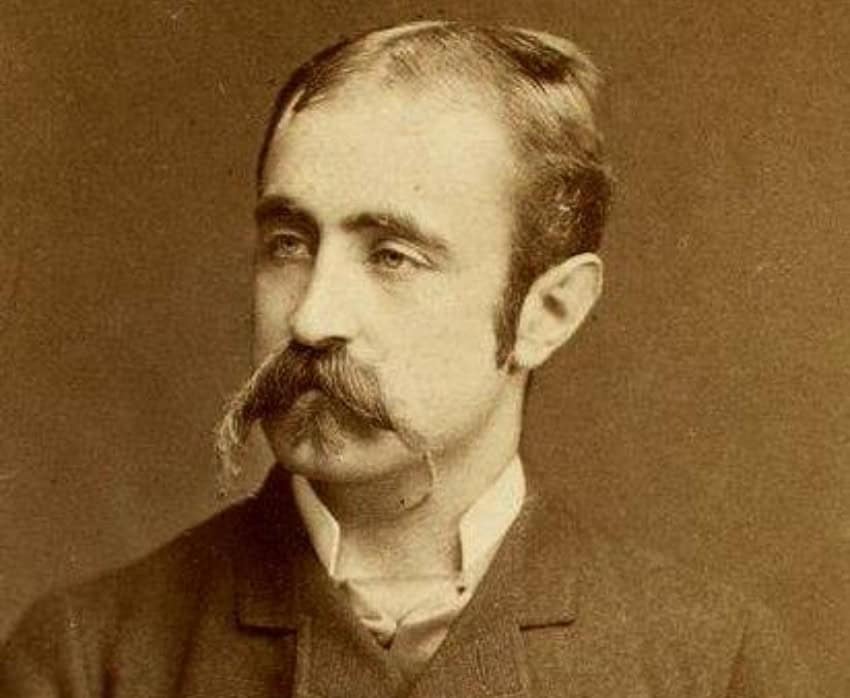
As for the Pericú, no one knows when the last full-blooded Indigenous inhabitant of Los Cabos died. Dutch anthropologist Herman Frederik Carel ten Kate drew his own conclusions later in the century, after visiting the region in the company of acclaimed ornithologist Lyman Bender, a journey recalled in “Travels and Researches in Native North America, 1882-1883.”
“Based on what I have seen of the rural population, though, I am persuaded that … a number of Indians and half-blood Indians, who are descendants of the old Pericúes, still appear here in the southern part of Lower California. But all these Indians have forgotten the language, religion, traditions and customs of their people and are partially or fully Hispanicized. There are Indians and mestizos who are not aware, and sometimes do not want to know, that they are Indians and mestizos. The Pericú people have ceased to exist, but the blood of the Pericúes still flows through the veins of the present-day inhabitants.”
Chris Sands is a writer and editor for Mexico News Daily, and the former Cabo San Lucas local expert for the USA Today travel website 10 Best and writer of Fodor’s Los Cabos travel guidebook. He has also contributed to numerous other websites and publications, including The San Diego Union-Tribune, Marriott Bonvoy Traveler, Forbes Travel Guide, Porthole Cruise and Travel, and Cabo Living.