My father died exactly one year ago, which has rendered me sensitive to the life cycle.
What happens to the energy stored inside a body once that body has shut down? In Mexico, the answer rides on the wings of monarch butterflies.
Winged migration
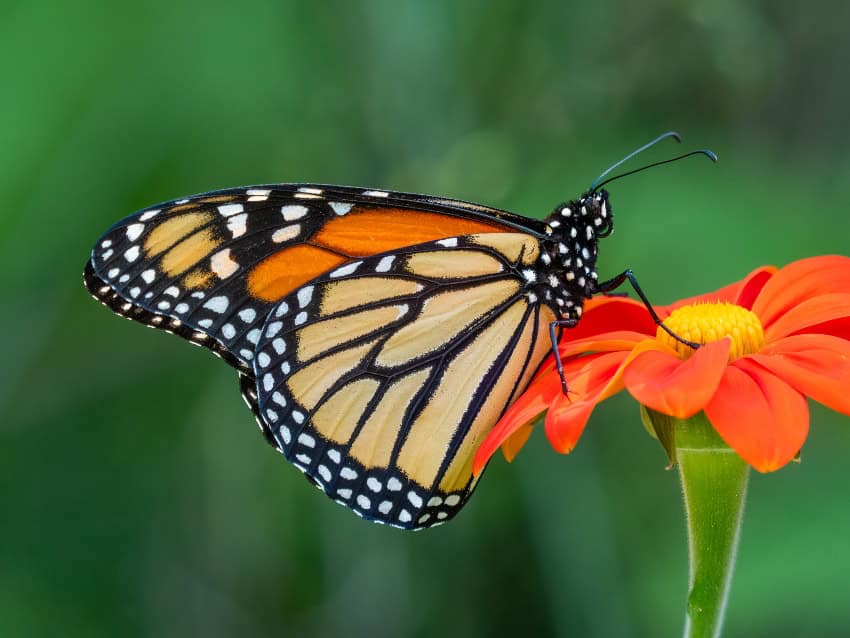
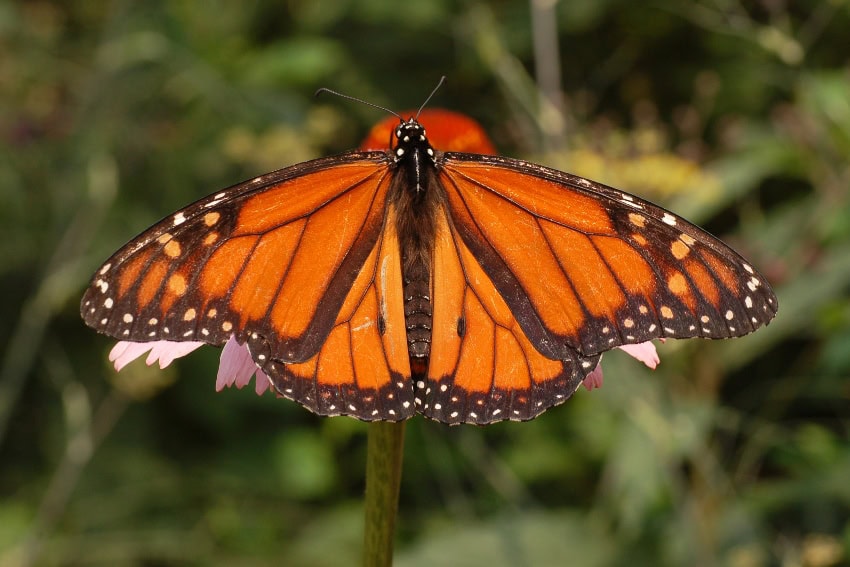
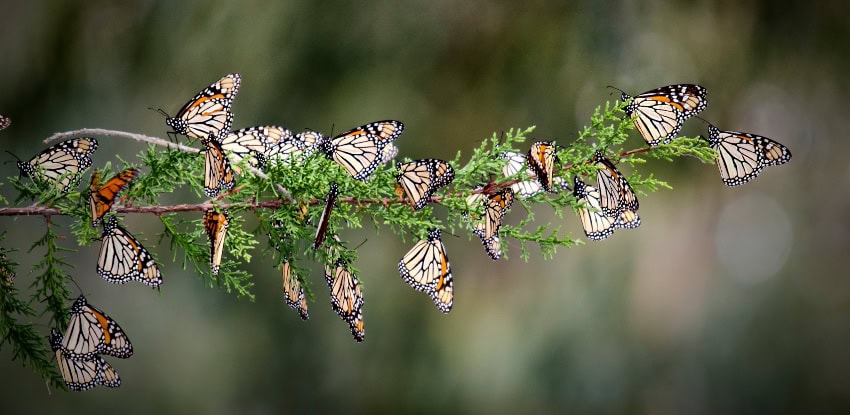
Each year, millions of the orange-and-black beauties make their way from Canada to Mexico and back again, drifting along high-altitude air currents through dense oyamel and pine forests. Here, they cluster at the tops of trees, where the cool, humid air keeps them from drying out — a deliberate act of survival against a climate that would otherwise kill them.
Their arrival in Mexico in late October to mid-November coincides with Day of the Dead, when the souls of deceased loved ones return to visit their living relatives, eat a good meal and have a tequila or two. The belief that the butterflies carry these souls from Mictlán — the Mexica realm of the dead — back to earth has endured for centuries.
The migration is indeed an environmental cause; in Mexico, it remains a sacred one.
Perhaps it’s fate that brought me to Valle de Bravo’s butterfly sanctuary this year, with the first truly significant calendar cycle of my father’s death coming to a close. The idea that he could be a butterfly actually makes me laugh out loud — if anything, he’s a squirrel — but knowing that one’s energy continues, albeit in another form, resonates on a deeper level.
I can’t wrap my head around death being the absolute end. Earthly life works on too intricate a system for there not to be a bigger purpose, and I think the butterfly migration is a prime example of exactly that.

A generational journey northward
In March, after mating, monarch butterflies travel 2,500–3,000 miles from Michoacán and México state to the northern United States and southern Canada in search of milkweed. While the southward-migrating generation of monarchs survive longer than the usual six-week lifespan — thanks to their bodies going into a lower metabolic state for the fall journey called diapause — it takes several generations of monarchs to complete their return journey northward: The first generation of these monarchs generally makes it as far as Texas, and it’s usually the grandchild that finally touches down in the United States and Canada.
Along the way, females lay eggs on milkweed before dying on the forest floor — where their decomposing tissue feeds ants, spiders and birds, and their exoskeletons return nitrogen to the soil. I keep coming back to that detail. Without it, the ecosystem would collapse — their death keeps the forest alive.
The monarch butterfly tour experience
The British Society in Mexico organized the trip, chartering a private bus from Mexico City for the 2 1/2-hour transfer westward. I’m sensitive to motion sickness, and by the time we arrived, I was downright spinning from what felt like a near-endless series of hairpin turns.
The entrance is a short walk from the parking area, where we paid 150 pesos for access to the sanctuary. Dozens of stands selling quesadillas, fresh fruit, monarch butterfly magnets, pan dulce and beverages of all kinds line the base of the mountain.
At the ascent’s starting point, visitors choose between hiking or horseback. I chose to hike — about 90 minutes to the top. The first stretch is a steady incline before reaching a platform where walking sticks are available and the trail steepens considerably — this is also where hikers and horses part ways — though the paths briefly reunite higher up with little warning.
The mix of visitors is striking: parents carrying babies on their backs and grandmothers navigating the slope alongside teenagers, some in full hiking gear, others in jeans and heeled cowboy boots.
The soft hum of flapping wings eventually replaced familial chitchat. The pathway narrowed enough that only one person could comfortably fit, and the temperature dropped several degrees. Flutters of color — orange, yellow and black — sparkled beneath the sun with increasing frequency.
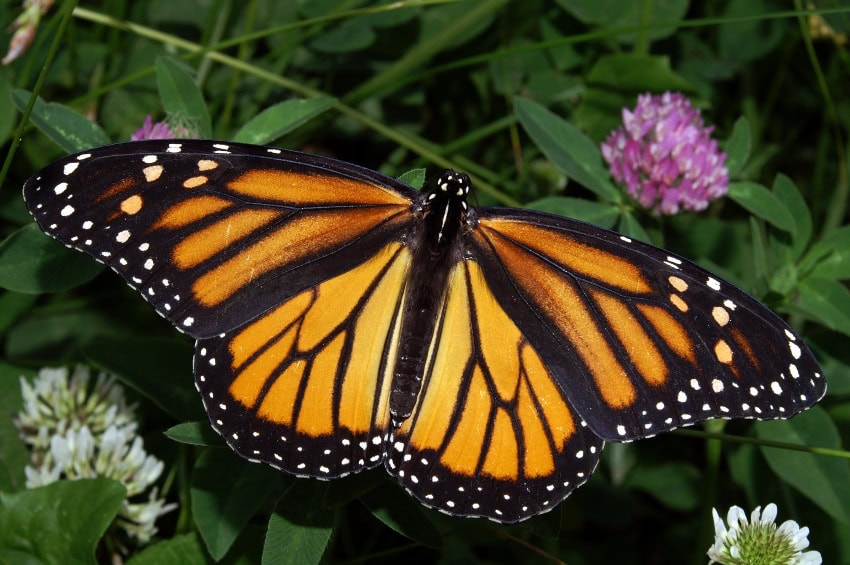
Beneath my feet, dead butterflies lay scattered across the ground, some in small piles, still quite colorful. Above my head, swarms of the living swirled among the trees. I walked slowly, gaze locked on the kaleidoscope of paper-thin wings. And then — a bump: I had gently collided with the person in front of me — luckily, a friend. The line had stopped; most onlookers were too busy documenting the experience through their phone screens to keep walking, and for the next 30 minutes, we were forced to creep along at their pace.
Despite the rampant obsession with documenting every moment, the sense of interconnection was powerful. Here we were, a group of strangers, walking among the dead and the living, both of which contribute critically to something bigger than any of us: the survival of the forest, and everything that depends on it.
Once through the roosting area, we made our way back down at our leisure. The descent took about half the time, not without a close encounter with an overzealous horse. My friend and I beelined to a fruit stand — fresh papaya, watermelon and pineapple for 50 pesos — before poking around the souvenir shops, where she picked up a monarch magnet for 10 pesos.
Two cheeseless quesadillas and a café de olla later, we wandered back to the bus, not without feeding a stray dog and buying a 15-peso loaf of bread for the ride back.
Where to find your own monarch experience
On the bus, I turned it all over in my mind — the crowds, the long ride, the sea of phone screens and — underneath it all — the color and sound of the delicate movements of millions of translucent wings.
This experience is so distinctly Mexican, not only because it takes place here but also because of what Mexicans have always understood about life and death. The migration, in a way, makes life make sense, a concept I’ve desperately been trying to grasp since my father’s death. We’re all contributing to something that never really dies, so maybe we never really die, we just change form.
For those considering a first butterfly experience, Piedra Herrada makes for an excellent day trip from Mexico City. Those looking for a less touristy, more intimate adventure might consider Michoacán’s Cerro Pelón or La Mesa — both require longer, steeper hikes and see fewer crowds – but for an introduction to the migration, this sanctuary delivers. For more information, check out the Mexican government’s biodiversity page.
Bethany Platanella is a travel planner and lifestyle writer based in Mexico City. She lives for the dopamine hit that comes directly after booking a plane ticket, exploring local markets, practicing yoga and munching on fresh tortillas. Sign up to receive her Sunday Love Letters to your inbox, peruse her blog or follow her on Instagram.